Set your speed, let off the gas, and watch the car ease itself off the throttle as traffic slows ahead. The first time adaptive cruise control does that on its own, most drivers get a little jolt of surprise. The car just backed off without being told, and then it picked the speed right back up when the lane cleared.
I have handed the keys back to a lot of drivers who thought their cruise control was possessed. It was not. It was simply reading the road ahead with a radar sensor and doing exactly what the engineers designed.
This guide is the map for everything that system does. How the radar works, why the message on your dash reads the way it does, why cruise engages one minute and refuses the next, and where to go when a specific problem shows up on your car.
Key takeaways
- Adaptive cruise control uses radar, and sometimes a camera, to measure the gap to the car ahead and adjust your speed automatically.
- It is a comfort and convenience feature, not self-driving. You steer, you stay alert, and you take over the moment it hands control back.
- Snow, heavy rain, fog, road grime over the sensor, and even a dirty front bumper will disable it, and that is by design.
- A “radar obstructed” or “cruise unavailable” message almost always points to the sensor being blocked, not a broken part.
What adaptive cruise control actually does
Regular cruise holds one fixed speed and never looks up. Adaptive cruise, often shortened to ACC, adds a set of eyes. A radar sensor, usually tucked behind the grille or lower bumper, constantly measures the distance and closing speed to the vehicle in front of you.
When that car slows, your car slows. When it speeds up or moves out of your lane, your car returns to the speed you originally set. You are still steering the whole time.
The key word is adaptive. The system adapts your speed to traffic, but it does not adapt your steering, and it will not read a stopped object well at high speed. Those limits matter, and I will come back to them.
Radar, camera, or both
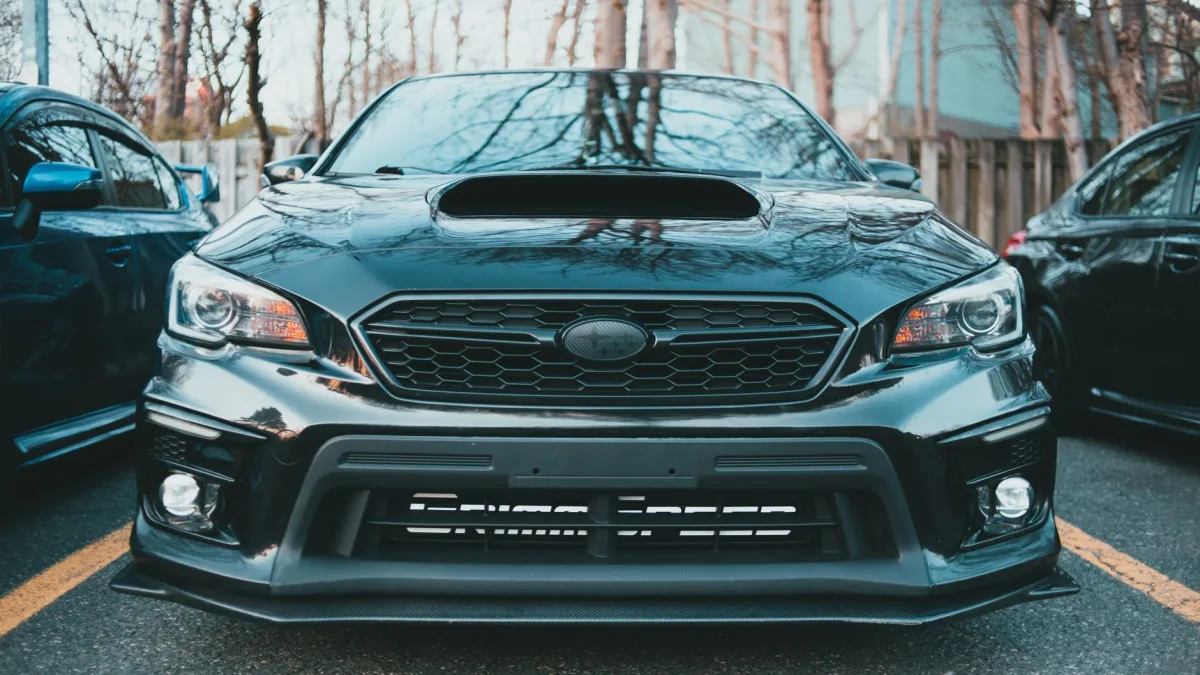
Most systems lead with radar because radar sees through light rain and darkness better than a camera. Some brands, Subaru being the famous example, lean on cameras instead. Subaru EyeSight uses a pair of windshield-mounted cameras rather than a bumper radar to judge distance.
Toyota, Honda, Ford, Hyundai, Kia, and Nissan mostly use a radar unit in the front fascia, often paired with a camera for redundancy. That is why a cracked grille or a fresh coat of bumper paint can throw the whole system off, which I will get to later.
How the radar measures the gap
The radar sends out a signal, waits for it to bounce off the vehicle ahead, and times the return. From that it calculates distance and how fast the gap is shrinking or growing. It does this many times per second.
Because it depends on a clean signal path, anything solid in front of the sensor degrades it. A caked-on layer of mud, a bumper-mounted license plate frame, snow packed into the grille, or even a thick coat of aftermarket paint can weaken the return.
Good to know
Radar cares about what sits directly in front of it, not the whole bumper. A clean car with one baseball-sized clump of ice over the sensor can still throw a “radar obstructed” warning while the rest of the car looks spotless.
When the signal gets too weak or noisy, the car does the safe thing and disables the feature. If you have ever seen a cruise unavailable radar obstructed message, that is the system telling you it cannot trust what it sees.
Why the system engages and drops out
This is the part that frustrates drivers most. You set your speed, everything is fine, and then the system quits with a chime and a message. Nine times out of ten, nothing is broken.
Here are the usual reasons ACC refuses to set or drops out mid-drive:
- The radar sensor is blocked by snow, ice, mud, or road grime.
- Weather is too heavy for the radar or camera to read reliably.
- You dropped below the minimum operating speed, often around 20 to 25 mph on non-stop-and-go systems.
- A sharp curve or a hill crest briefly hid the car ahead.
- You pressed the brake, which cancels the system on purpose.
If your cruise sets fine but keeps quitting on the highway, the pattern usually points to the sensor or the weather. Our deep look at adaptive cruise dropping out while driving ranks the causes the way I actually see them in the bay.
If it will not engage at all, that is a different starting point. Walk through the causes in adaptive cruise control not working before you assume the worst.
Following distance is yours to set
One of the best features people ignore is the following gap setting. Almost every ACC system lets you choose how far back it holds, usually with a button showing one, two, or three bars.
More bars means a longer gap and a more relaxed drive. Fewer bars keeps you closer but reacts more abruptly. I tell drivers to run the longest comfortable gap, because it gives the system more room to slow smoothly instead of braking hard.
If you have never touched that button, or you are not sure what the bars mean, our guide to following distance settings explained walks through what each level feels like at highway speed.
Tip
On a crowded interstate, a longer follow gap actually cuts down on phantom braking. The more space the radar has to work with, the less it panics at cars cutting in. Short gaps make the system jumpy.
Stop-and-go and low-speed traffic
Older adaptive cruise systems shut off below about 20 to 25 mph. Newer ones, often badged as traffic jam assist or full-speed-range ACC, will follow the car ahead all the way down to a complete stop and then resume when traffic moves.
This is a genuinely useful feature in bumper-to-bumper commuting, but it behaves differently brand to brand. Some resume automatically after a short stop, others need a tap of the accelerator or the resume button.
If your car creeps and stops with traffic, learn its exact behavior in our explainer on stop and go traffic jam assist. Knowing whether it resumes on its own is the difference between a relaxed commute and a nasty surprise.
Adaptive cruise in bad weather
Weather is where these systems show their limits fastest. Radar handles darkness well, but heavy precipitation scatters the signal, and cameras get blinded by glare, fog, and packed snow.
The radar is not stubborn in a storm. It is honest. When it cannot see clearly, it tells you instead of guessing, and that honesty is the whole safety case.
Winter is the toughest test. A snow-plugged grille can kill ACC in minutes, and drivers who do not expect it get caught off guard. Our winter guide on adaptive cruise control in snow and ice explains what to clear and what to accept as a limitation.
Watch out
Do not lean on adaptive cruise in fog or driving rain the way you would on a clear day. Reduced visibility cuts the sensor’s range, and a stopped vehicle can appear later than you expect. Our piece on adaptive cruise control in fog and rain covers when to switch it off entirely.
Brand by brand differences
No two automakers tune ACC the same, and the acronyms alone are a headache. Here is a quick map of the big names.
| Brand | System name | Sensor |
|---|---|---|
| Toyota / Lexus | Dynamic Radar Cruise (DRCC) | Radar plus camera |
| Honda / Acura | Adaptive Cruise with Low-Speed Follow | Radar plus camera |
| Subaru | EyeSight Adaptive Cruise | Dual camera, no radar |
| Hyundai / Kia | Smart Cruise Control (SCC) | Radar plus camera |
Each has its own quirks worth knowing. Toyota drivers should read up on Toyota radar cruise DRCC problems. Subaru owners will want the EyeSight adaptive cruise troubleshooting guide, since the camera-only setup behaves differently in weather.
Honda’s low-speed follow has its own personality, covered in the Honda adaptive cruise low-speed follow guide. Hyundai and Kia drivers can sort out common gripes in Hyundai Kia Smart Cruise Control issues, and Nissan owners chasing an engagement problem should start with Nissan ProPILOT cruise not engaging.
Keeping the system healthy
Because the radar and camera do all the work, a few habits keep ACC reliable. Keep the front bumper and grille clean, especially in winter and after muddy back-road driving. Do not slap a big license plate frame or badge directly over the sensor area.
The bigger issue is calibration. Any time the sensor is disturbed, the aim can shift, and a mis-aimed radar either quits or misjudges distance. Two service events trigger this most.
The first is a windshield swap on camera-based systems, which throws the camera out of alignment. If your ACC went dark after new glass, read adaptive cruise after windshield replacement before you panic.
The second is body work. A bumper repair, a fender bender fix, or even a repaint over the sensor can shift the radar’s aim. Our guide on adaptive cruise after bumper repair or paint explains why a fresh bumper so often means a fresh calibration.
Tip
Before any front-end body work, ask the shop up front whether ADAS radar calibration is included in the estimate. Skipping it can leave your adaptive cruise disabled or inaccurate, and the recalibration bill can land later as a surprise.
Respect the limits and it earns its keep
Adaptive cruise is one of the genuinely great features on a modern car. It cuts fatigue on long drives and smooths out stop-and-go traffic. But it is a helper, not a chauffeur.
Keep your eyes up, your hands on the wheel, and be ready to brake for a stopped vehicle the radar may catch late. For an outside look at how these systems are tested, the IIHS overview of advanced driver assistance is a solid, neutral read. For plain-language basics on what each feature does, MyCarDoesWhat is genuinely helpful too.
Understand what the radar can and cannot see, keep the bumper clean, and treat a warning as information rather than doom. Do that, and adaptive cruise becomes the quiet co-pilot it was meant to be.
Questions drivers ask
No. Adaptive cruise control adjusts your speed to match traffic ahead, but you still do all the steering and stay fully responsible. It is a comfort feature that reduces fatigue, not an autonomous system.
The most common causes are a blocked radar sensor, heavy rain or snow, dropping below the minimum speed, or a sharp curve hiding the car ahead. These are normal design limits rather than faults.
It means the radar sensor cannot get a clean signal, usually because snow, ice, mud, or road grime is blocking it. Cleaning the front bumper and grille area over the sensor clears it most of the time.
Full-speed-range systems with traffic jam assist can follow to a complete stop and resume in traffic. Older systems shut off around 20 to 25 mph, so check whether your car has low-speed follow before relying on it.
Often yes. A bumper repair, repaint, or windshield replacement can shift the radar or camera aim, and the system needs recalibration to judge distance correctly. Ask the shop whether calibration is included before the work begins.