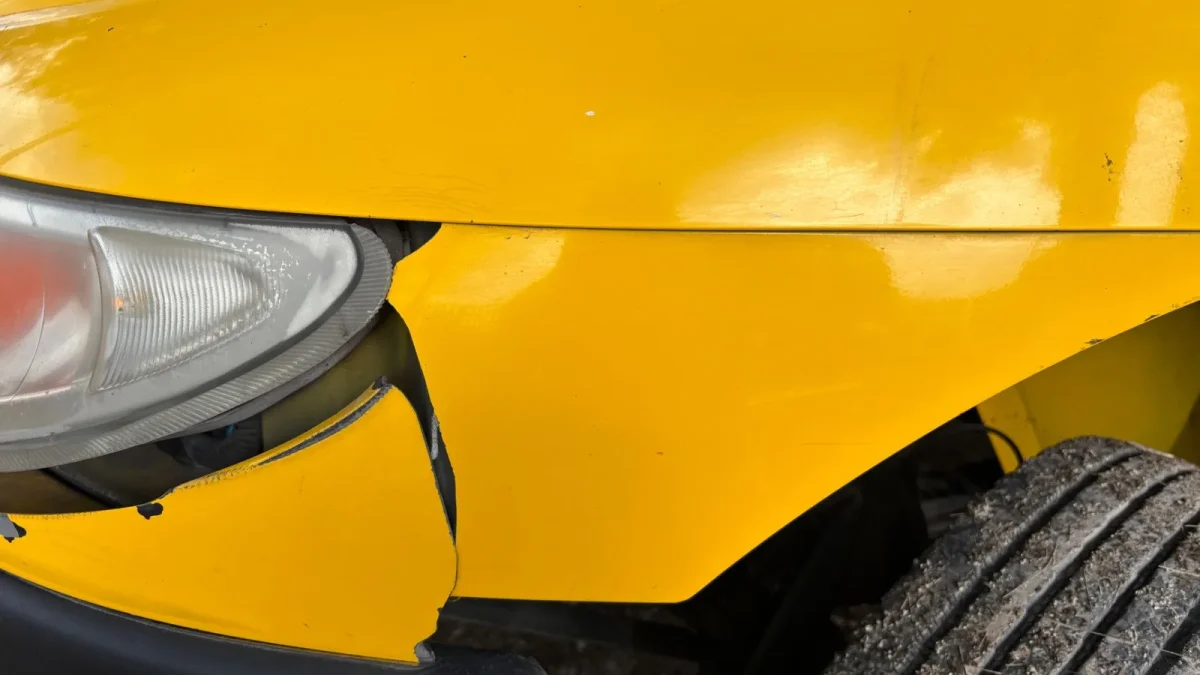
The call came in from a body shop, not the customer. They had finished a clean front bumper repair on a 2021 Toyota RAV4, a tap in a parking lot that cracked the fascia and nothing more. Beautiful paint match, everything reassembled. But the owner picked it up, drove off, and within a mile the Dynamic Radar Cruise had quit and a warning was glowing on the dash.
The body shop swore they never touched anything electrical. And technically they were right. They did not cut a single wire. Yet the radar behind that bumper was now aimed wrong, and the car knew it.
This is the case I use to explain why adaptive cruise after bumper repair so often needs a calibration that nobody quoted, and why a repaint or a slightly bent bracket is enough to trigger it.
Key takeaways
- The radar for adaptive cruise usually sits behind the front bumper, so any repair, removal, or repaint in that area can shift its aim.
- Even without touching the radar directly, a bent bracket, a thick coat of paint, or a slightly misaligned bumper cover can throw off the signal.
- Radar recalibration after body work commonly runs $150 to $350 and is separate from the paint and bodywork bill.
- Ask the body shop up front whether ADAS radar aiming is included, because it is easy to overlook in a collision estimate.
Where the radar hides and why body work disturbs it
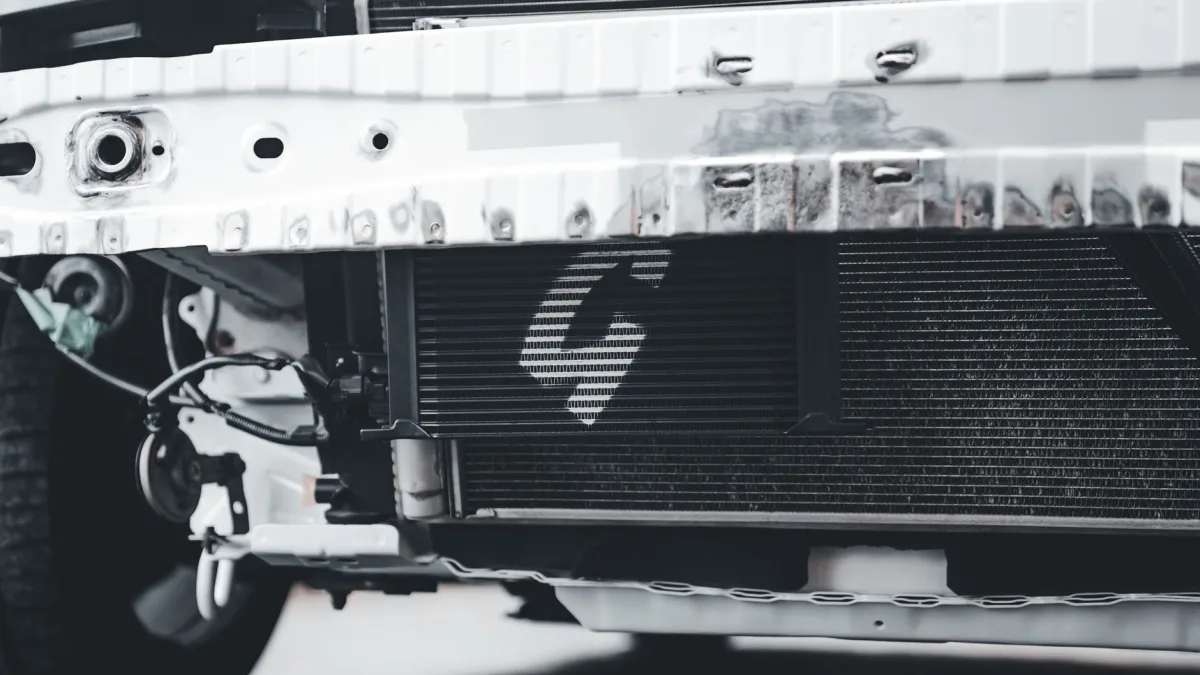
On most radar-based systems, the sensor is a small square unit mounted low and center behind the bumper cover, often behind the emblem or down near the lower grille. It fires a signal straight ahead and reads what bounces back.
Its aim has to be dead-on. A radar pointed even a couple of degrees off center will misread where the car ahead actually is, so the system either shuts down or, worse, tracks the wrong lane.
When a body shop repairs a bumper, they remove the cover, and often the bracket the radar bolts to gets disturbed. Reassemble it a hair off, and the radar’s aim shifts with it.
Good to know
Radar aim is measured against the car’s centerline and thrust angle, not just the bumper. That is why even a straightened bracket that looks perfect to the eye can still be out of spec by an amount the radar cannot tolerate.
The three ways bumper work kills adaptive cruise
Not every repair fails the same way. In the bay I sort these into three buckets, and knowing which one you have points at the fix.
1. A shifted or bent radar bracket
This is the RAV4 case. The bracket that holds the radar got tweaked during the repair, so the sensor now points slightly off. The car detects the mismatch and disables Dynamic Radar Cruise. The fix is a radar aiming procedure, not a new part.
2. Paint or filler over the sensor path
Radar can see through a plastic bumper cover, but it does not love thick paint, body filler, or metallic flake in its direct path. A heavy repaint over the sensor area, or filler used to smooth a repair right in front of the radar, can weaken the signal enough to trip a fault.
3. A misaligned bumper cover
Sometimes the radar is fine but the whole bumper cover sits slightly proud or low after reassembly. That shifts the plastic in front of the sensor and changes what the radar sees, causing intermittent dropouts even though nothing is technically broken.
Watch out
Metallic and pearl paints are the sneaky ones. The metal flake in the pigment can interfere with the radar signal if applied heavily over the sensor zone. A shop that repaints the bumper without knowing this can leave you with cruise that drops out for no visible reason.
What the RAV4 fix actually took
Getting that Toyota’s DRCC back was a defined radar aiming procedure. It is not something you adjust by feel; it needs the right equipment and a level floor.
- Confirm the car sits level with correct tire pressures and no load in the trunk
- Establish the vehicle centerline and thrust angle as the reference
- Place the radar calibration reflector or target at the specified distance and height
- Run the guided radar aiming routine with a factory-capable scan tool
- Adjust the radar bracket or aim until it reads within spec
- Clear fault codes and road test to confirm cruise tracks correctly
Start to finish it ran about 90 minutes and cost the shop a little over $200 in sublet calibration, which they had not built into the original estimate. That is exactly the surprise this article exists to prevent.
Radar aiming versus camera calibration
People mix these up, so it helps to separate them. Bumper work disturbs the radar. Windshield work disturbs the camera. Different sensor, different procedure, though the principle of getting the aim exact is the same.
| Trigger | Sensor affected | Procedure needed |
|---|---|---|
| Front bumper repair or repaint | Front radar | Radar aiming |
| Windshield replacement | Forward camera | Camera calibration |
| Front-end collision | Often both | Radar aiming and camera calibration |
If your repair was a bigger front-end hit that also disturbed the glass or the mirror area, you may need both. Our companion piece on adaptive cruise after windshield replacement covers the camera side of that equation in detail.
How to spot a shop that gets it
The best defense is asking the right question before the work starts. A collision shop that handles modern cars will already know your RAV4, Rogue, or CR-V needs radar aiming after bumper work.
A repaint that looks flawless can still leave your radar blind. The paint is only half the job on a car with driver assist; the other half is getting the sensor to agree with the new bumper.
Ask whether ADAS radar calibration is included in the estimate and how they perform it. A shop that answers confidently, and lists it as a line item, is one that will hand you back a working car. A shop that waves it off is one that may send you home to a dead system.
Tip
If your collision repair is going through insurance, ADAS calibration is a legitimate, documentable part of restoring the car to pre-loss condition. Make sure the shop includes radar aiming on the supplement so it is covered, rather than paying out of pocket weeks later when you notice cruise is gone.
If your cruise is already acting up after paint
Say you already got the bumper done and now adaptive cruise is dead or dropping out. Before you assume a big repair bill, rule out the simple stuff first.
Check that the bumper cover sits flush and even, with no gaps or a cover that hangs low. Make sure no wet paint, tape, or protective film is still stuck over the sensor area. Sometimes a leftover shipping film or a poorly seated cover is the whole problem.
If it drops out intermittently rather than staying fully dead, the pattern matters. Our guide to adaptive cruise dropping out while driving helps you tell a calibration issue from a normal condition-based dropout. And Toyota owners chasing a DRCC quirk specifically will find more in our Toyota radar cruise DRCC problems and fixes guide.
The takeaway from the RAV4
That customer got a perfect bumper and a working radar in the end, but only after an unplanned second visit and an unbudgeted calibration. The whole thing would have been a single line on the estimate if anyone had asked the question up front.
Bumper repairs on a car with adaptive cruise are a two-part job: fix the body, then aim the radar. Treat them as one task and you avoid driving off with a dash full of warnings.
For the full picture of how radar and camera systems work together across every automaker, start with the complete adaptive cruise control guide. And for an independent, plain-language look at what these driver-assist features do and their limits, MyCarDoesWhat is a genuinely helpful reference.
Questions drivers ask
The radar sensor sits behind the front bumper, so removing or repairing the cover can shift the sensor's aim or bend its bracket. The car detects the mismatch and disables adaptive cruise until the radar is recalibrated and aimed to spec.
Yes. A heavy repaint, body filler, or metallic and pearl paint in the radar's direct path can weaken the signal enough to trip a fault. The metal flake in metallic paint is especially prone to interfering with the radar.
Radar recalibration after body work commonly runs $150 to $350 and is separate from the paint and bodywork bill. If the repair is a collision claim, it is a legitimate insurance line item, so ask the shop to include it.
Possibly. If the paint was applied heavily over the sensor zone, or the cover was removed to paint it, the radar may need re-aiming. Ask the shop whether the sensor area was disturbed and whether calibration is included.
First check that the bumper cover sits flush and no tape, film, or wet paint covers the sensor. If cruise drops out intermittently rather than staying fully dead, compare it against normal condition-based dropouts before assuming a calibration fault.