A woman brought in a 2020 Subaru Outback last winter, genuinely rattled. She had a rock chip spider across her windshield, got the glass replaced at a quick-service shop over lunch, and by the drive home her EyeSight adaptive cruise had gone completely dark. The dash lit up like a Christmas tree, and the shop that did the glass shrugged and told her to see the dealer.
She thought the new windshield was defective. It was not. The glass was fine. What nobody told her was that her camera-based cruise system needs to be recalibrated any time that windshield comes out.
Her case is worth walking through in detail, because it is the single most common way I see adaptive cruise after windshield replacement go sideways, and it is almost always avoidable.
Key takeaways
- Camera-based adaptive cruise systems mount the camera to the windshield, so replacing the glass moves the camera and requires recalibration.
- Skipping calibration can leave your cruise disabled, or worse, working but misjudging distance to the car ahead.
- Subaru EyeSight, Toyota, Honda, and most camera-assisted systems all need this, and the calibration usually runs $150 to $400 on top of the glass.
- Always confirm the glass shop includes ADAS camera calibration before you book, not after the car is torn apart.
Why the windshield matters so much
On a camera-based system, the forward camera lives at the top center of the windshield, right behind the rearview mirror. It looks through the glass to read lane lines, spot the vehicle ahead, and judge distance. Its aim has to be exact, down to a fraction of a degree.
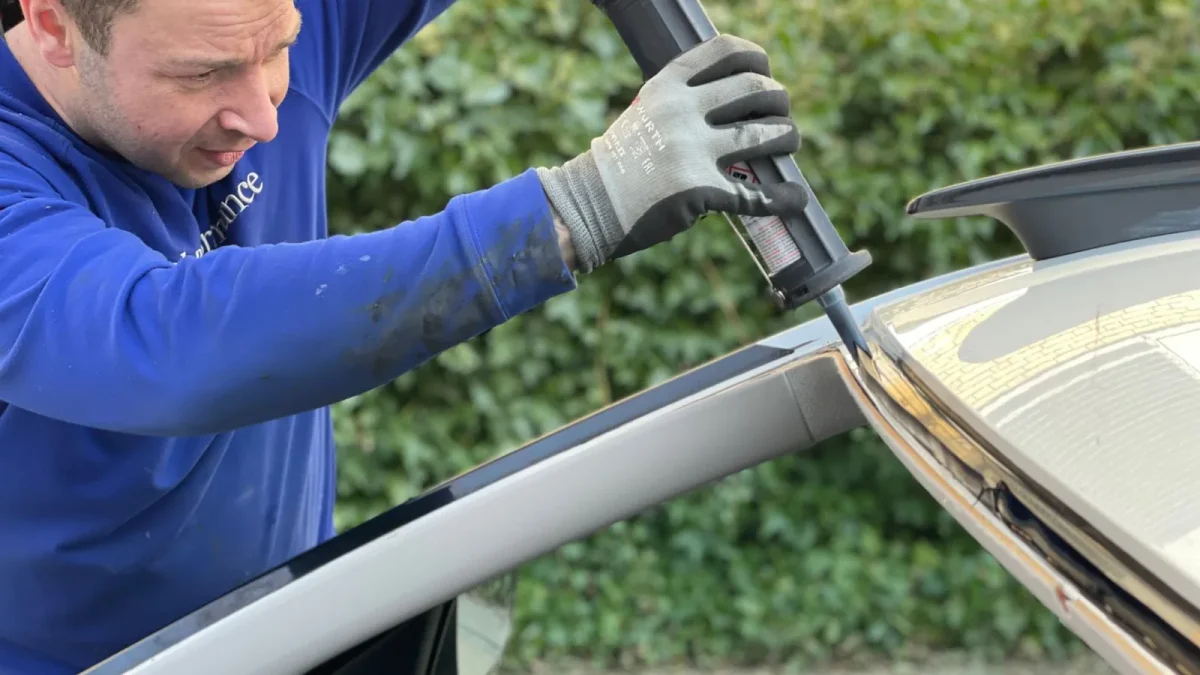
When a shop removes the old windshield and sets a new one, the camera comes off its mount and goes back on. Even a perfect reinstall shifts the camera’s angle slightly, because the new glass sits a hair differently and the camera bracket never lands in precisely the same spot.
A camera aimed even a degree off will misjudge how far away the car ahead is. That is why the system refuses to trust itself and shuts down until it is recalibrated.
Good to know
Subaru EyeSight is the poster child here because it uses no bumper radar at all. Two windshield-mounted cameras do everything, so a glass swap hits it harder than a radar-plus-camera system where the radar keeps working.
What went wrong in the Outback case
Back to my customer. The quick-service glass shop did solid work on the glass itself, but they were not set up to calibrate EyeSight. They popped the cameras off, set the new windshield, clicked the cameras back on, and handed her the keys.
The moment she started the car, EyeSight saw two cameras that no longer agreed with each other and disabled the whole suite. Adaptive cruise, lane keep, pre-collision braking, all of it went offline with warning lights.
Nothing was broken. The system was doing exactly the right thing by refusing to operate on cameras it could not trust.
The fix, step by step
Bringing EyeSight back is a defined procedure, and it is not something you can eyeball. Here is what a proper calibration involves.
- Confirm the new glass is the correct OEM-spec type with the right camera bracket and clarity
- Set the car on a level floor at the correct ride height, tires properly inflated
- Place calibration targets at manufacturer-specified distances and heights in front of the car
- Run the guided calibration routine with a factory-capable scan tool
- Verify the system passes and clear any stored fault codes
- Road test to confirm adaptive cruise engages and tracks correctly
For the Outback, that took about an hour and ran her a little over $250 on top of the glass. Had the original shop included it, she would never have driven home to a dead system in the first place.
Static versus dynamic calibration
Not every car calibrates the same way, and the method affects both time and cost. There are two broad types, and some vehicles need both.
| Type | How it works | Typical time |
|---|---|---|
| Static | Targets set at fixed distances in a shop bay | 45 to 90 minutes |
| Dynamic | Drive on marked roads at set speeds while the system self-aligns | 20 to 45 minutes |
| Combined | Static setup followed by a validation drive | 60 to 120 minutes |
Subaru EyeSight leans static, done in the bay with targets. Some Toyota and Honda cameras use a dynamic drive. Knowing which your car needs tells you whether the shop needs a proper calibration bay or just a clear stretch of road.
Watch out
The most dangerous outcome is not a system that shuts off. It is a system that comes back on but was never properly calibrated. A camera aimed slightly wrong may still let cruise engage while misjudging the gap to the car ahead, braking late or unnecessarily. Always verify calibration was actually performed and passed.
Why some cars survive a glass swap and others don’t
If your neighbor got a new windshield and their cruise was fine, but yours died, the difference is where the sensors live. A pure radar system with the radar in the bumper does not care about the glass at all, so ACC keeps working.
A camera-based or camera-assisted system does care, because the camera is bonded to the windshield’s world. Most modern cars use a camera for at least lane centering, even when radar handles the distance, so a growing share of vehicles need calibration after glass.
The rule of thumb is simple: if there is a camera behind your rearview mirror, assume a windshield replacement means a recalibration, and confirm it in writing before the old glass comes out.
This is the twin of what happens after front-end body work. When a bumper or its radar bracket gets disturbed, the radar needs aiming just as the camera needs it here. Our guide to adaptive cruise after bumper repair or paint covers that other half of the calibration story.
Getting it right the first time
The whole headache is preventable with one question at booking. Before you schedule glass work on any car with driver assist, ask the shop directly whether ADAS camera calibration is included and how they perform it.
A shop that knows what it is doing will answer without hesitation, tell you static or dynamic, and quote the calibration as a line item. A shop that gets vague or says it “usually is not needed” is a red flag on a camera-based car.
Tip
Insurance often covers ADAS calibration as part of a glass claim, but only if it is documented. Get the calibration written on the estimate and invoice. If the glass shop cannot calibrate, have them coordinate with a dealer or ADAS specialist before the job, not after your dash lights up.
What to do if your cruise is already dark
If you are reading this after the fact, with a fresh windshield and dead adaptive cruise, the path forward is straightforward. You need a calibration, full stop.
Go back to the glass shop first. If they cannot calibrate, a dealer or an independent ADAS specialist can. Bring the glass invoice so the calibration ties to the same event, which helps if insurance is involved.
Before you assume the worst, though, rule out the simple stuff, because a dirty camera or a stored fault can mimic a calibration problem. Our broader walkthrough on adaptive cruise control not working helps you separate a true calibration need from a temporary blockage. And if you drive a Subaru specifically, the EyeSight adaptive cruise troubleshooting guide digs into the quirks of that camera-only setup.
The lesson from the Outback
My customer left with a working system and a good story, but she paid twice: once for the calibration she should have bundled, and once in the stress of driving home to a car that seemed broken. None of it was necessary.
Camera-based adaptive cruise is a genuinely great feature, and it holds its accuracy for years, right up until the glass it lives behind gets swapped. Treat a windshield replacement as a two-part job, glass plus calibration, and you skip the whole ordeal.
For the full picture of how radar and camera systems work together across every brand, the complete adaptive cruise control guide is the place to start. And for an independent look at how these driver-assist systems are validated, the IIHS overview of advanced driver assistance is a solid, neutral read.
Questions drivers ask
On camera-based systems it usually does, because the forward camera mounts to the windshield and gets disturbed when the glass is swapped. The system disables itself until the camera is recalibrated to the new glass position.
Calibration typically runs $150 to $400 on top of the windshield cost, depending on whether the car needs a static or dynamic procedure. Insurance often covers it as part of a glass claim if it is documented on the invoice.
Yes, the car drives normally without it since adaptive cruise is a convenience feature. The real risk is a system that comes back on without proper calibration and misjudges the distance to the car ahead.
It comes down to where the sensors live. A pure bumper-radar system is unaffected by glass, while a camera-based system like Subaru EyeSight relies entirely on windshield cameras and needs recalibration.
Either can, as long as they have the proper targets and a factory-capable scan tool. Ask before booking whether calibration is included; if the glass shop cannot do it, have them coordinate with a dealer or ADAS specialist for the same visit.