The first time a customer rolled into my bay swearing their Subaru’s cruise control was broken, I asked one question before touching a tool: “Was the sun low and in your face when it happened?” They stared at me like I’d read their mind. That is the tell with EyeSight. It is not radar. It is a pair of cameras, and cameras have eyes that can be blinded just like yours.
Subaru’s EyeSight system reads the road with two color cameras mounted up near the rearview mirror, tucked behind the top of the windshield. Those stereo cameras judge distance the way your own two eyes do, by comparing slightly different views. It is clever and cheap to build, but it comes with quirks that radar-based systems never have.
Key takeaways
- EyeSight uses two windshield cameras, not radar, so glare, dirt, and fog affect it far more than other brands.
- Most “EyeSight cruise not working” messages clear on their own once conditions improve or you clean the glass.
- A windshield replacement almost always requires a professional recalibration or EyeSight stays disabled.
- Persistent faults with a clean, clear windshield point to a real issue worth scanning at a Subaru service bay.
Why does my Subaru say EyeSight is disabled?
Nine times out of ten, the answer is light or dirt. Because EyeSight looks through the glass, anything that blinds the cameras shuts the whole system down as a safety measure.
The dash will typically flash a message like “EyeSight disabled” or “Pre-Collision braking system deactivated,” and the little green icons for adaptive cruise and lane centering go dark. That is the car telling you it cannot trust its eyes right now.
The usual culprits
- Low sun shining directly into the camera lenses at sunrise or sunset
- A dirty or streaky windshield in the camera’s sightline
- Heavy rain, dense fog, or snow that obscures the road ahead
- Condensation or frost on the inside of the glass on a cold morning
- A dash-mounted object or reflection bouncing light back at the cameras
Tip
Keep the small patch of windshield directly in front of the EyeSight cameras spotless. A microfiber cloth and glass cleaner on that zone, inside and out, resolves more “EyeSight cruise not working” complaints than any other single fix.
Why does sun glare shut EyeSight off when radar cars keep working?
This is the question I get most, usually from someone who traded a Toyota with radar cruise for a Subaru. Radar does not care about light. It bounces a radio wave off the car ahead and measures the echo, so a blinding sunset means nothing to it.
EyeSight sees the way you do. Point your own eyes at a low winter sun and you cannot judge the distance to the car ahead either. The system knows that, so rather than guess badly, it steps back and hands control to you.
A camera that cannot see clearly is more dangerous than no camera at all, so Subaru chose to disable rather than risk a bad reading.
If you want the deeper comparison of how camera systems and radar systems stack up in poor conditions, our breakdown of adaptive cruise in fog and rain walks through exactly where each technology struggles.
My windshield is clean and it still will not work. Now what?
Once you have ruled out glare, dirt, and weather, you move into the mechanical and electrical causes. These are less common but very real, and I see them weekly.
Recent windshield replacement
This is the big one. If your glass was swapped and EyeSight has not worked since, the cameras almost certainly need recalibration. The stereo pair must be aimed with laboratory precision, and even a millimeter off throws the distance math out.
Subaru requires a specific calibration procedure after glass work, and a general auto-glass shop may not perform it. We cover this exact trap in our guide to adaptive cruise after a windshield replacement, and it is worth reading before you pay for a diagnosis you do not need.
Watch out
Some aftermarket windshields use glass with a slightly different optical quality or the wrong bracket, and EyeSight will refuse to calibrate on them. If your installer used non-Subaru glass, that alone can be the reason the system is dead.
A blown fuse or dead 12-volt battery
EyeSight is fussy about voltage. A weak or failing 12-volt battery, or a low charge after the car sat for weeks, can throw temporary EyeSight faults that clear the moment the battery is healthy again. If you jump-started the car recently, drive it 20 to 30 minutes to let the battery recover before assuming the worst.
Is EyeSight cruise different from regular Subaru cruise control?
Yes, and this trips people up. Older Subarus and the base trims of some models still have plain cruise control that only holds a set speed. EyeSight adds the adaptive part, meaning it also watches the car ahead and adjusts your speed to keep a gap.
If your standard cruise works fine but the adaptive following feature does not, the fault is almost always in the camera side of the system, not the cruise switch on your steering wheel. That narrows the hunt considerably.
Good to know
EyeSight has appeared on most Subaru models from roughly 2013 onward, with major camera upgrades in 2015 and again around 2020. Newer versions handle glare and low light noticeably better, though none of them are immune.
What about the “EyeSight temporarily disabled due to high temperature” message?
Park a dark-dashed Subaru in full August sun and the cabin behind the windshield can hit 150 degrees. The cameras have a thermal limit, and when they overheat they shut down to protect themselves.
The fix is simple: run the air conditioning, aim a vent toward the base of the windshield, and give it 10 to 15 minutes. Once the camera housing cools, EyeSight comes back on its own with no scan tool required.
When should I stop troubleshooting and see a technician?
Call it a day on the home fixes if the system stays dark with a clean windshield, good weather, a healthy battery, and no recent glass work. At that point you are likely looking at a camera fault, a wiring issue, or a stored trouble code that needs a Subaru-capable scanner.
If your adaptive cruise cuts out mid-drive rather than refusing to turn on, that is a slightly different pattern. Our article on adaptive cruise dropping out while driving covers those intermittent gremlins, which often trace back to a specific stretch of road or lighting.
For the full picture of how these systems are meant to behave across every brand, the complete guide to adaptive cruise control is the place to start, and it links out to brand-specific pages like this one. You can also read up on how any camera or radar system is supposed to function on the independent explainer at MyCarDoesWhat, which is a solid neutral reference.
A quick real-world example
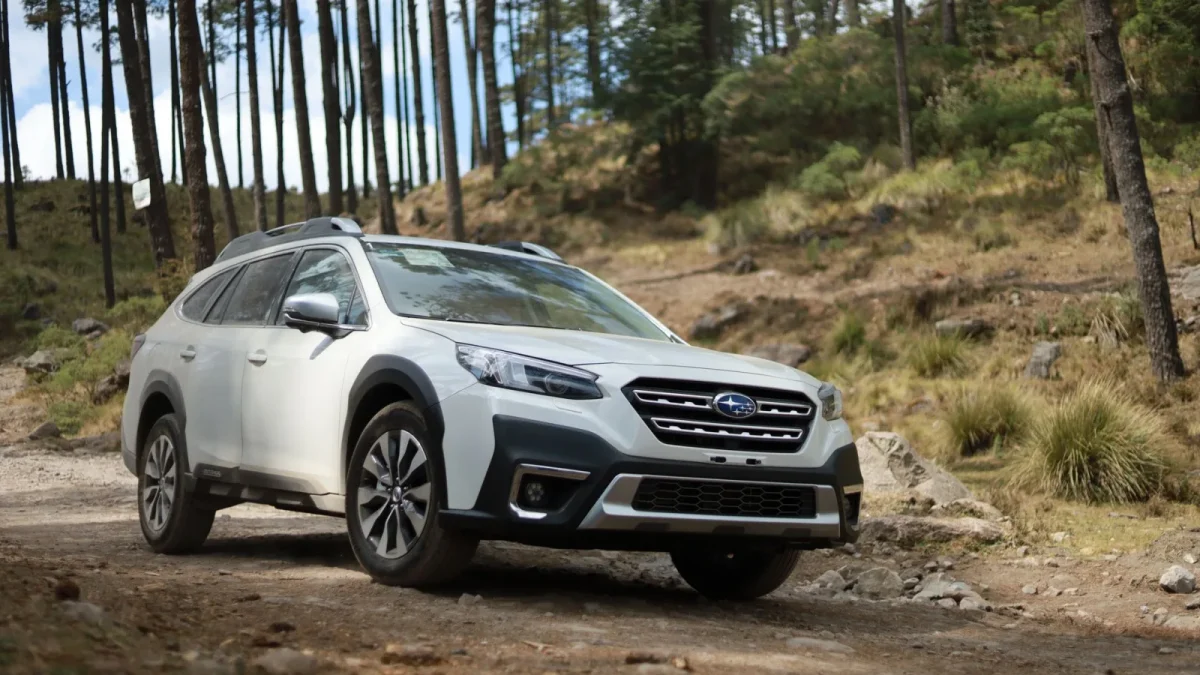
Last spring a regular brought in her 2019 Outback certain the whole EyeSight unit had failed. It only quit on her morning commute, never the drive home. Her commute ran due east, straight into the sunrise, and the glare was blanking the cameras every clear morning. Nothing was broken. A pair of good sunglasses for her and a reminder that the car was behaving exactly as designed, and she left happy without spending a dime.
EyeSight is a strong system once you understand it thinks with its eyes. Treat the windshield like a lens, keep it clean, respect that bright light and thick weather will occasionally send it to sleep, and you will spend far less time worrying that something expensive has gone wrong.
Questions drivers ask
The EyeSight cameras look through the windshield the way your eyes do, so a low sun aimed directly at the lenses blinds them. The system disables itself rather than risk a bad distance reading. It comes back once the sun angle changes or you shade the cameras.
Almost always yes. The two cameras must be aimed with precision, and new glass shifts their view enough to require a full recalibration. A general glass shop may not perform it, so confirm the procedure was done or EyeSight stays disabled.
Yes. EyeSight is sensitive to voltage, and a low or failing 12-volt battery can trigger temporary faults. If you recently jump-started the car, drive it 20 to 30 minutes to let the battery recover before assuming the system failed.
No. Standard cruise only holds a set speed, while EyeSight adds adaptive following that watches the car ahead. If regular cruise works but adaptive following does not, the fault is on the camera side, not the cruise switch.
The cameras overheat when the car bakes in direct sun, so they shut down to protect themselves. Run the air conditioning with a vent aimed at the windshield base for 10 to 15 minutes and EyeSight restarts on its own.