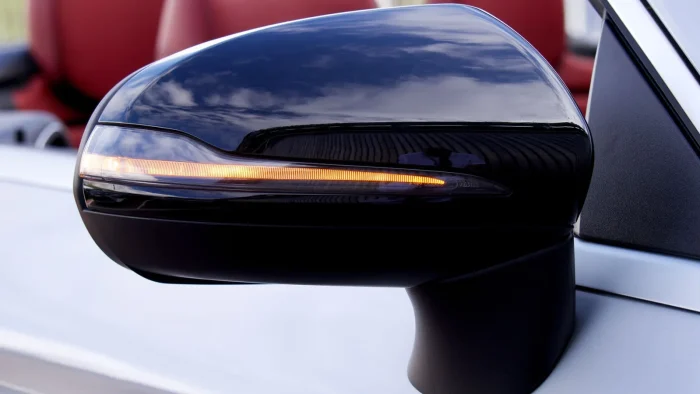
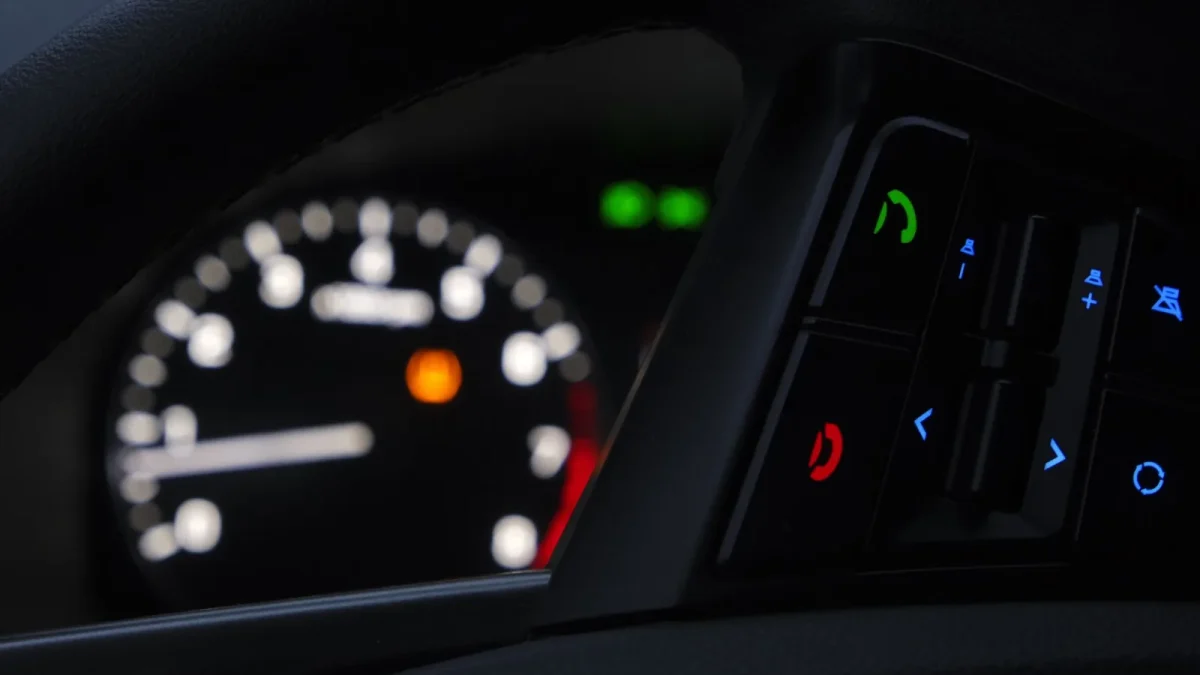
You are cruising down the interstate in your Tucson or Sportage, you flick the turn signal to move over, and suddenly the whole cabin lights up: an amber icon flashes in the side mirror, the seat or wheel buzzes, and a chime nags at you. Or maybe you never signaled at all and a message reading “Check blind spot safety system” just parked itself on your dash. Either way, you want to know what this thing is trying to tell you.
Hyundai and Kia call their version BCW, short for Blind-Spot Collision Warning. It is one of the more talkative blind spot systems on the road, and that extra chatter confuses a lot of owners who are used to a quiet mirror light and nothing more.
I have walked plenty of Hyundai and Kia drivers through this at the counter. Let me answer the questions in the order they actually come up.
Key takeaways
- The amber icon in your side mirror lighting up as a car sits beside you is BCW working correctly, not a fault.
- Hyundai and Kia layer a haptic buzz and a chime on top of the mirror light when you signal toward an occupied lane, which is the safety escalation working as designed.
- The dash message “Check blind spot safety system” almost always points to a blocked or iced rear bumper radar, not a broken part.
- BCW and BCA are related but different: warning only alerts you, while assist can nudge the brakes.
- A rear bumper repair, road salt film, or a hitch accessory are the three most common reasons the message stays lit.
What does the Hyundai and Kia BCW light actually mean?
Here is where the confusion usually starts, because the same amber symbol does two different jobs depending on when it appears.
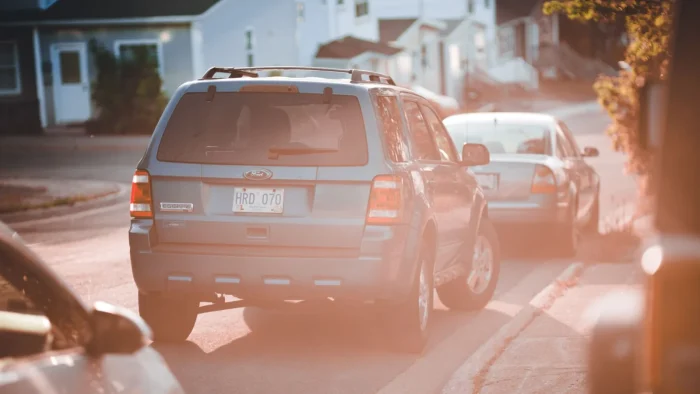
When the icon lights up only as a vehicle enters or occupies the lane beside you, that is the system doing its job. It saw a car in your blind spot and it is telling you the lane is not clear. Nothing is wrong.
When that same icon glows steadily, or a text warning shows up at startup, the system is telling you it is either switched off or cannot see. Same little symbol, opposite meaning, and neither Hyundai nor Kia makes that difference obvious in the owner’s manual.
Good to know
BCW is a radar system, not a camera. Two small radar units sit behind the rear bumper corners, one on each side. That is why the sensors live where you cannot see them, and why a low-speed parking tap back there can knock the whole thing offline.
If you want the full picture of how these radar units read the lane beside you, our explainer on how blind spot monitoring works behind the bumper lays it out in plain terms.
Why does my car buzz and chime, not just flash?
This is the part that startles new owners. Most blind spot systems give you a silent mirror light and leave it at that. Hyundai and Kia escalate.
The mirror light comes on first when a car is beside you. If you then flick the turn signal toward that occupied lane, the system decides you might actually change lanes into the other car, so it ramps up the warning. You get a flashing icon, an audible chime, and on many trims a haptic buzz through the steering wheel or the seat bolster.
That layered response is deliberate. The quiet light is a heads-up. The buzz and chime are a “no, really, do not move over right now” alert.
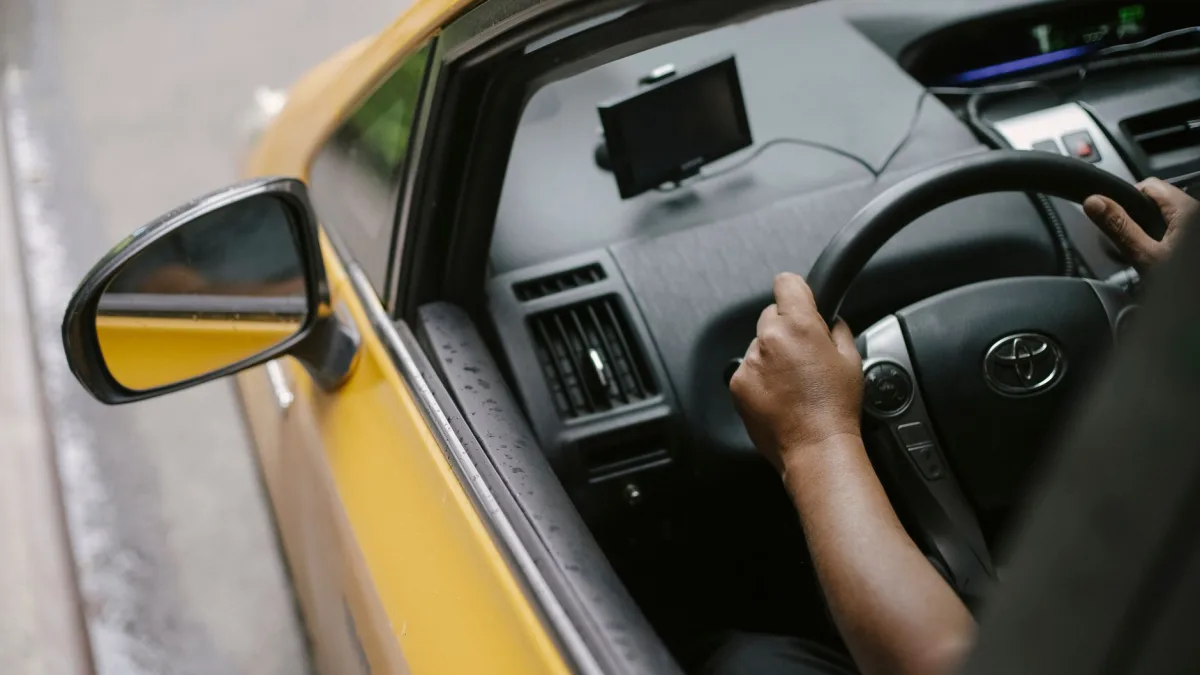
I had a new Palisade owner convinced the steering wheel vibration was a mechanical problem with the column. It was BCW doing exactly what it was built to do, buzzing him off a lane change into a car he had not seen. Once he understood the buzz was the feature, not a fault, he actually liked it.
What is the difference between BCW and BCA?
Owners mix these two up constantly, and the letters do not help. Hyundai and Kia use both.
BCW is Blind-Spot Collision Warning. It alerts you: light, chime, buzz. It does not touch the controls. BCA is Blind-Spot Collision-Avoidance Assist, and it goes a step further by applying gentle braking on one side to help steer you back if you start drifting toward a vehicle in your blind spot.
| System | What it does | Does it act on the car? |
|---|---|---|
| BCW | Warns with light, chime, and buzz | No, alerts only |
| BCA | Adds corrective braking assist | Yes, can brake one side |
Not every trim gets BCA. If your car only warns and never intervenes, you likely have BCW alone, and that is perfectly normal for many base and mid trims. Both features lean on the same rear bumper radar, so a blocked sensor takes them both down together.
Why does my dash say “Check blind spot safety system”?
This is the message that sends people straight to the search bar. Nine times out of ten it is not a broken part.
The rear bumper radar needs a clear line of sight through the plastic. Cake that area with ice, packed snow, road salt film, or mud, and the radar loses confidence and shuts itself down. The car would rather disable the feature than hand you a false read.
Before you assume the worst, walk to the back of the car and look at both rear bumper corners. Clean them gently. If you want the right technique so you do not scratch the sensor covers, our guide on cleaning blind spot sensors the right way covers it, and the broader list of what blocks blind spot sensors is worth a skim.
Watch out
Do not blast the rear bumper corners with a pressure washer at close range. I have seen high-pressure water force moisture into a radar housing and create an intermittent fault that is far more aggravating than the dirt you were trying to clear. Warm water and a soft cloth is all it takes.
If the warning message will not clear even after cleaning, our cross-brand breakdown of the blind spot system unavailable message walks through what comes next.
Why does the BCW light stay on all the time?
A mirror icon that glows steadily, even with no car beside you, is a different problem from the normal flash. Something is telling the system it cannot trust itself.
The usual suspects are a dirty or damaged rear sensor, a recent battery disconnect that reset the system to a fault state, or a bumper repair that knocked the radar out of alignment. Our dedicated piece on when the blind spot light stays on ranks those causes in order.
The mirror light is not a warning that something is wrong with your car. It is a warning that something is sitting where you are about to steer.
Does a bike rack or trailer trip the BCW warning?
Yes, and this one catches people off guard. A hitch-mounted bike rack, a trailer, or even a heavy cargo carrier can sit right inside the rear radar’s field of view.
The system sees a large object glued behind you, cannot tell it apart from a real hazard, and either floods you with false alerts or shuts down with a warning message. That is normal behavior, not a defect. Our guide on the blind spot monitor turning off after a trailer or bike rack explains how to handle it without chasing a phantom fault.
Why does BCW act up in winter?
Cold, slushy months are peak season for the “check” message on Hyundai and Kia models, and the reason is simple: snow, slush, and salt spray collect exactly where the radar lives.
A single morning of highway driving through wet snow can build a solid film over both rear corners in under an hour. The system goes quiet, the message appears, and it clears once you wipe the area or the crud melts off. If your car only misbehaves when it is cold and wet, read our seasonal breakdown of blind spot monitoring failing in snow and ice before booking a service visit.
Tip
Make wiping the two rear bumper corners part of your winter routine, the same way you clear the backup camera. A ten second swipe with a glove keeps BCW alive on the exact days you most want it watching your flank.
When should the BCW warning actually worry you?
After cleaning the sensors, confirming the feature is switched on in the settings menu, and ruling out a trailer or weather, if the message still refuses to clear, then it is time for a scan.
A genuine fault, a mis-aimed radar after rear body work, or wiring damage from a parking-lot tap all leave a stored trouble code. A technician can pull that in well under an hour and tell you whether it needs a recalibration or a part. Recalibrations after a rear bumper repair often run in the $150 to $400 range depending on the shop and model.
For the master overview that ties every one of these symptoms together, start with our pillar on blind spot monitoring warning lights explained. And if you want an independent look at how much these systems actually help, the crash-test folks at the IIHS track blind spot warning research without any sales pitch. In my experience, the Hyundai and Kia BCW system is honest. Give it a clean line of sight and the right settings, and it goes right back to buzzing you out of trouble.
Questions drivers ask
BCW is Blind-Spot Collision Warning. It alerts you with a mirror light, a chime, and often a haptic buzz when a vehicle sits in your blind spot. It only warns you and does not touch the controls, unlike BCA which can apply corrective braking.
That buzz is BCW escalating its warning. The mirror light comes on first when a car is beside you, and if you signal toward that occupied lane the system adds a chime and a haptic buzz to stop you changing lanes into the other car. It is the feature working, not a fault.
Nine times out of ten the rear bumper radar is blocked by ice, packed snow, salt film, or mud over the bumper corners. Clean both rear corners gently with warm water and a soft cloth. If the message clears, nothing was broken.
BCW, Blind-Spot Collision Warning, only alerts you with light, chime, and buzz. BCA, Blind-Spot Collision-Avoidance Assist, goes further and can apply gentle braking on one side to help steer you away from a vehicle in your blind spot. Not every trim gets BCA.
Yes. A hitch bike rack, trailer, or cargo carrier sits inside the rear radar field and confuses the system, so it either floods you with alerts or shuts down with a warning message. Remove the accessory and the system usually restores itself.