A woman brought her two-year-old crossover in last winter convinced the radar module had died. Blind spot warning on the dash, mirror lights dead, the works. I walked out to the lot, chipped a fist-sized wedge of frozen slush off the left rear bumper corner with my thumbnail, and told her to start it up. The warning cleared before she buckled her seatbelt.
That is the story with these systems more often than not. The radar itself rarely fails. What fails is the clear path the signal needs, and it gets blocked by things you would never think twice about. So here is my ranked list of what actually kills blind spot monitoring, ordered by how often I see each one roll into the bay.
Key takeaways
- Nine times out of ten, a blind spot fault is a blocked sensor, not a broken part.
- Packed snow and ice over the rear bumper corners is the single most common cause, especially in cold climates.
- The radar only cares about the small patch of bumper directly in front of each sensor, so one clump of grime in the wrong spot is enough.
- Aftermarket bumpers, thick stickers, and towed gear can block the signal even when the bumper looks perfectly clean.
1. Packed snow and ice
This is the runaway champion. When temperatures drop, slush thrown up by your own tires freezes right onto the rear bumper corners, exactly where the radar lives. A layer as thin as a stack of coins can be enough to shut the system down.
The frustrating part is that it looks like nothing. Your whole car can be clean and dry while one hidden pad of ice over the sensor throws a warning. If you drive where winters bite, our seasonal breakdown of blind spot monitoring in snow and ice is worth a read before the first hard freeze.
Tip
Make the two rear bumper corners part of your winter clear-off routine, right alongside the mirrors and taillights. Ten seconds with a gloved hand over each spot prevents most cold-morning blind spot faults.
2. Caked mud and road salt
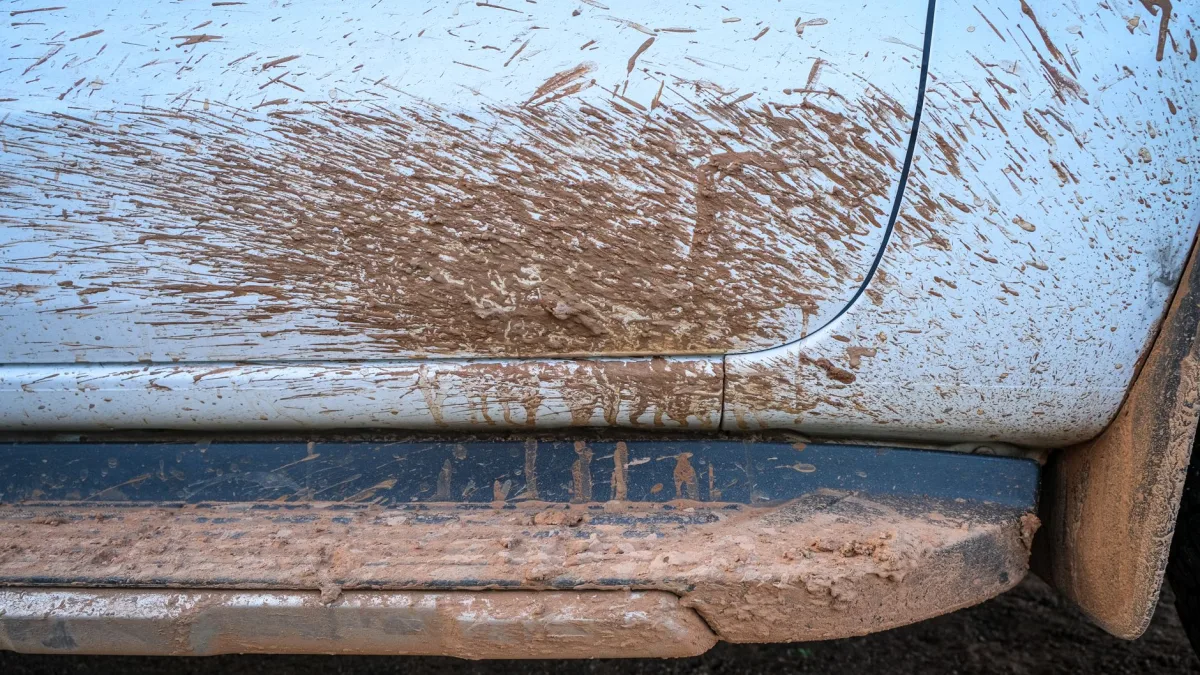
Right behind ice comes plain filth. A muddy back road, a gravel job site, or weeks of winter salt spray leave a crust over the bumper that the radar has to shoot through. Once that crust gets thick enough, the signal scatters and the system flags a fault.
Road salt is especially sneaky because it dries into a chalky film you can barely see against light-colored paint. I have cleared plenty of faults with nothing more than a wet rag and thirty seconds of wiping.
3. A dealer decal, sticker, or license plate frame
Here is one that catches people off guard. A thick bumper sticker, a dealership decal, or a chunky license plate frame placed right over a sensor can absorb enough signal to matter. Most stickers are fine, but the dense vinyl ones with metallic ink are not.
I once traced a stubborn intermittent fault to a “My kid is an honor student” magnet the owner had slapped dead center over the left corner sensor. Peel it off, problem gone.
Good to know
Manufacturers usually mark the sensor zones with a small warning in the owner’s manual telling you to keep that area free of stickers and metallic paint. If you are unsure where yours are, that manual page is the fastest way to find them.
4. An aftermarket bumper or heavy body repair
This is where a clean-looking car still fails. The radar is tuned to shoot through the exact thickness of your factory bumper cover. Swap in an aftermarket unit, pile on thick body filler after a collision, or repaint with a metal-flake product, and you change what the signal has to pass through.
When that happens, the system may need a recalibration or may not work at all until the correct material is restored. If your blind spot light died right after collision work, the repair is almost certainly the reason. Our guide on the blind spot system unavailable message covers how to tell a post-repair fault from a simple blockage.
5. A trailer, bike rack, or hitch cargo carrier
Anything you bolt to the back of the car can sit right inside the radar’s field of view and read as a permanent object in your blind spot. A bike rack loaded with two mountain bikes, a small utility trailer, or a hitch-mounted cargo box will all do it.
Most cars simply disable blind spot monitoring when they detect this, and many will not turn it back on until the obstruction is gone. This is expected behavior, not a fault. Our piece on the blind spot monitor turning off after a trailer or bike rack explains which systems auto-detect towing and which need a manual toggle.
The radar cannot tell the difference between a car parked in your blind spot and your own bike rack sitting in the same space. To the sensor, they look identical.
6. Heavy rain, slush, and dense spray
Radar handles light rain fine, but a downpour is a different animal. Thick sheets of water and the spray kicked up by highway traffic can scatter the signal enough to trip a temporary fault. This one usually clears itself once the weather calms and the bumper dries.
If your system only complains in heavy weather and behaves normally otherwise, that is a good sign the hardware is healthy and the environment is the problem.
7. A stray plastic bag or road debris
Last on the list because it is rare, but it happens. A plastic bag, a wad of wet leaves, or a strip of road tar flung up and stuck to the bumper corner can block a sensor just like anything else. I have pulled a shredded grocery bag off a rear corner more than once.
The fix is obvious once you spot it. The trick is knowing to walk around and look, which brings us to the routine that prevents most of this.
How to keep all of it clear
You do not need tools or chemicals, just a habit. A quick wipe of the two rear bumper corners whenever you clean your car handles the vast majority of these blockages before they ever throw a warning.
- Wipe both rear bumper corners every time you wash the car.
- Brush off snow, ice, and slush from those spots before winter drives.
- Keep stickers, magnets, and thick plate frames off the sensor zones.
- Rinse away mud and road salt after gravel or slushy driving.
- Glance at the corners for stuck bags or debris after highway trips.
Watch out
Skip the pressure washer aimed straight at the bumper corners. High-pressure water can force moisture into the sensor housing over time. A damp cloth and gentle pressure is all the radar ever needs.
For the right cleaning technique in detail, our walkthrough on cleaning blind spot sensors the right way shows exactly where to wipe and what to avoid. And if the light stays lit even after everything is spotless, our symptom guide on the blind spot light that stays on ranks the deeper causes.
When you want the full picture of how these warnings fit together, the pillar guide to blind spot monitoring warning lights ties every icon and message back to the same rear radar. For neutral background on how far these systems have come, the IIHS overview of driver assistance is a solid reference.
Learn where your sensors live, keep those two corners clean, and most of these faults never reach your dashboard. The radar is tougher than people think. It just needs a clear window to see through.
Questions drivers ask
Packed snow and ice over the rear bumper corners, by a wide margin. Slush thrown up by your own tires freezes right where the radar sits, and even a thin layer can shut the system down while the rest of the car looks clean.
A thick vinyl sticker, magnet, or metallic-ink decal placed directly over a sensor can absorb enough signal to matter. Most thin stickers are fine, but manufacturers still recommend keeping the marked sensor zones clear.
The radar is tuned to shoot through the exact thickness of your factory bumper cover. An aftermarket bumper, thick body filler, or metal-flake repaint changes what the signal passes through, which can require recalibration or disable the feature entirely.
Yes. Towed gear sits inside the radar's field of view and reads as a permanent object in your blind spot. Most cars disable the feature when they detect this, and it is normal behavior rather than a fault.
Light rain is no problem, but a heavy downpour and highway spray can scatter the signal enough to trip a temporary fault. It usually clears on its own once the weather calms and the bumper dries.