The first real snow of the season hits, you pull onto the highway, and your dash lights up with a message you have not seen all summer: radar unavailable, or cruise system fault. Nothing is broken. Your car just went partially blind, and it is telling you so.
Winter is hard on adaptive cruise control in ways that catch a lot of drivers off guard. The same sensors that track traffic beautifully in July can get packed with slush, glazed with ice, or caked in road salt within a single trip.
Let me walk you through exactly what happens, why, and the handful of winter habits that keep your system working when you actually want it.
Key takeaways
- Snow, ice, and salt buildup physically block the radar and camera, so the system disables itself for safety.
- A “radar obstructed” message in winter is usually packed slush, not a failed part.
- Clearing the grille and windshield camera before you drive prevents most cold-weather dropouts.
- On slick roads, even a working system has limits, so keep more following distance and be ready to take over.
Why winter blinds your radar
Adaptive cruise leans on a radar unit, usually behind the grille or lower bumper, and often a camera at the top of the windshield. Both need a clear line of sight to do their job.
Radar can punch through light rain and mist. What it cannot handle is a solid plug of wet snow or a sheet of ice sitting directly on the sensor face. That packed material scatters and absorbs the signal, and the system loses its picture of the road ahead.
When that happens, your car does the responsible thing. It disables adaptive cruise and posts a message rather than pretending it can see a car that it cannot.
Good to know
A winter “radar obstructed” or “cruise unavailable” message is almost always a blocked sensor, not a broken one. If you want the full rundown on that specific alert, we cover it in our guide to the cruise unavailable radar obstructed message.
The three winter culprits
Packed snow and slush
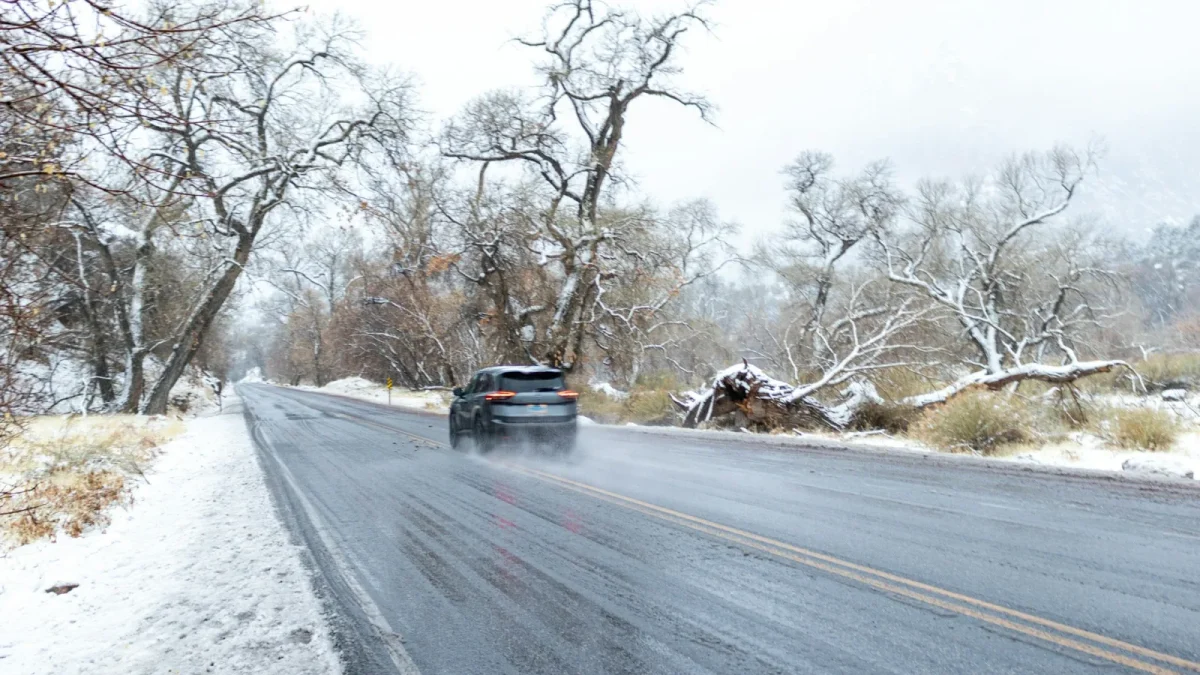
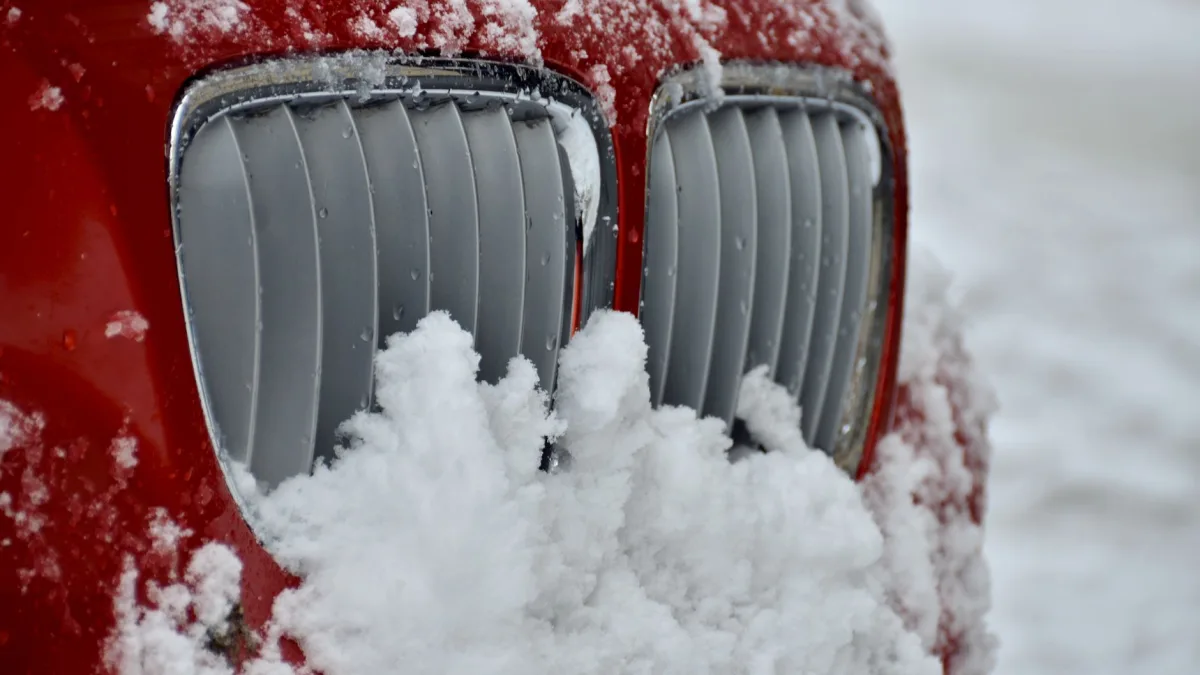
Highway spray in a fresh snow throws a constant mist of slush onto the front of your car. Within twenty minutes that mist can build into a solid crust right over the radar. This is the most common winter cause I see, and it can happen even when the grille looks mostly clear from a few feet away.
Clear ice glaze
Freezing rain or refreeze after a wash leaves a thin, nearly invisible layer of ice over the sensor. You cannot always spot it, but the radar feels it immediately. This one fools people because the car looks clean.
Road salt and grime film
Late in a long winter, the real enemy is the caked layer of salt, sand, and road film that never fully washes off. It builds gradually, so the system may work at 90 percent for weeks and then start dropping out as the film thickens over the sensor and camera.
Watch out
Do not chip ice off the grille or bumper with a metal scraper right over the sensor. The radar unit and its housing scratch and crack easily. Use warm water, a plastic scraper away from the sensor face, or just let the defrost and engine heat do the work.
Winter habits that keep ACC alive
You cannot change the weather, but you can change how you prep and drive. These are the moves that make the difference on the days I would otherwise expect a customer to call.
- Before pulling out, brush snow off the grille and lower bumper, not just the windshield.
- Wipe the windshield camera zone at the top of the glass clean and clear of ice.
- Give the defrost a few minutes so engine and cabin heat can soften any glaze.
- On a long snowy drive, stop and clear the grille when the message first appears.
- Run your washer fluid to keep the camera zone clear if your wipers reach it.
- Keep the front end reasonably washed through salt season.
That first item is the one drivers skip. Everyone clears the windshield. Almost nobody thinks to knock the snow out of the grille, which is exactly where the radar lives.
Tip
Keep a cheap microfiber cloth in the door pocket through winter. Thirty seconds wiping the camera glass and grille face at a gas stop often brings the system right back online for the rest of the trip.
When the system is working but the road is not
Here is a point I make sure every driver understands. Even when your radar is perfectly clear, adaptive cruise on snow and ice has real limits you need to respect.
The system controls the throttle and brakes to hold your gap, but it has no idea the road is slick. It can brake harder than traction allows, and on some vehicles it will accelerate to close a gap on a surface where you would never want to add power.
Your radar can see the car ahead just fine. It cannot see the ice under your tires. That is still your job.
On genuinely slippery roads, I tell people to lengthen their following distance or switch the system off entirely and drive it yourself. If you do run ACC in winter, set the longest gap available and stay ready to override. Our breakdown of following distance settings explains how those gaps translate to real spacing.
Brand behavior in the cold
Systems handle winter differently. Subaru EyeSight is camera-based, so it is especially fussy about a snow-covered or iced windshield and will quit if the camera view is compromised. Its winter quirks are covered in our Subaru EyeSight troubleshooting guide.
Radar-based setups like Toyota DRCC, Honda, and Hyundai and Kia Smart Cruise Control tolerate a dirty windshield better but still choke on a packed grille. If yours throws faults through the cold months, the Hyundai and Kia Smart Cruise Control issues guide and the Toyota DRCC problems writeup are good next stops.
Is something actually wrong?
Most winter dropouts clear the moment the sensor is clean and dry. If clearing the snow and warming the car brings the system back, nothing is wrong with your vehicle.
Be suspicious if the fault sticks around after everything is clean and the weather turns mild, or if it happens on dry winter roads with no buildup at all. That points to a real fault rather than weather, and our guide to adaptive cruise not working helps you sort it out. Rain and fog cause a related but different set of behaviors, which we cover in our piece on adaptive cruise in fog and rain.
For the wider picture of how your system is meant to operate across conditions, the complete adaptive cruise control guide ties it all together. And for a plain-language reminder of what these features can and cannot do in bad weather, the folks at MyCarDoesWhat keep it honest.
Clear the grille, warm the glass, lengthen your gap. Do those three and winter stops being the season your cruise mysteriously quits.
Questions drivers ask
Wet snow, slush, and ice pack onto the radar behind your grille and the camera on your windshield, blocking their view. The car disables adaptive cruise and posts a message rather than operate blind. Clearing the buildup usually restores it right away.
Use it with caution. Even a clean radar cannot sense traction, so the system may brake or accelerate in ways that do not suit a slick surface. Set the longest following gap, stay ready to take over, or switch it off and drive manually on genuinely slippery roads.
Use warm water, a plastic scraper kept away from the sensor face, or let the defrost and engine heat soften the glaze. Never chip at the grille or bumper radar with a metal scraper, since the housing scratches and cracks easily.
Yes. Over a long winter, caked salt, sand, and road film build up over the radar and camera and gradually degrade the signal. The system may work for weeks then start dropping out. Keeping the front end washed through salt season helps.
Almost always. If the message clears once the sensor is clean and dry, nothing is wrong with your car. If the fault sticks around in mild, dry weather, that points to a real problem worth having scanned.