Rain and fog play a sneakier game with adaptive cruise than snow does. Snow blocks the sensor outright and the car tells you. Water is more subtle: your system might work at half strength, hesitate on a car it should have seen, or quietly drop into standby on a highway wall of spray.
Drivers ask me all the time why their cruise gets “lazy” in the rain. The honest answer is that heavy weather degrades what the sensors can perceive, and the smart systems respond by backing off.
Knowing how your car behaves when visibility falls apart is the difference between trusting it appropriately and getting an unpleasant surprise in a downpour.
Key takeaways
- Heavy rain, spray, and fog scatter both radar and camera signals, so the system loses confidence and often reduces or cancels operation.
- Camera-based systems like Subaru EyeSight struggle most in fog because fog defeats optical vision.
- Water on the sensor itself, not just in the air, is a common and fixable cause of poor performance.
- Treat degraded ACC in bad weather as expected, keep more distance, and be ready to drive it yourself.
Radar versus camera in the wet
To understand why your car acts the way it does, you have to know what it is looking with. Most adaptive cruise setups combine a radar unit up front with a camera behind the windshield, but the mix varies by brand.
Radar handles rain reasonably well. It can see through a lot of water in the air that would blind a human. But dense fog and the heavy spray thrown up by trucks still scatter the signal enough to reduce its range and reliability.
Cameras are the weak link in poor visibility. A camera sees roughly what your eyes see, so when fog swallows the road, the camera is just as lost as you are. That matters a lot for camera-first systems.
Good to know
Subaru EyeSight uses stereo cameras and no forward radar, which makes it excellent in clear conditions but genuinely limited in thick fog and heavy rain. If yours acts up in bad weather, that is characteristic, and our Subaru EyeSight troubleshooting guide explains its quirks.
What your car actually does when visibility drops
Adaptive cruise does not just switch off or stay on. In marginal weather it moves through a range of behaviors, and recognizing them helps you respond calmly.
Reduced range and slower reactions
In moderate rain, radar range shrinks. The system may pick up the car ahead later than usual, so it starts braking closer than it would on a dry day. Nothing is wrong, but you should expect less lead time.
Dropping into standby
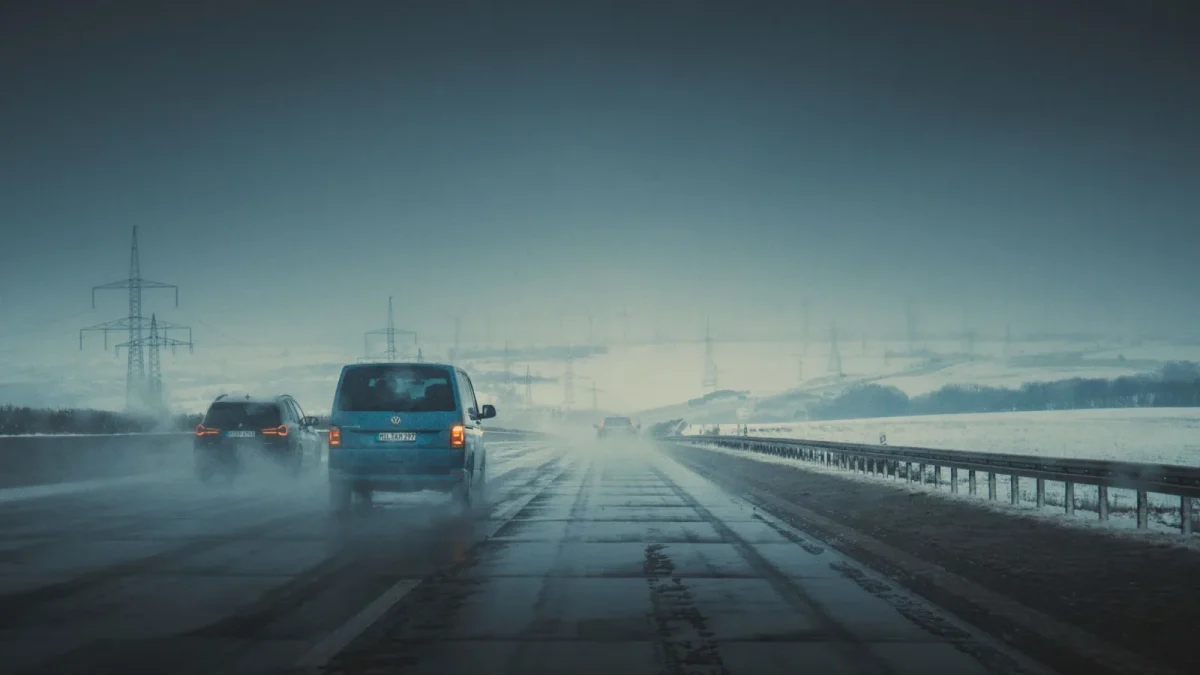
In heavy spray or fog, the system may lose its target and quietly stop holding speed, or fully disengage with a chime. On a highway behind a semi throwing up a wall of water, this is common. If it happens repeatedly on clear road, though, that is a different story, and our guide on adaptive cruise dropping out while driving helps you separate weather from fault.
A weather warning message
Many vehicles post something like “driver assist limited due to weather” or “sensor unavailable.” That message is the car being honest about its own vision. Do not treat it as a defect.
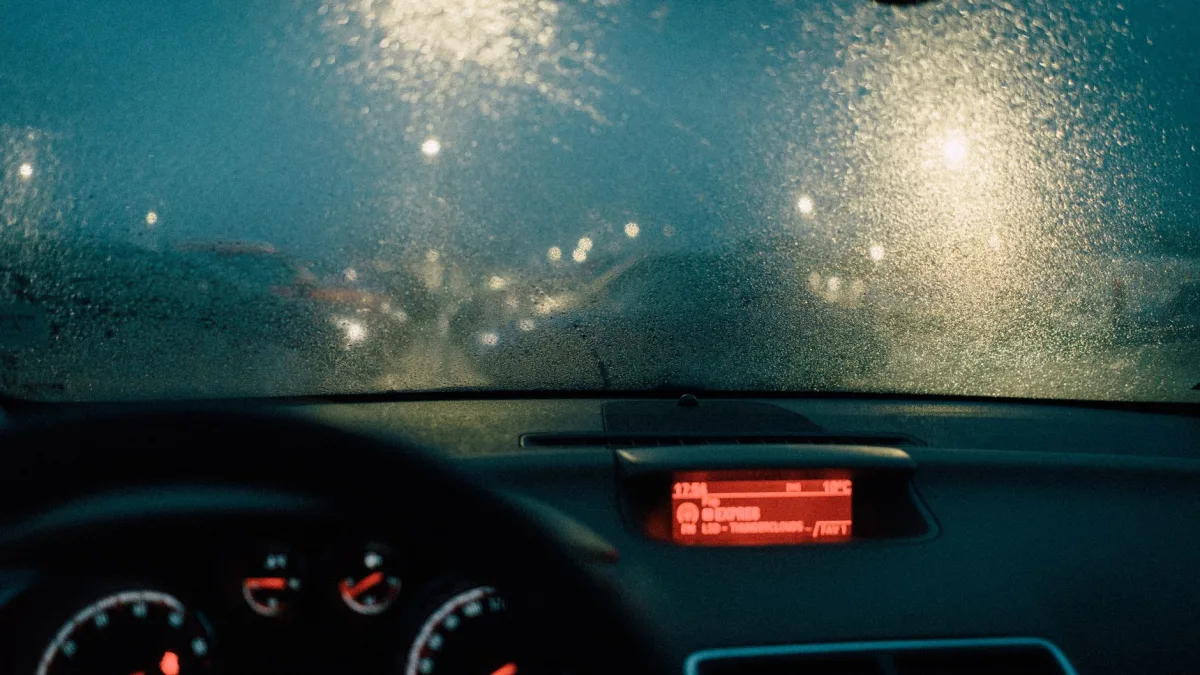
When water on the sensor is the real problem
Here is the part people miss. Sometimes the issue is not the weather in the air but water sitting directly on the sensor or camera.
A droplet-covered windshield right over the camera, or a film of water and road grime on the radar face, degrades performance more than the rain itself. I had a customer convinced his cruise was failing in every storm. His real problem was a wiper that did not quite clear the camera zone, leaving a permanent smear in that exact spot.
Tip
Before you blame the storm, make sure your wipers actually clear the top of the windshield where the camera sits, and that the grille radar face is clean. Fresh wiper blades and good washer fluid fix more rain-related cruise complaints than any software update.
Quick checks in wet-weather trouble
- Are your wiper blades clearing the full windshield, including the camera zone at the top?
- Is the grille or bumper radar face free of caked grime and water film?
- Does the problem happen only in heavy spray and fog, or also in light rain on open road?
- Is there a weather-related message, or a hard system fault?
If it only misbehaves in genuinely bad visibility and clears when the weather does, that is normal. If it acts up in light drizzle on an empty road, look closer at the sensor and glass.
Driving smart when the sensors can’t see
Whatever your car is willing to do in the wet, the rule for you does not change. Reduced visibility is exactly when you want more margin, not less.
Fog and heavy rain cut your car’s vision the same way they cut yours. That is the worst possible time to hand it more trust, not less.
Lengthen your following distance, which gives both you and the radar more room to react. Our breakdown of following distance settings shows how each gap level translates on the road. And in the thickest fog, do what I do: switch the assist off and drive it yourself, because your judgment about a barely visible road beats a sensor that is equally blind.
Watch out
Do not assume adaptive cruise will brake for stopped or slow traffic hidden in fog or spray. Radar can struggle with stationary objects even in clear weather, and poor visibility makes it worse. Keep your foot ready and your eyes forward.
How different brands handle the wet
Radar-first systems like Toyota DRCC, Honda, Nissan ProPILOT, and Hyundai and Kia Smart Cruise Control generally hold up better in rain than camera-only setups, though all of them degrade in dense fog. If your Nissan refuses to engage in bad weather, our guide on ProPILOT cruise not engaging covers what to check.
Winter throws a related but different set of challenges at these same sensors, from packed slush to ice glaze, which we cover in our companion piece on adaptive cruise control in snow and ice. For the full picture of how your system is designed to work across every condition, start with the complete adaptive cruise control guide.
When to stop blaming the weather
Weather-related dropouts have a signature: they happen in obviously bad visibility and clear up when conditions improve. If that describes yours, your system is doing its job.
Start asking questions when the problem persists in clear weather, or when a hard fault message stays lit after the storm passes. That is no longer about rain, and our guide to adaptive cruise not working walks through the real faults. For an authoritative, plain-language look at what these systems can and cannot do in tough conditions, Consumer Reports on car safety is a level-headed source.
Clean the glass, mind your wipers, add following distance, and take over when the fog gets thick. Do that, and rainy-day cruise stops feeling like a system you cannot trust.
Questions drivers ask
Heavy rain and spray shrink the radar's usable range, so the system detects the car ahead later and brakes closer than it would on a dry day. This is expected behavior in poor conditions, not a fault. Keep extra following distance to make up for the shorter lead time.
Yes, especially on camera-based systems like Subaru EyeSight, because fog defeats optical vision the same way it blocks your own eyes. Radar-based systems hold up better but still lose range in dense fog. Many cars post a weather-limited warning and reduce or cancel operation.
Absolutely. Droplets or a smear right over the camera zone, or a film of water and grime on the grille radar, can degrade performance more than the rain in the air. Make sure your wipers clear the top of the windshield and keep the sensor faces clean.
In genuinely thick fog it is safer to switch the assist off and drive manually. Your judgment about a barely visible road beats a sensor that is equally blind. If you do keep it on, use the longest gap and stay ready to take over immediately.
Weather dropouts happen in obviously bad visibility and clear up when conditions improve. If the problem persists in clear weather or a hard fault message stays lit after the storm passes, it is no longer about the rain and should be scanned.