Two drivers describe the same feature to me and they might as well be talking about different cars. One says the vehicle “yelled at her” before a rear-end near-miss. The other swears his car “slammed on the brakes by itself.” They are both right, and they are both describing pieces of the same two-stage safety system that most people lump into one word.
Those two experiences are actually two separate technologies working in sequence. One warns you. The other acts. Getting them straight matters, because it changes what you do when a light flashes and what you should expect the car to do next.
Let me lay them side by side the way I would at the service counter.
Key takeaways
- Forward collision warning only alerts you, with a light and a chime, so you can brake yourself.
- Automatic emergency braking actually applies the brakes when you do not react in time.
- On almost every car, the warning comes first and the braking is the backup that follows.
- You can often have the warning without the braking, but rarely the braking without the warning.
The one-line difference
If you remember nothing else, remember this. Forward collision warning tells you to brake. Automatic emergency braking brakes for you.
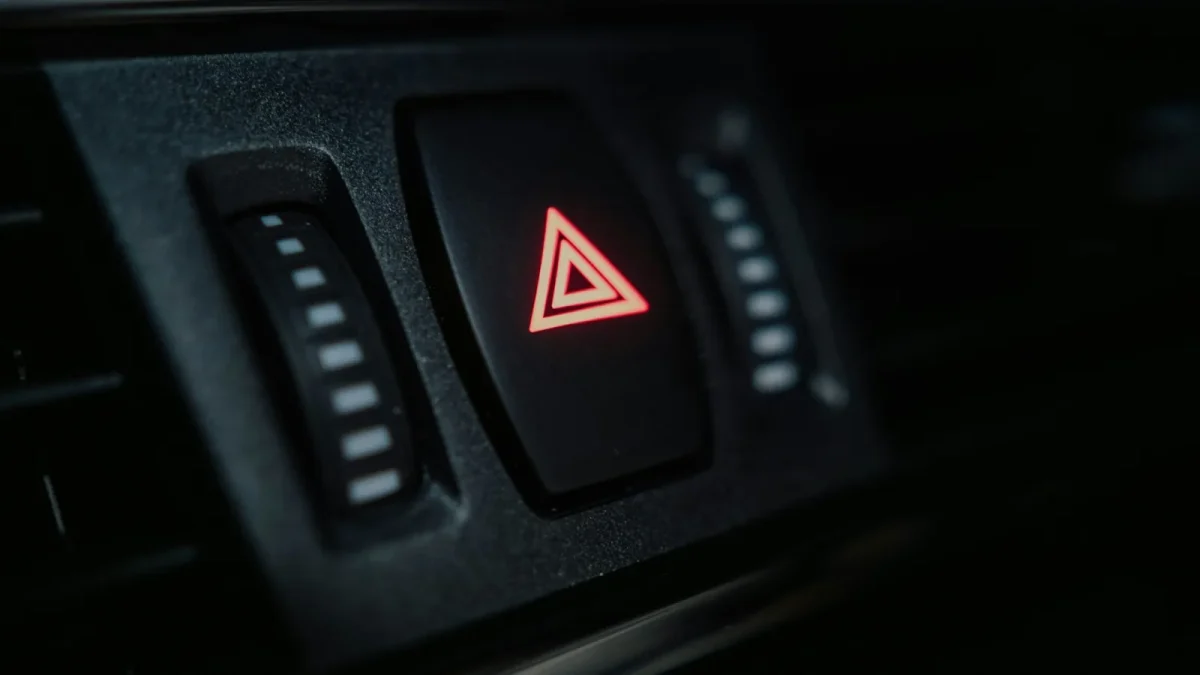
The warning is a messenger. It flashes a red symbol, usually a car or a person with an exclamation mark, and sounds an urgent chime. Its entire job is to get your foot moving toward the pedal a half-second sooner.
The braking is the muscle. If you ignore the warning or simply cannot react fast enough, AEB steps in and squeezes the brakes on its own to bleed off speed before impact.
How the two work together in a real moment
Picture traffic stopping short in front of you. Here is the sequence most systems run through in under a second.
- The sensor detects you are closing fast on the car ahead.
- Forward collision warning fires first, a flashing symbol and a loud chime.
- If you brake, the car hands control back to you and does nothing more.
- If you do not react, automatic emergency braking applies the brakes to reduce impact.
That order is the whole point. The warning gives you the chance to be the hero. The braking is there for the moments you cannot be.
Think of forward collision warning as the copilot shouting brake, and automatic emergency braking as the copilot grabbing the wheel when you freeze.
Side-by-side comparison
Here is the clean breakdown. Notice that one is about information and the other is about action.
| Feature | Forward collision warning | Automatic emergency braking |
|---|---|---|
| What it does | Alerts you to brake | Applies the brakes |
| Who acts | You do | The car does |
| Typical signal | Flashing symbol and chime | Sudden brake application |
| When it triggers | First, as a warning | Second, if you do not react |
For a deeper look at just the alert side, our guide to what the forward collision warning light means breaks down every version of that symbol and why it might light up.
Can you have one without the other?
Yes, and this is where a lot of confusion lives. Older cars from the early 2010s often shipped with the warning only. They would beep and flash but never touch the brakes. It was up to you every time.
Newer vehicles, especially 2018 onward as automakers moved toward voluntary AEB commitments, usually pair both. You get the warning and the automatic braking as a package.
Good to know
Many cars let you adjust or turn off the warning timing separately from the braking. If the chime feels too sensitive, you may be able to soften the alert without giving up the automatic braking underneath it. Check your driver-assist menu before disabling anything.
Why people mix them up
Part of the confusion is branding. Automakers wrap both functions under one marketing name, so a Toyota owner hears Pre-Collision System and a Honda owner hears CMBS, and neither realizes there are two distinct behaviors inside.
The other part is that in a real emergency, they can happen so close together that you feel one event. The chime and the brake grab blur into a single jolt.
I had a customer swear his 2020 Honda “braked without warning” after a close call in stop-and-go traffic. When we pulled the data, the forward collision warning had fired a full second before CMBS touched the brakes. He simply never registered the chime because his radio was up and his attention was elsewhere. The warning did its job. He just missed it.
If you want to see how the umbrella system fits together across brands, our hub on automatic emergency braking explained maps the whole thing, warning and braking included.
What each one means for you as a driver
When the warning fires
Treat a forward collision warning as a genuine command, not a suggestion. Get on the brakes. Even if it turns out to be a false alarm, braking early costs you nothing and buys you distance. The system is trying to make you the one who prevents the crash.
When the braking engages
If AEB actually grabs the brakes, that means you were about to hit something and did not react in time. Once you are safe, take it seriously. Frequent automatic braking with nothing there points to a sensor problem, and our guide to why your car brakes for no reason covers the real triggers.
Watch out
Neither feature makes tailgating safe. The warning needs time to help, and the braking can only reduce impact, not guarantee a stop. Both work far better with a proper following distance in front of you.
The upgrade in one sentence
Forward collision warning was the first step, a car that could see danger and shout about it. Automatic emergency braking was the leap, a car that could see danger and do something about it.
Most modern vehicles give you both, layered so the warning always gets first crack at your reflexes before the braking backs you up. If you ever want an independent take on how these features are rated and tested, the IIHS overview of advanced driver assistance is a straight-shooting resource, and MyCarDoesWhat explains each feature in plain terms.
Know which stage you are in when a symbol lights, and the whole system stops feeling like a mystery and starts feeling like the teammate it was built to be.
Questions drivers ask
No. Forward collision warning only alerts you with a light and a chime so you can brake yourself. Automatic emergency braking actually applies the brakes when you do not react in time. The warning usually comes first, and the braking is the backup.
Yes. Many older cars, especially from the early 2010s, offered the warning only and never touched the brakes. Newer vehicles from around 2018 onward typically bundle both, so you get the alert and the automatic braking together.
The warning almost always fires first. It gives you a chance to brake yourself. Only if you fail to react does automatic emergency braking step in and apply the brakes to reduce impact speed.
Yes, treat it as a command, not a suggestion. Get on the brakes even if it might be a false alarm, since braking early costs nothing and buys distance. The system is trying to let you prevent the crash before the car has to.
On many cars, yes. The alert timing and the braking are often separate settings. If the chime feels oversensitive, you may be able to soften the warning in the driver-assist menu while leaving the automatic braking active underneath.