A customer once pulled into my bay convinced her brakes were failing. The pedal never felt soft, but twice on her commute the car had slammed to a near stop on its own. Nothing was wrong with the brakes at all. What she had was a perfectly healthy automatic emergency braking system doing its job, and doing it a little too eagerly for her taste.
That confusion is common. AEB is one of the most valuable safety features ever bolted to a passenger car, yet most drivers never got a real explanation of how it works or what the warnings on the dash are trying to say.
This is the hub I point people to. It covers what AEB actually does, how it decides to brake, what the warning lights mean, and where to go for the deeper questions.
Key takeaways
- Automatic emergency braking uses cameras, radar, or both to spot a collision risk and apply the brakes when you do not react in time.
- It almost always starts with a forward collision warning, an alert meant to make you brake first before the car steps in.
- AEB is a backup, not a chauffeur. It reduces crash severity, but it does not replace attentive driving.
- A lit AEB warning symbol usually means the system is temporarily blocked or faulted, not that the car is about to brake on its own.
What automatic emergency braking actually does
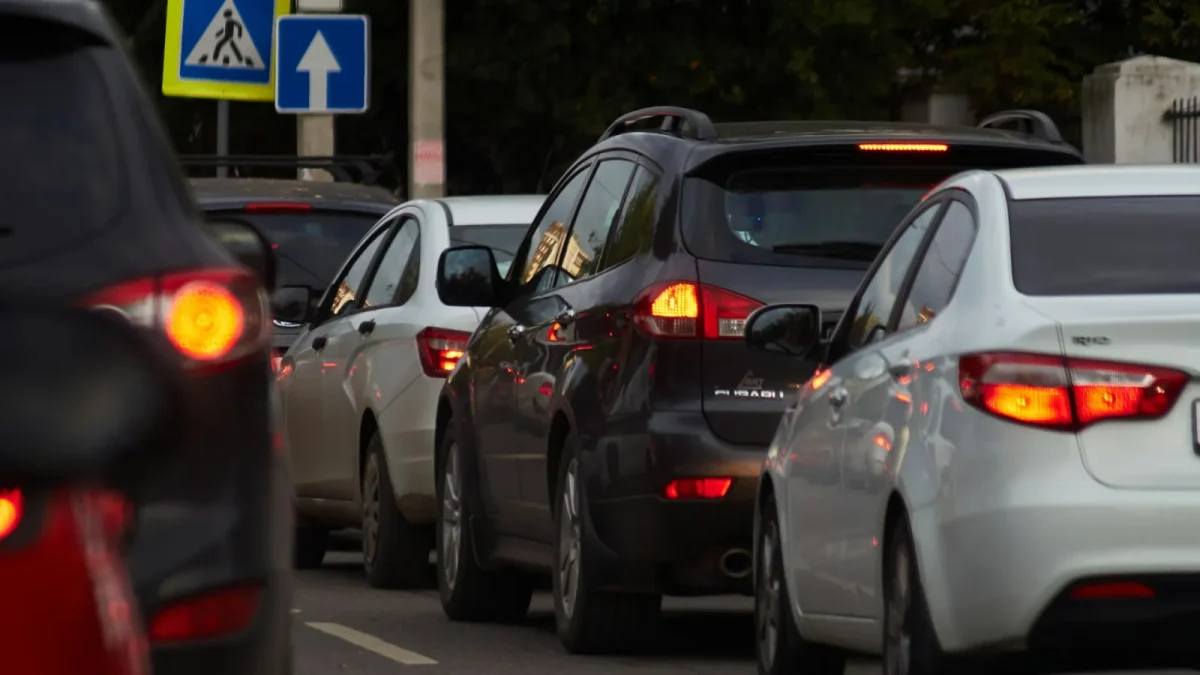
At its simplest, AEB watches the road ahead and measures how fast you are closing on the vehicle or object in front of you. If a crash looks likely and you are not slowing down, the system brakes for you.
Most systems work in two stages. First comes a forward collision warning, a visual and audible alert that begs you to act. If you brake, the car hands control right back to you. If you do nothing, the second stage kicks in and the brakes apply automatically.
The whole point is to shave off speed before impact. Even when AEB cannot prevent a crash entirely, dropping from 40 mph to 15 mph before contact turns a serious wreck into a fender bender.
Warning first, braking second
People blur these two functions together, but they are distinct. The warning is a nudge. The braking is the safety net. If you want to understand exactly where one ends and the other begins, our breakdown of AEB versus forward collision warning lays out the difference from the driver seat.
And if a symbol lights up and you are not sure which stage you are looking at, start with what the forward collision warning light means, because that amber symbol is the one drivers ask me about most.
How the car sees the road
AEB relies on sensors, and the type of sensor shapes how the system behaves. There are three common setups.
- Camera only, usually mounted behind the windshield near the mirror, common on Subaru EyeSight and many Mazda models.
- Radar only, hidden behind the front grille or bumper, good in fog and darkness but weaker at reading shapes.
- Camera and radar fused together, the setup Toyota, Honda, and most premium brands use for the widest coverage.
Good to know
Radar reads distance and closing speed beautifully but struggles to tell a stopped car from a metal sign. Cameras read shapes and lane context but hate glare and darkness. Fusing the two is why modern systems are so much better than the early ones from a decade ago.
Because the system leans on vision and clear sensor faces, anything that blocks them matters. A grille packed with snow, a bug-smeared windshield, or a bumper caked in road grime can all knock the system offline for a while.
Reading the dashboard symbols
Color and shape tell you almost everything before you open the manual. Most AEB icons show a car with a symbol in front of it, sometimes with radar-style waves.
An amber symbol generally means the feature is unavailable or has faulted. A red symbol that flashes with a chime is an active collision alert telling you to brake now.
Amber is the car saying I cannot help right now. Red is the car saying help me, brake.
Every brand draws these icons a little differently, which is maddening when you are trying to decode your own dash. Our AEB warning lights and symbols chart puts the common ones side by side so you can match yours in seconds.
When the system brakes and it should not
The complaint I hear most is the car braking hard with nothing in front of it. Drivers call it phantom braking, and it is unsettling.
It usually traces to a sensor misreading something: an overpass, a cresting hill, a metal sign on a curve, or a car in the next lane on a bend. Our guide to why your car brakes for no reason walks through the real triggers and what you can actually do about them.
Watch out
Do not assume phantom braking is harmless. A hard stop on a highway with a tailgater behind you is a genuine risk. If it happens more than once or twice, get the sensors checked rather than living with it.
When AEB turns itself off
Sometimes the system disables on its own and throws a warning. This is different from a phantom brake. Here the car is telling you it cannot function.
The causes range from a blocked sensor to a calibration fault to a simple dirty camera. If your dash shows the feature is unavailable, our explainer on why automatic emergency braking turned itself off ranks the reasons from the quick fixes to the ones that need a shop.
Winter is the worst offender. Packed snow over a radar sensor blinds it completely, and the system has no choice but to shut down. Drivers in cold climates should read why AEB stops working in winter weather before the first storm catches them off guard.
Brand by brand differences
No two automakers tune AEB the same way, and the names are a soup of acronyms. Here is a quick orientation for the systems I see most.
| Brand | System name | Sensor setup |
|---|---|---|
| Toyota | Pre-Collision System (PCS) | Camera and radar |
| Honda | CMBS (Collision Mitigation Braking) | Camera and radar |
| Subaru | EyeSight Pre-Collision Braking | Dual camera |
| Nissan / GM | City / Forward Emergency Braking | Radar or fused |
If you drive a Toyota, our deep dive on Toyota Pre-Collision System warnings covers its quirks. Honda owners should read up on Honda CMBS collision braking, and Subaru drivers will want the EyeSight pre-collision braking guide to understand how its dual-camera setup behaves in weather.
Pedestrians and city speeds
Newer systems do more than watch for cars. Many now detect people, and some detect cyclists, applying the brakes at low speed to prevent the kind of parking-lot and crosswalk hits that used to be unavoidable.
This is a genuine leap forward, but it has limits. Our piece on how pedestrian detection braking works explains what the camera can and cannot see, especially at night.
Low-speed city braking has its own failure modes too. Small habits, like a poorly fitted aftermarket bumper or a badge stuck over a sensor, can quietly disable it. See the mistakes that disable city braking support so you do not switch off your own safety net by accident.
Turning it off, and the cost of fixing it
Some drivers want AEB off, whether for towing, off-roading, or personal preference. Every system has a switch, though many reset it on each restart by regulation. Our walkthrough on how to turn off automatic emergency braking shows the button or menu path for the major brands.
When something genuinely breaks, the repair can range from a cheap sensor cleaning to a pricey radar module and calibration. Our breakdown of the cost to fix automatic emergency braking gives real ranges, often $150 to $400 for calibration and well beyond that for a replaced module, so you are not blindsided at the counter.
Clearing up the myths
The wrong ideas run deep. No, AEB does not mean you can tailgate safely. No, it will not stop the car in every situation. And no, a warning light does not automatically mean a four-figure bill.
For the full list, our roundup of common AEB myths drivers believe tackles the biggest misunderstandings I run into at the counter.
If you want an outside view on how these systems are tested and rated, the IIHS overview of advanced driver assistance is a solid, unbiased resource, and NHTSA tracks the safety data behind the mandate.
Respect what AEB is, know its blind spots, and keep those sensors clean. Do those three things and automatic emergency braking becomes the quiet backup it was designed to be, not a mystery light on the dash.
Questions drivers ask
No. AEB is a safety backup that brakes only when a collision looks likely and you have not reacted. It does not steer, hold speed on its own, or replace your attention. You are still fully in charge of driving.
Not always. At higher speeds or with sudden cut-ins, the system may only reduce impact speed rather than avoid the crash entirely. Even a partial reduction, such as dropping from 40 mph to 15 mph, makes a large difference in injury severity.
An amber symbol usually means the system is temporarily unavailable or has faulted, often from a blocked sensor, dirty camera, or calibration issue. It does not mean the car is about to brake. Clean the sensors first, and if it stays lit, have it checked.
Yes, every system has an off switch through a button or dashboard menu. Many vehicles reactivate it each time you restart the car due to safety regulations, so it may not stay off permanently.
A simple sensor cleaning or recalibration often runs $150 to $400. Replacing a damaged radar module or front camera costs considerably more, sometimes over $1,000 with parts and calibration, depending on the vehicle.