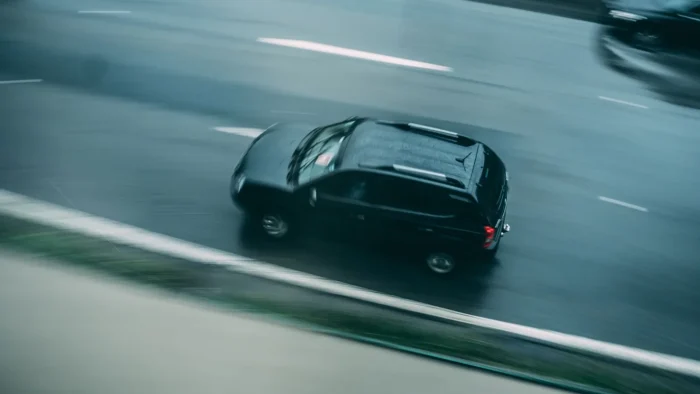
Pull up behind a slow car on the highway in a modern Honda and let the gap close a little too fast. You will hear it before you feel it: a sharp string of beeps, a red image of a car flashing on the dash, and if you still do nothing, a firm tug on the brake pedal that you did not ask for. That is Collision Mitigation Braking System, or CMBS, doing exactly what Honda built it to do.
I have had this system trigger on me during a test drive when a delivery van cut in from an on-ramp. It got my attention fast. Drivers who have never felt it before often think something broke.
Nothing broke. Let me walk you through how CMBS actually works, what each beep means, and what to do when that amber CMBS problem light shows up and stays on.
Key takeaways
- CMBS works in three escalating stages: visual and audible warning, brake pressure warning, then hard automatic braking.
- An amber CMBS message means the system is temporarily disabled, usually from a blocked radar or camera, not a permanent failure.
- You can lower the warning distance or turn CMBS off through the dash menu, but it resets on every restart.
- Most CMBS faults trace back to a dirty sensor, a windshield issue, or a low battery, not an expensive module.
What CMBS is and where the sensors live
CMBS is Honda’s version of automatic emergency braking, bundled into the larger Honda Sensing safety suite you will find on most models from roughly 2015 onward. If you want the big-picture view of how these systems fit together, our overview of automatic emergency braking explained lays out the whole family.
The system reads the road through two sensors working together. A radar unit sits behind the lower grille or the Honda emblem, and a camera looks out from the top of the windshield near the mirror.
Radar measures distance and closing speed. The camera confirms what the object actually is. When both agree that a crash is coming and you have not reacted, CMBS steps in.
Good to know
On many 2022-onward Hondas, the separate grille radar was dropped in favor of a wide-angle camera that handles both jobs. The warnings feel the same to the driver, but a cracked or dirty windshield now affects more of the system than it used to.
The three stages of a CMBS event
CMBS does not slam the brakes the instant it sees trouble. It escalates in stages, giving you every chance to react first. Understanding the sequence tells you how much time you actually have.
Stage one: the warning
The first stage is purely a heads-up. You get a flashing BRAKE message, a red car symbol, and repeated beeps. This is the same territory as a forward collision warning light, and on Honda it is called FCW.
At this point the car has not touched the brakes. It wants you to.
Stage two: light braking and belt tension
If you still have not lifted off the gas or braked, CMBS applies light brake pressure and, on many models, gently tightens the front seatbelts. The tug on the belt is deliberate. It is a physical warning you cannot ignore.
Stage three: hard automatic braking
When a collision is nearly unavoidable, the system applies strong braking to reduce your speed as much as possible before impact. It may not stop the car completely, and Honda is clear that CMBS is a mitigation system, not a substitute for the driver. Below about 5 mph closing speed it often will not engage at all.
CMBS buys you feet and miles per hour, and in a real crash both of those save lives.
Decoding the beeps and the amber CMBS light
Two very different alerts get confused all the time. One is a live crash warning. The other is a system health message. Telling them apart saves you a panic and sometimes a needless trip to the dealer.
A rapid, urgent series of beeps with a red car image is a live event. React to the road.
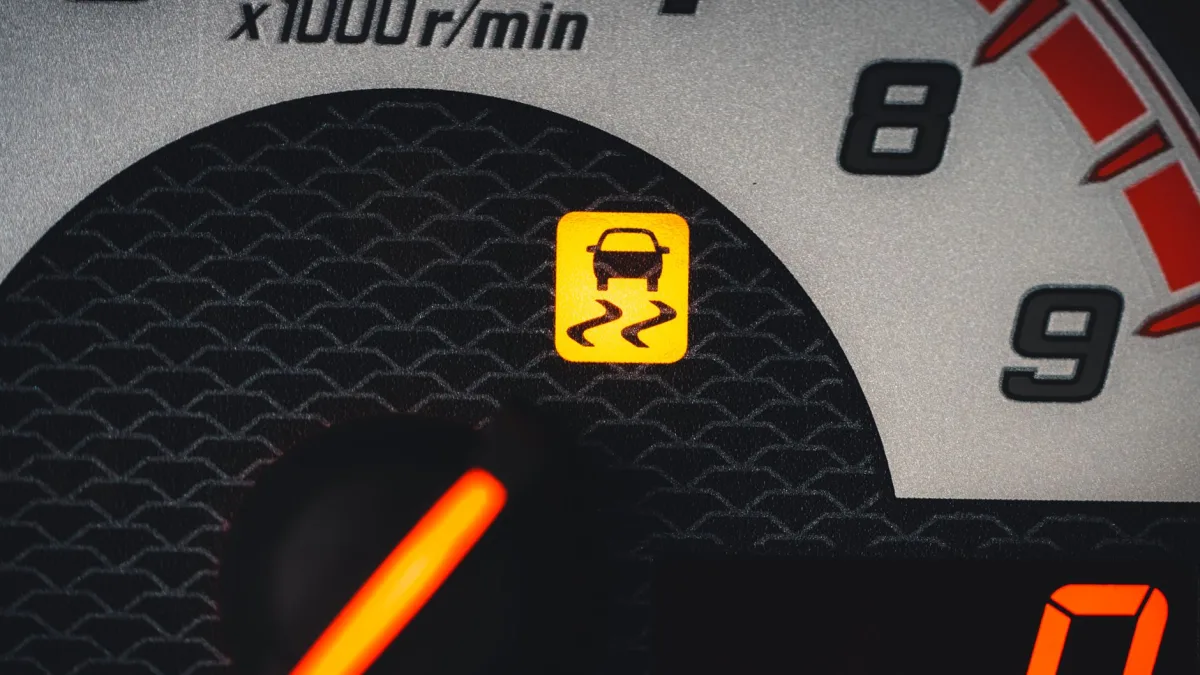
An amber CMBS message that stays on the dash, often reading “CMBS Problem” or “Collision Mitigation Braking System Problem,” means the system has switched itself off. It is not warning you about traffic. It is telling you it cannot see well enough to protect you right now.
Watch out
An amber CMBS message means you have no automatic braking until it clears. Drive as if the system is not there, because it is not. Do not assume the car will catch a mistake for you.
This behavior is normal and shared across brands. Our guide on what it means when AEB turns itself off covers the same logic for Toyota, Subaru, and others.
Why the CMBS light comes on
In fifteen years of service bays, I can tell you most CMBS faults are not the module or the radar itself. They are simpler and cheaper. Here are the usual suspects.
- A dirty or ice-covered radar behind the grille or emblem
- Bugs, road film, or a chip on the windshield in front of the camera
- A low or aging 12-volt battery causing voltage dropouts
- Heavy rain, dense fog, or direct low sun blinding the camera
- A recent windshield replacement without camera recalibration
- Slightly off wheel alignment or a bumper knock that moved the radar
That last one matters more than people expect. Even a minor parking tap can nudge the radar a few degrees and throw the system off. Winter is its own headache, which we cover in why AEB stops working in winter weather.
Tip
Before you book anything, wipe the Honda emblem and lower grille area with a clean damp cloth, then clean the windshield inside and out at the mirror. Restart the car. A large share of “CMBS Problem” messages clear on their own once the sensors can see.
Adjusting the warning distance or turning CMBS off
Honda gives you two levers. You can change how early the warning fires, and you can switch the whole thing off. Both live in the driver information menu on the cluster.
For the warning timing, look for FCW distance settings: Long, Normal, or Short. If you drive in dense traffic and the beeps feel constant, Normal or Short cuts the false alarms without disabling protection.
To disable CMBS itself, some Hondas use a dedicated button to the left of the steering wheel, others bury it in the menu. Either way, here is the part people miss.
Good to know
CMBS turns itself back on every time you restart the engine. There is no permanent off switch by design. If you truly need it off for a specific reason, our walkthrough on how to turn off automatic emergency braking explains the tradeoffs.
What a real repair costs
If cleaning and a battery check do not clear the message, the price depends entirely on what failed. Here is the range I quote drivers.
| What is wrong | Typical cost |
|---|---|
| Sensor cleaning and diagnostic scan | $100 to $180 |
| Windshield camera recalibration | $150 to $400 |
| Radar sensor replacement and calibration | $600 to $1,300 |
| Camera or control module replacement | $900 to $1,800 |
Most people land in the first two rows. For the full breakdown across systems and brands, see our guide on the cost to fix automatic emergency braking.
When to stop guessing and see a pro
Clean the sensors, restart, and drive a short loop. If the amber CMBS message clears, you are done. If it comes back within a day or two, or never clears at all, get a scan.
A shop can pull the exact fault code and tell you whether it is a blocked-sensor code, a calibration code, or a genuine hardware failure. That one scan saves you from throwing parts at the problem.
For a lasting fix, prioritize this: any Honda that has had a windshield replaced, a front-end collision, or a recent battery swap should be first in line for camera calibration. Those three events cause the majority of stubborn CMBS faults I see.
CMBS is one of the better safety nets on the road today, but it is only as good as the eyes it looks through. Keep the grille and windshield clean, respect the amber warning when it appears, and it will be there the one time you actually need it. For a comparison of Honda’s approach to Subaru’s EyeSight pre-collision braking, the differences in sensor design are worth a look. You can also read how the U.S. safety agency rates these systems at NHTSA.
Questions drivers ask
CMBS reads a closing gap as a possible collision, often from a car that slowed suddenly or one you approached quickly. If it happens with no traffic ahead, a dirty grille radar or windshield camera may be misreading the road. Clean both sensors and see if it stops.
Yes, the car drives normally, but you have no automatic braking until the message clears. Treat the situation as if the system is switched off and keep more following distance. Get it scanned if it does not clear after cleaning the sensors and restarting.
No. You can disable it through the menu or a dedicated button, but it turns back on every time you restart the engine. Honda designed it this way so the safety feature is always active by default.
It can. The forward camera looks through the glass near the mirror, so a chip or crack in that zone can block or distort its view. On newer camera-only Hondas, a windshield issue can disable more of the system than on older radar-plus-camera models.
Simple cases like sensor cleaning and a diagnostic scan run about $100 to $180. Camera recalibration after a windshield job is typically $150 to $400. A failed radar or camera module with calibration can reach $600 to $1,800.