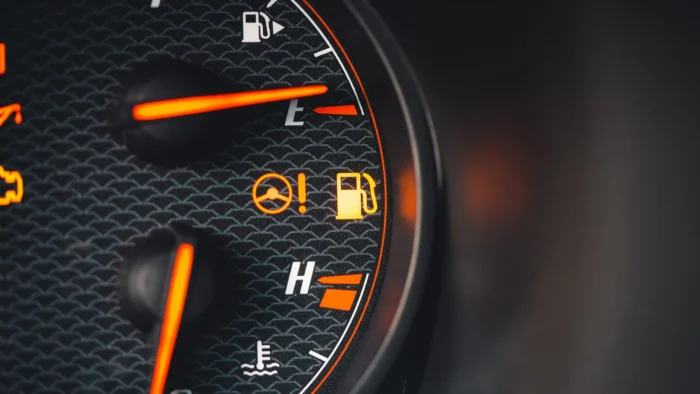
You are backing out of the driveway on a normal morning when a message flashes across the cluster: Pre-Collision System Unavailable, or maybe just a little car-and-obstacle icon glowing amber. The brakes feel fine. Nothing sounds wrong. And yet the car is telling you that the safety net you paid for has quietly gone dark.
I get this question at the counter more than almost any other ADAS complaint. The good news is that most of the time, an AEB shutdown is the system protecting you from itself, not a sign of an expensive failure.
Let me walk you through what actually turns automatic emergency braking off, in the rough order I check them in the bay, from the sixty-second fixes to the ones that need a scan tool.
Key takeaways
- Most AEB shutdowns come from a blocked or dirty sensor, not a broken part, and clear once the obstruction is gone.
- An amber unavailable message means the system cannot see well enough to work safely, so it disables itself on purpose.
- Persistent shutdowns that survive a clean windshield and a restart usually point to a calibration fault or a stored trouble code.
- Never keep driving as if AEB is active once it has warned you it is off, because the automatic braking is genuinely gone until the fault clears.
Why the car shuts its own safety system down
Automatic emergency braking only helps if it can trust what it sees. The moment the camera or radar loses confidence, the smartest thing the computer can do is step back rather than brake at a phantom or miss a real threat.
So when you see automatic emergency braking off or an unavailable message, read it as an honest admission. The car is saying it cannot promise to catch you right now, so it would rather tell you than pretend.
That is very different from a system that brakes when it should not. If your issue is unexpected hard stops instead of a shutdown, our guide to why your car brakes for no reason is the better place to start.
The quick fixes: sensors that cannot see
Roughly seven out of ten AEB-off complaints I handle trace back to a blocked sensor. The forward camera usually lives behind the windshield near the mirror, and the radar hides behind the grille badge or lower bumper.
Anything caked over those spots can trip the warning. I have found the culprit to be all of these on real cars:
- A bug-splattered or filmy windshield right in front of the camera.
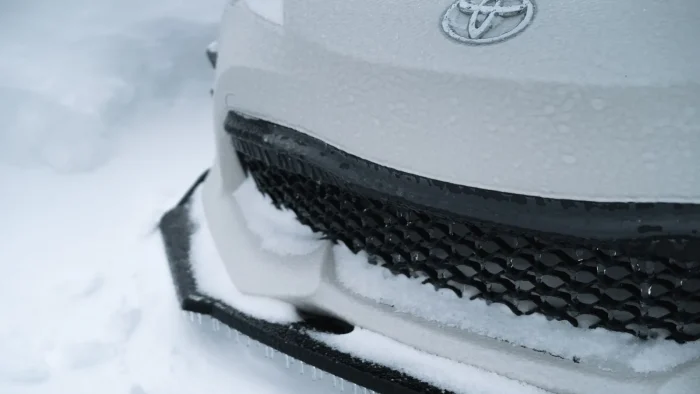
- Packed snow, slush, or road salt over the front radar.
- A layer of mud or crushed leaves in the lower grille.
- A dealer plate frame or badge sitting over the radar emblem.
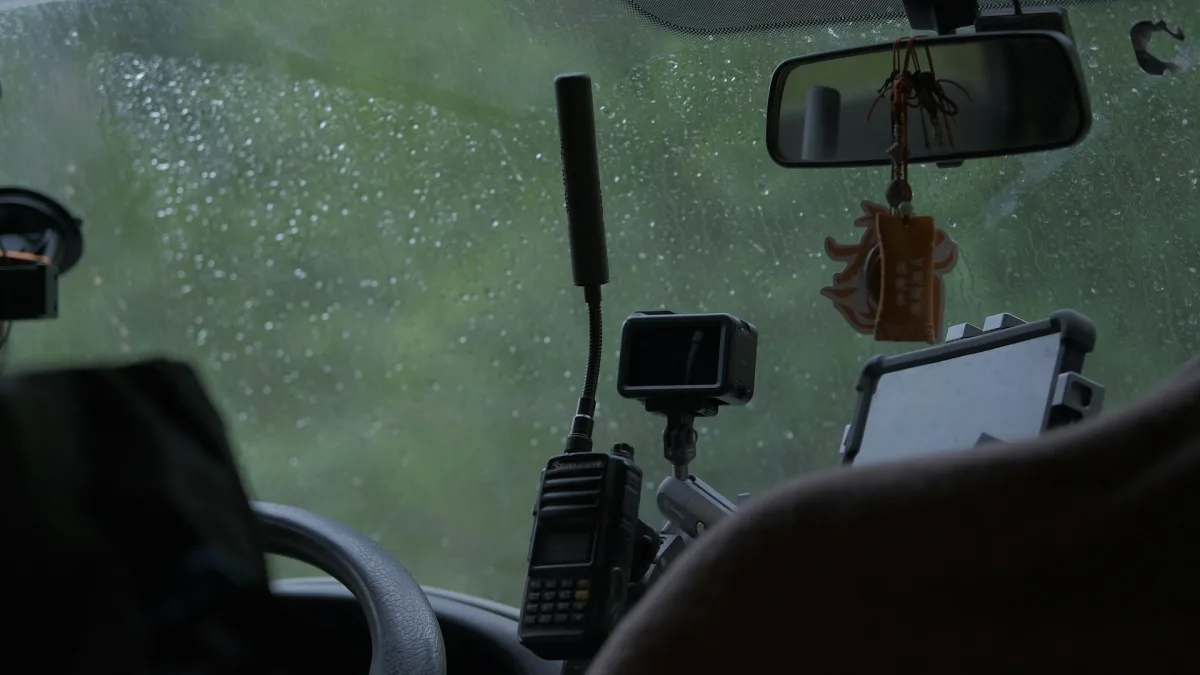
- Heavy rain or dense fog thick enough to blind the camera temporarily.
Tip
Before you book anything, clean the windshield right in the camera’s line of sight and wipe the front emblem and lower grille with a damp cloth. Then drive a few minutes at road speed. A huge share of these warnings clear themselves once the sensor gets a clean view again.
Weather that fixes itself
Fog, a whiteout snow squall, or blinding low sun can all disable AEB for a stretch of road and then let it come right back once conditions improve. That is normal behavior, not a fault.
If your car only loses AEB in the cold and it lingers longer than a passing storm, the deeper reasons are worth understanding, and our piece on why AEB stops working in winter weather covers the frozen-sensor problem in detail.
The middle ground: calibration and alignment drift
When the sensors are clean and the message still will not leave, I start thinking about calibration. The forward camera and radar have to be aimed with real precision, and they lose that aim more easily than most people expect.
A windshield replacement is the classic trigger. Swap the glass without recalibrating the camera bonded to it and the system often throws an unavailable warning within a few drives. The same goes for a front-end collision, a curb strike hard enough to shift a bumper, or new tires and a ride-height change on a lifted truck.
A camera aimed even a degree off is not slightly worse. It is a system the car no longer trusts, so it turns the whole thing off.
Calibration is not a driveway job. It needs targets, level floor space, and a scan tool, which is why it lands in the shop even though the part itself is fine.
The real faults: codes and modules
If cleaning and a restart do nothing, the car is likely holding a stored trouble code. At that point a technician plugs in a scan tool and reads exactly which module is unhappy, whether it is the radar sensor, the camera, or the brake control unit that ties them together.
Common real faults I pull codes for include a failed radar module after a low bumper hit, water intrusion into a sensor connector, or a software issue that a manufacturer bulletin already addresses with an update.
Watch out
Once the dash says AEB is off, treat the automatic braking as genuinely gone. I have talked to drivers who kept tailgating on the assumption the car would still catch them. It will not. Drive as if you have no safety net until the warning clears.
How to tell which category you are in
You can usually sort your own situation with a short test before you spend a dime. Here is the ladder I hand people.
| What you see | Likely cause | First move |
|---|---|---|
| Warning appears in bad weather, clears after | Temporary sensor blockage | Nothing, it is normal |
| Warning clears after cleaning the glass and grille | Dirty camera or radar | Keep sensors clean |
| Warning stays after cleaning and a restart | Calibration or stored fault | Book a scan and calibration |
| Warning followed by other lights and rough braking | Module or wiring fault | Get it diagnosed promptly |
If your symbol is amber and steady rather than flashing red, that is a strong hint you are in the unavailable camp rather than an active alert. To be sure which icon you are staring at, our AEB warning lights and symbols chart lines the common ones up so you can match yours.
What it might cost if it is real
Here is the part people brace for. The truth is the range is wide, and the cheap end is far more common than the scary end.
A recalibration after a clean bill of health often runs $150 to $400. A replaced radar module with calibration climbs well past that, sometimes north of $1,000 on cars with expensive sensors. For the full breakdown by repair type, our guide to the cost to fix automatic emergency braking lays out real numbers.
And if you would rather understand the whole system before you decide what to do, start with our hub on automatic emergency braking explained, which ties every one of these symptoms back to how the system works. For an outside safety perspective, the NHTSA tracks the data behind why these systems became standard equipment.
Nine times out of ten, an AEB-off message is your car being cautious, not broken. Clean the sensors, drive a little, and see if it comes back before you assume the worst.
Questions drivers ask
The most common reason is a blocked or dirty sensor. The forward camera behind the windshield or the radar behind the grille cannot see clearly, so the car disables AEB on purpose. Clean the glass and front emblem, then drive a few minutes to see if it clears.
The car is safe to drive mechanically, but you have lost the automatic braking backup entirely. Drive as if you have no safety net, leave extra following distance, and get the cause checked soon. Do not rely on the system to catch you until the warning clears.
Often, yes. If the cause was fog, snow, or a dirty sensor, the message usually clears once conditions improve or you clean the sensor and drive at road speed. If it survives a clean windshield and a restart, it likely points to a calibration issue or a stored fault.
Yes. The forward camera is bonded to the glass, so replacing the windshield without recalibrating the camera very often triggers an unavailable warning within a few drives. A proper glass job includes an ADAS recalibration, which usually runs $150 to $400.
It rarely helps and can complicate things by clearing codes a technician needs to diagnose the fault. Start with cleaning the sensors and a normal restart. If the warning persists, have the system scanned rather than disconnecting the battery.