You set the cruise, ease your foot off the pedal, and settle in for the highway stretch. Two minutes later the chime sounds, the green ACC icon on the cluster winks out, and your car quietly gives the driving back to you. It happens again ten miles down the road. Then again.
That pattern, where the system engages perfectly but keeps bailing out mid-drive, is one of the most common complaints I hear at the counter. It is also one of the most misunderstood.
Here is the thing most drivers do not realize: a lot of these dropouts are the system working exactly as designed. The trick is learning to tell a normal, expected cutoff from a real fault that needs attention.
Key takeaways
- Adaptive cruise that engages fine but keeps canceling is often reacting to sensor conditions, not a broken part.
- Sharp curves, low speeds, and a lost radar target will drop cruise on purpose, usually with no warning light afterward.
- A real fault leaves a warning message or stored code and tends to happen in clear weather on straight, flat road.
- Cleaning the sensor area, updating software, and checking for stored codes solves most repeatable dropouts.
What “dropping out” actually means
When people say the cruise keeps disengaging, they usually mean one of two things. Either the system cancels and hands control back with a beep, or the ACC icon changes color and it stops holding your set speed while staying technically on.
Those are different behaviors, and they point to different causes. A full cancel with a chime is the system deciding it cannot safely operate. A quiet drop to standby, where it stops accelerating but does not fully quit, usually means it briefly lost confidence in what it was seeing.
Pay attention to which one you are getting. If a warning message flashes at the same time, that is a strong clue you are dealing with a real fault rather than a design limit.
Good to know
Almost every automaker programs adaptive cruise to disengage rather than guess when conditions get marginal. A cautious dropout is a feature. The system is choosing to give you the wheel instead of making a bad assumption at 65 mph.
The normal cutoffs that are not faults
Before you spend a dime, rule out the everyday situations that make any adaptive cruise system quit on purpose. I see drivers chase phantom problems for weeks when the car is just behaving normally.
Speed dropping below the system’s floor
Many older ACC setups will not operate below a threshold, often around 20 to 25 mph. On a Toyota Dynamic Radar Cruise Control without full-speed range, or an early Honda system, coming down to that floor in slowing traffic cancels cruise entirely. If yours quits every time traffic bunches up, that is likely the cause. Systems with full stop-and-go can handle it, and I cover how those behave in our breakdown of stop and go traffic jam assist.
Tight curves and crests
On a sweeping interstate curve or over a hill crest, the radar can momentarily lose the car ahead or aim at the guardrail. Some systems drop out rather than accelerate into an uncertain gap. Mountain grades and cloverleaf ramps are classic spots for this.
Lane changes and cut-ins
When the vehicle you were following exits and no new target appears, the system may cancel instead of surging to your set speed. That momentary confusion is normal, especially at higher following-distance settings.
- Did speed drop near the system’s low-speed cutoff?
- Were you in a curve, on a crest, or on a ramp?
- Did the car ahead just change lanes or exit?
- Was there a warning message, or just a plain chime?
If you can answer yes to any of the first three and there was no warning text, you are almost certainly looking at normal operation, not a defect.
When it is actually a fault
Now the part that matters. A genuine problem behaves differently, and once you know the pattern it is hard to miss.
Real faults tend to show up in clear weather, on straight and flat road, with no traffic to blame. The dropout happens at random rather than tied to a curve or a slowdown. And critically, you often get a specific message: something like “radar obstructed,” “system unavailable,” or a named ACC fault on the cluster.
Watch out
If a message such as “Cruise Unavailable: Radar Obstructed” appears when the front of the car is visibly clean and dry, do not keep dismissing it. That points to a sensor or aim issue, and we walk through it in detail in the guide to a cruise unavailable radar obstructed message.
Blocked or dirty sensors
The number one repeatable fault is a sensor that cannot see. The radar usually lives behind the grille or lower bumper, and the camera sits at the top of the windshield. A film of road grime, a smear of bug guts, or a plastered leaf is enough to make the system cut out intermittently.
I once had a customer whose cruise died every afternoon on the same commute. Turned out low sun angle plus a hazed-over camera lens was the combination. A wipe of the glass and a clean of the grille sensor, and it never came back.
Radar aim knocked off
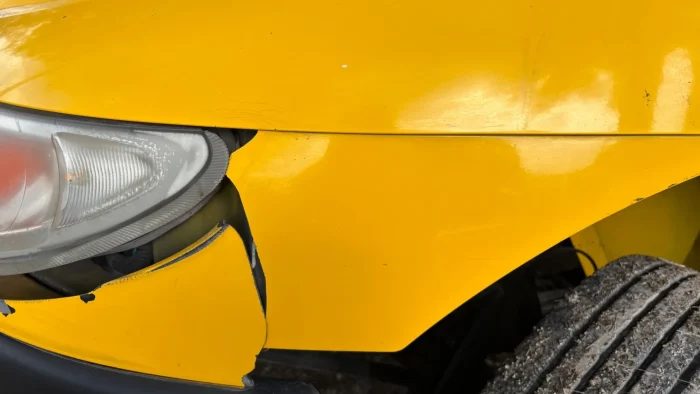
A minor front-end tap, a curb strike, or even body work can nudge the radar out of its calibrated aim by a couple of degrees. The system may work fine on flat, straight road and then drop out when the geometry shifts. If your dropouts started after a repair, that is your lead suspect. Our piece on adaptive cruise after bumper repair or paint covers why paint thickness and aim both matter here.
Software and stored codes
Some intermittent dropouts trace back to a software bug the manufacturer has already fixed with an update. Others leave a stored trouble code even when the dash goes clear. A scan tool that reads ADAS modules, not just a cheap generic reader, will pull those.
How to track down your dropout
Work it like a technician. Gather facts before you throw parts at it.
- Note the exact conditions each time: speed, road shape, weather, traffic.
- Read whether a warning message appears or just a plain chime.
- Clean the windshield camera area and the grille or bumper radar face.
- Have the ADAS modules scanned for stored codes at a shop with the right tool.
- Ask whether a software update applies to your model year.
- Check for recent front-end work, curb hits, or windshield replacement.
That last item catches more people than you would guess. A fresh windshield with the camera not recalibrated will cause exactly this kind of flaky behavior, which is why we have a whole rundown on adaptive cruise after windshield replacement.
The difference between a normal cutoff and a real fault is usually written right there on your dash. Learn to read the message, not just hear the beep.
Tip
Keep a note in your phone for a week. Jot the speed and situation every time cruise drops. A clear pattern (always in curves, always below 25 mph) means normal behavior. Random dropouts on straight clear road mean it is time for a scan.
Brand quirks worth knowing
Different systems have different personalities. Subaru EyeSight is camera-only, so it is more sensitive to windshield haze and low sun than radar-based rivals. If yours drops out into bright glare, that is characteristic, and our Subaru EyeSight troubleshooting guide digs into it.
Toyota and Lexus radar cruise has its own set of common gremlins, from calibration drift to specific dash messages, all covered in our writeup on Toyota radar cruise DRCC problems. For a full picture of how these systems are meant to work, start with our complete guide to adaptive cruise control.
When to stop troubleshooting and get help
If you have cleaned the sensors, ruled out the normal cutoffs, and it still drops out on clear straight road, get it scanned. Chasing an intermittent ADAS fault by feel wastes time. A proper scan and, if needed, a radar recalibration usually runs $150 to $400 at an independent shop, more at a dealer.
Do not ignore repeated dropouts paired with a warning message. Adaptive cruise is a convenience feature, but the sensors it shares often feed automatic emergency braking. A blind radar can affect more than your cruise. For the safety background on why these systems matter, the IIHS overview of driver assistance is a solid, no-hype resource.
Drive it, log it, clean it, scan it. In that order, you will land on the answer without guessing.
Questions drivers ask
On tight curves and hill crests the radar can briefly lose the car ahead or aim at a guardrail. Many systems cancel rather than accelerate into an uncertain gap. This is normal behavior, especially on ramps and mountain grades, and does not mean anything is broken.
A single cautious dropout is the system handing control back safely, which is by design. Repeated random dropouts with a warning message are worth checking, because the radar often also feeds automatic emergency braking. Get the ADAS modules scanned if it happens on clear, straight road.
Yes. A film of grime, bug splatter, or a leaf over the grille radar or windshield camera is enough to cause intermittent dropouts. Cleaning the sensor area is the first free step and fixes a surprising number of cases.
Front-end work, a curb strike, or a windshield replacement can knock the radar aim off or leave the camera uncalibrated. The system may work on flat road then drop out when the geometry changes. A recalibration usually resolves it.
Sometimes. Several automakers have released updates that address intermittent ACC dropouts on specific model years. Ask your dealer whether a software update applies to your vehicle before paying for other repairs.