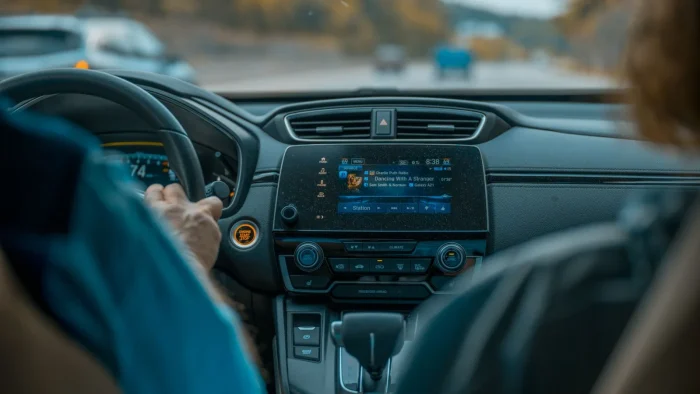
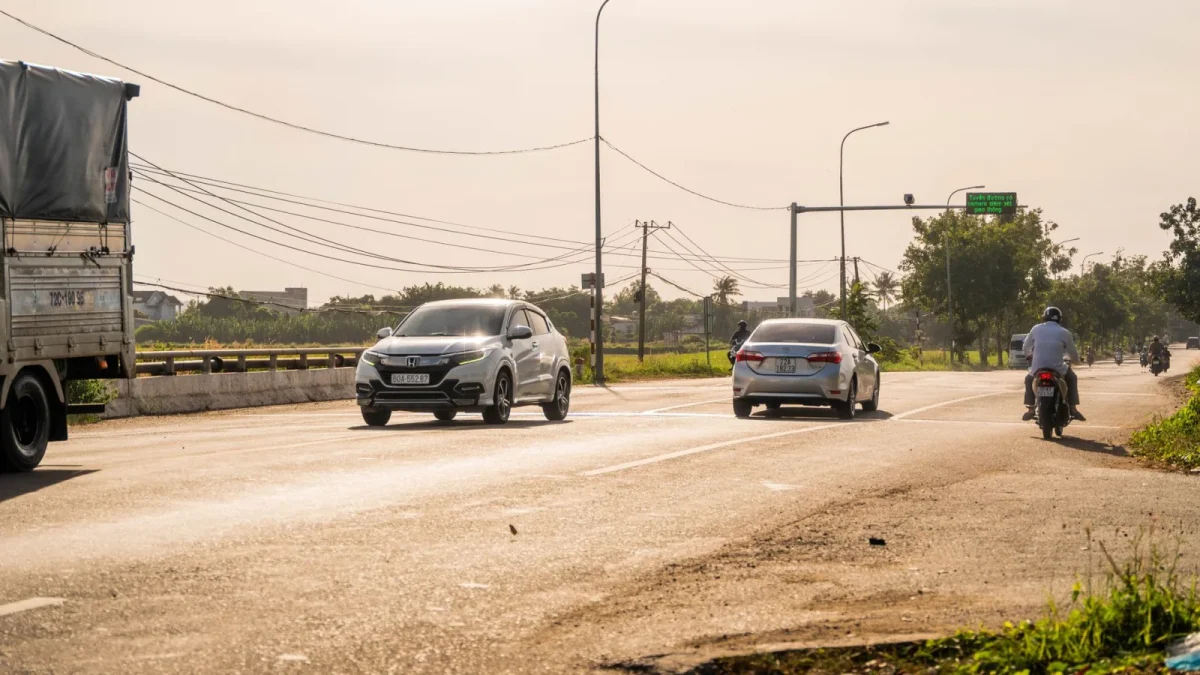
Picture a Honda Accord crawling through the evening rush on I-95, brake lights stacking up ahead. The driver has both hands loose on the wheel and their foot nowhere near the pedals, and the car keeps closing the gap, slowing itself, then stopping. That is Low-Speed Follow doing its job, and once you trust it, sitting in traffic stops feeling like a chore.
Honda’s adaptive cruise, badged as part of the Honda Sensing suite, is smart and well-behaved, but a lot of owners never learn what it can actually do. Some assume it quits below highway speed. Others expect it to bring them to a full stop when their model was never built to. Let me walk you through how it really works.
Key takeaways
- Honda ACC with Low-Speed Follow keeps working in slow, stop-and-go traffic, unlike older cruise that switched off around 25 mph.
- Whether your car resumes automatically after a full stop depends on the model year and drivetrain, so know which version you have.
- Honda ACC uses a radar sensor behind the front emblem plus a windshield camera, so a dirty grille or blocked emblem can disable it.
- Most confusing dash messages are the system telling you it lost its sensors, not a mechanical failure.
What Low-Speed Follow actually means
Plain adaptive cruise holds a speed and a gap, but it typically drops out once traffic slows below a set threshold, often around 20 to 25 mph. That is where Honda’s Low-Speed Follow earns its keep. It stays engaged all the way down to a crawl, and on equipped models it will bring the car to a complete stop behind the vehicle ahead.
The system uses a radar unit hidden behind the Honda emblem on the grille, paired with a monocular camera at the top of the windshield. The radar tracks the car ahead and measures the closing distance, while the camera reads lane lines and helps identify what is in front of you.
Good to know
Honda Sensing with ACC and Low-Speed Follow started appearing broadly around 2016 and became standard on most trims by 2019. If your Honda predates that, you may have basic cruise or an earlier ACC version without the full stop-and-go behavior.
Does it stop the car completely, and does it move again on its own?
Here is where model differences matter most. On many CVT-equipped Hondas, the system brings you to a full stop and, if traffic starts moving within a few seconds, resumes on its own. Wait too long and you get a “resume” prompt or a tap of the accelerator is needed to get going again.
On some earlier or manual-transmission versions, ACC disengages below a certain speed and will not hold you at a stop at all. Neither behavior is a defect. It is simply which generation of Honda Sensing your car carries.
Tip
Read the exact wording in your owner’s manual under “Adaptive Cruise Control with Low-Speed Follow.” Honda spells out precisely whether your car holds at a stop, auto-resumes, or requires a pedal tap. It takes two minutes and ends a lot of guesswork.
If stop-and-go behavior is what you care about most, our deeper explainer on stop and go traffic jam assist compares how different brands handle the full-stop-and-resume cycle.
Reading the dash messages without panicking
Honda’s warnings sound alarming but usually describe a temporary blindness, not a broken part. The two you will see most are worth knowing by heart.
“ACC/LSF unavailable: clean the sensor area”
This means the radar behind the emblem cannot see clearly. Common causes are packed snow, road grime, mud, a bug-crusted grille, or ice over the badge. Wipe the emblem clean and the message often clears within a minute of driving.
“System unavailable: camera high temperature” or “poor visibility”
That one comes from the windshield camera. Direct sun on the lens, a foggy or iced windshield, or a cabin baked in summer heat can all trip it. Cool the glass, clean it, or wait for the sun angle to shift and it recovers.
Watch out
Aftermarket grilles, oversized license plate frames, or a front plate mounted over the emblem can partially block the radar and cause intermittent ACC dropouts. I have seen a novelty plate frame alone kill Low-Speed Follow on an otherwise perfect Civic.
Why does my Honda ACC keep cutting out?
If the system engages but keeps dropping mid-drive, the radar or camera is losing its target intermittently. Heavy rain, a very dirty sensor, sharp curves that swing the car ahead out of view, and tight bumper-to-bumper following can all cause brief dropouts.
Persistent, unexplained cutouts on clean sensors in good weather are a different matter and deserve a scan. Our guide to adaptive cruise dropping out while driving lays out how to tell a normal condition-based dropout from a real fault.
What if the whole system refuses to turn on?
When ACC will not engage at all, walk through the basics before booking service. A blocked radar, a stored fault from a recent low battery, or a system still disabled from earlier in the drive are the usual reasons.
- Wipe the Honda emblem and the windshield in front of the camera
- Confirm no snow, ice, or mud is packed into the grille
- Check that your speed is above the minimum needed to set ACC, often around 20 mph on a fresh engagement
- Look for a warning light suggesting the system was disabled and needs a restart of the car
- Rule out a front plate frame or accessory blocking the sensor
If none of that brings it back, the broader troubleshooting path in adaptive cruise control not working covers the deeper electrical and calibration causes that apply across brands.
How Honda’s approach compares to camera-only rivals
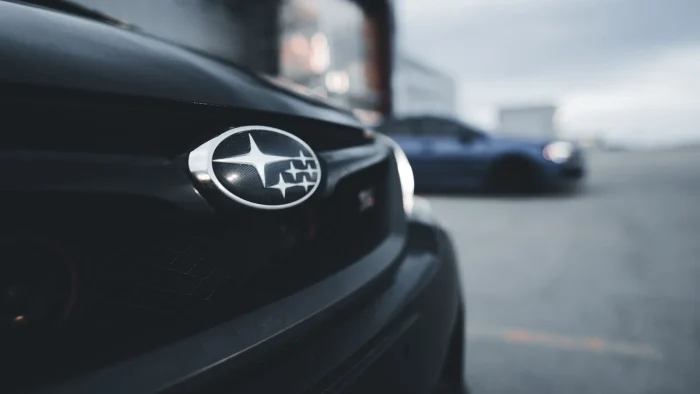
Because Honda pairs radar with a camera, it handles glare and low sun better than a pure camera system like Subaru EyeSight. Radar does not care about light. That said, Honda’s radar can be fooled by a dirty or blocked emblem in ways a camera never would be, so the maintenance is just different.
Radar shrugs off a blinding sunset but hates a mud-caked grille; a camera loves clean weather but folds in direct sun. Honda leans on both, which is why it stays reliable across more conditions.
For the full lay of the land across every system and how they behave in weather and traffic, start with the complete adaptive cruise control guide. If you want an independent take on how these driver-assist features are tested, the IIHS advanced driver assistance pages are a trustworthy reference.
One last real-world note
A guy came in convinced his 2018 CR-V’s ACC was failing because it “quit stopping in traffic.” Turns out his car did stop and hold, but after about three seconds at a standstill it required an accelerator tap to resume, exactly as Honda designed it. He thought a working feature was a broken one. Knowing your specific version of Low-Speed Follow is honestly half the battle, and it saves an unnecessary trip to the service counter.
Questions drivers ask
On many CVT-equipped Hondas it does, holding you behind the car ahead and resuming if traffic moves within a few seconds. Some earlier or manual versions disengage at low speed instead. Check your owner's manual for your exact model behavior.
The radar behind the front emblem cannot see clearly, usually from snow, mud, ice, or bug residue on the grille. Wipe the emblem clean and the message typically clears within a minute of driving.
Yes. A front plate mounted over the emblem, an oversized frame, or an aftermarket grille can partially block the radar and cause intermittent dropouts. Removing the obstruction often restores Low-Speed Follow completely.
Honda Sensing with ACC and Low-Speed Follow appeared broadly around 2016 and became standard on most trims by 2019. Older Hondas may have basic cruise or an earlier ACC version without full stop-and-go support.
Intermittent dropouts usually come from a dirty sensor, heavy rain, sharp curves that swing the lead car out of view, or very tight following. Persistent cutouts on clean sensors in good weather deserve a diagnostic scan.