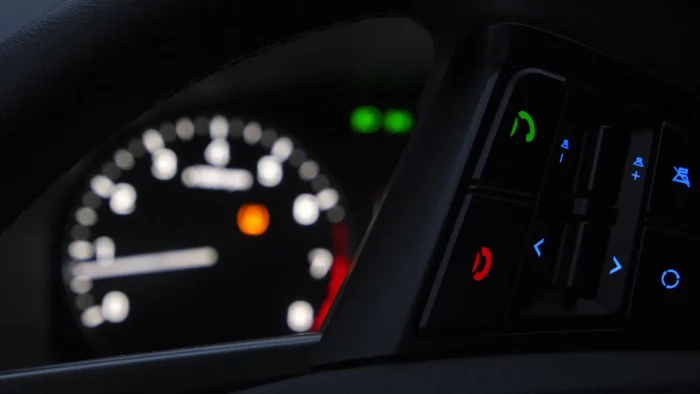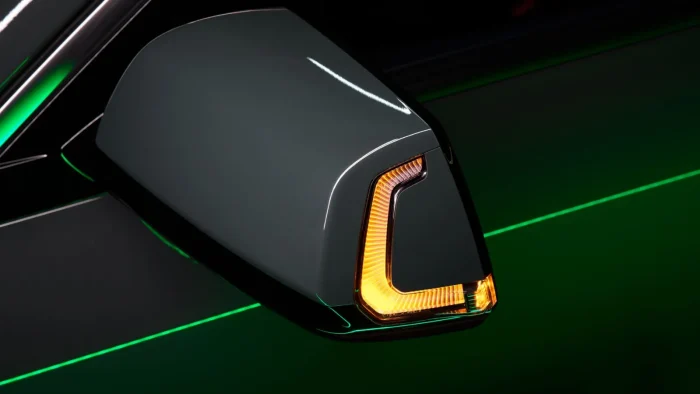
Two orange car symbols glow at the base of your Rogue’s windshield when you start it up, then fade. A little light sits in the corner of your side mirror. And when you back out of a parking spot, a sharp beep sometimes goes off and an arrow flashes on the screen. Nissan wraps a few different safety features into these alerts, and the labels alone do not tell you much.
Nissan splits the job in two. Blind spot warning watches the lanes beside you while you drive, and RCTA, Rear Cross-Traffic Alert, watches for cars crossing behind you while you reverse. They share hardware but behave differently, and that trips up a lot of owners.
Let me answer the questions Nissan drivers actually bring to the counter, roughly in the order they ask them.
Key takeaways
- Nissan blind spot warning works while you drive; RCTA only works in reverse, so they trigger in completely different situations.
- The small icon in your side mirror lighting up as a car sits beside you is the system working, not a fault.
- RCTA disables itself at anything above a slow reverse crawl because it is meant to catch traffic before you commit to backing out.
- Both features run off the same rear bumper radar, so a blocked corner usually kills them together.
- A dirty sensor, a hitch accessory, or a menu toggle explain most “it stopped working” complaints.
What is the difference between Nissan blind spot warning and RCTA?
These two get mixed up constantly because they use the same little car symbol and the same radar. The difference is all about when they fire.
Blind spot warning runs while you are driving forward, roughly above 20 mph on most Nissans. It lights the mirror indicator when a vehicle is sitting in the lane beside you, and it flashes and beeps if you signal toward that lane.
RCTA runs only when you are in reverse. It watches for vehicles crossing your path from either side as you back out, and it warns with a beep and an on-screen arrow before a car reaches you.
Good to know
Both features share two radar units tucked behind the rear bumper corners, one per side. That shared hardware is why a single blocked corner can knock out your blind spot warning and your cross-traffic alert at the same time.
If you want the deeper picture of how those radar units read the road, our explainer on how blind spot monitoring works behind the bumper breaks it down without the jargon.
What does the light in my Nissan mirror mean?
Here is the source of most confusion, because the same amber icon means different things depending on when it appears.
When the mirror icon lights only as a vehicle enters or occupies the lane beside you, that is the blind spot warning doing its job. It saw a car you might not have, and it is telling you the lane is not clear.
When that icon flashes and a chime sounds, you signaled toward an occupied lane and the system is escalating the warning to keep you from moving over into another car.
And when the icon glows steadily with nothing beside you, or a dash message appears, the system is telling you it is switched off or cannot see. Same symbol, very different meaning.
Why does RCTA turn off at low speed when I back up?
This one confuses people who think the system quit on them. It did not. It is behaving exactly as designed.
RCTA is meant to catch crossing traffic in the split second before you commit to backing out of a space. So it is most active from a dead stop and through the first few miles per hour of reverse. Once you are already rolling backward at more than a slow crawl, many Nissans reduce or suppress the alert.
The logic is simple. If you are already moving through the lane, the warning has done its job, and constant beeping would just become noise you tune out. I had a Murano owner sure his RCTA was broken because it went silent halfway out of the spot. It was working perfectly; he was just testing it at the wrong moment.
Tip
To test RCTA properly, find a safe lot, put the car in reverse from a complete stop, and have a friend drive slowly across behind you at normal parking-lot speed. If it warns you then, the system is fine and your earlier situation just did not meet the trigger conditions.
Why did my Nissan RCTA and blind spot warning stop working?
When both features go quiet at once, that shared radar is almost always the reason. Start at the back bumper.
The rear corner radar needs a clear path through the plastic. Cake it with mud, road salt film, packed snow, or ice, and the system loses confidence and shuts down rather than give you a false read.
- Wipe both rear bumper corners with a damp, soft cloth.
- In winter, clear any packed snow or ice from those spots.
- Check for a sticker, magnet, or plate frame covering a corner.
- Rinse off caked mud or salt after slushy or gravel driving.
For the right technique so you do not scratch the covers, our walkthrough on cleaning blind spot sensors the right way covers it. And if the cross-traffic side specifically is the one giving you trouble, rear cross-traffic alert not working runs through the full fix list in order.
Watch out
Some Nissans tie the RCTA beep to the parking-sensor volume. If you turned those beeps down or muted them, your cross-traffic warning can go quiet along with them. Check that the audible alert volume is up, not just that the feature is enabled in the menu.
Does a bike rack or trailer disable Nissan RCTA?
Yes, and it surprises a lot of owners. A hitch-mounted bike rack, a trailer, or a heavy cargo carrier sits right inside the rear radar’s field of view.
To the sensor, that rack looks like a solid object parked exactly where a crossing car would be, so the system either floods you with false alerts or shuts down to avoid them. That is the safe response, not a defect.
Your bike rack does not confuse the radar. It obeys it. To the sensor, that rack is a solid object sitting right where a crossing car would appear, so the system does the safe thing and stands down.
Unhook the rack and RCTA usually wakes back up on its own. Our guide on the blind spot monitor turning off after a trailer or bike rack explains which setups auto-detect towed gear and which need a manual reset.
Why does the blind spot light stay on all the time?
A mirror icon that glows steadily even with no car around is a different problem from the normal flash. Something is telling the radar it cannot trust itself.
The usual causes are a dirty or damaged rear sensor, a recent battery disconnect that reset the system to a fault state, or a rear bumper repair that knocked the radar out of aim. Our dedicated piece on when the blind spot light stays on ranks those in order.
Does winter weather really break Nissan RCTA?
Not break, exactly, but it does shut the system down more often than any other season, and the reason is simple. Snow, slush, and salt spray collect precisely where the rear radar lives.
A single morning of highway driving through wet snow can film over both rear corners in under an hour. The features go quiet, a message may appear, and everything clears once you wipe the area or the crud melts off. If your Nissan only acts up when it is cold and wet, our seasonal breakdown of blind spot monitoring failing in snow and ice is worth reading before you book anything.
When should a Nissan RCTA warning actually worry you?
After cleaning the sensors, confirming both features are switched on in the settings, and ruling out a trailer or weather, if the system still refuses to warn, then it is time for a scan.
A genuine radar fault, a mis-aimed sensor after rear body work, or wiring damage from a parking-lot tap all leave a stored trouble code. A shop can pull those in well under an hour. Expect a diagnostic fee around $100 to $150, with recalibration after a bumper repair often running $150 to $400 depending on the model.
For the master overview that ties every one of these symptoms together, start with our pillar on blind spot monitoring warning lights explained. And for a plain-language refresher on what these safety features can and cannot do, the folks at MyCarDoesWhat keep a friendly, no-sales reference. Until the system is back and trustworthy, go old school: back out slowly, crane your neck, and let any oncoming driver see your nose before you commit.
Questions drivers ask
Blind spot warning runs while you drive forward and lights the mirror indicator when a car is beside you. RCTA, Rear Cross-Traffic Alert, runs only in reverse and warns of vehicles crossing behind you as you back out. Both use the same rear bumper radar.
RCTA is designed to catch crossing traffic in the moment before you commit to backing out, so it is most active from a stop and through the first few miles per hour. Once you are already rolling backward, many Nissans reduce or suppress the alert on purpose. That is normal, not a fault.
Both features share the same two rear bumper radar units, so one blocked corner can kill them together. Wipe both rear bumper corners clean of mud, salt film, snow, or ice. If they come back, the sensor was simply obstructed.
Yes. A hitch bike rack, trailer, or cargo carrier sits inside the rear radar field and reads as a solid object where a crossing car would appear, so the system floods you with alerts or shuts down. Remove the accessory and RCTA usually restores itself.
A steady mirror light with no car around usually means a dirty or damaged rear sensor, a recent battery disconnect that reset the system, or a bumper repair that knocked the radar out of alignment. If cleaning does not fix it, have the radar module scanned for codes.