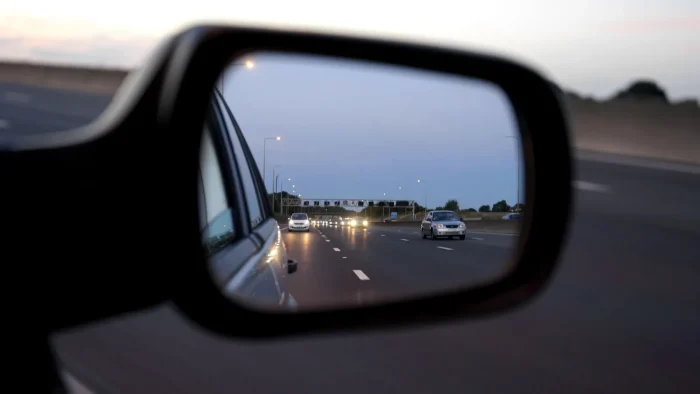
I watched a customer nearly clip a motorcycle in my own shop’s parking lot. She had just picked up her car, glanced at the mirror, saw no amber light, and started drifting over. The bike was there the whole time, sitting in a gap the radar was never designed to watch. She trusted the system to do something it simply does not do.
That moment sums up why these myths matter. Blind spot monitoring is a genuinely useful safety net, but drivers keep filling in the gaps with assumptions the technology never earned. Let me clear a few of them up the way I would at the counter.
Key takeaways
- Blind spot monitoring supplements a head check, it does not replace one.
- Most systems watch a defined zone, not the entire side of your car.
- A quiet indicator can mean the system is blocked, not that the lane is clear.
- These sensors are radar or camera based, and each has real limits worth knowing.
Myth 1: The amber light means it is safe to change lanes
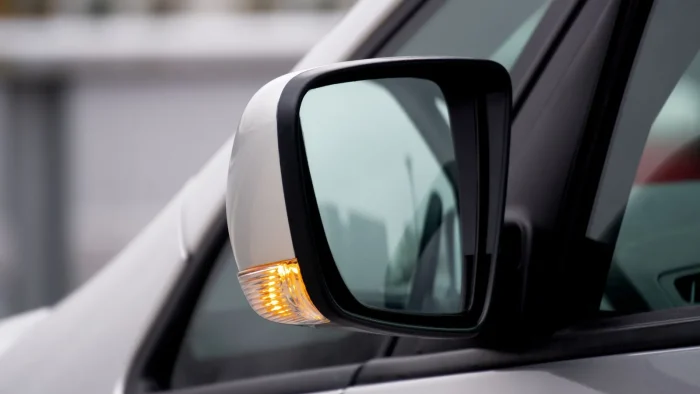
This is the big one, and it is the myth that hurts people. A dark mirror indicator only means the sensor did not detect a vehicle in its coverage zone at that instant. It is not a clearance to move.
Fast-approaching cars, bicycles, and motorcycles can slip through the timing or ride in a spot the beam does not cover. The system is a second set of eyes, not the only set.
The light is an assistant, not a chauffeur. The lane change decision is still yours.
Watch out
Always do a physical head check before merging. Every automaker, from Subaru to Ford, states plainly in the owner’s manual that the driver remains responsible. The MyCarDoesWhat safety education project says the same thing in plainer language.
Myth 2: It covers the whole side of the car
People picture a bubble wrapping the entire flank of the vehicle. Reality is narrower. Most rear-corner radar systems watch a roughly rectangular zone starting near your side mirror and extending back one lane over, maybe 10 to 15 feet behind the bumper.
A car sitting right at your door, ahead of that zone, may not register at all. So may a vehicle two lanes over. If you want the real picture of that coverage, our breakdown of how blind spot monitoring works behind the bumper maps out exactly where the beam looks.
Myth 3: Every brand’s system is basically the same
They are not, and the differences change how you should use them. Radar systems like Ford BLIS, Hyundai and Kia BCW, and Toyota’s Blind Spot Monitor see through light dirt and darkness but can be fooled by heavy snow packed on the bumper.
Camera-based setups behave differently. Honda’s LaneWatch, for example, shows you a live video feed of the passenger side only when you signal right. It is a camera, not a radar zone, and it watches nothing on the driver’s side. Our comparison of Honda LaneWatch versus traditional blind spot monitoring spells out why that trade matters.
| System type | Watches | Weakness |
|---|---|---|
| Rear-corner radar | Both sides, defined zone | Snow, ice, mud on bumper |
| Side camera (LaneWatch) | One side, on signal | Nothing on the other side |
| Mirror-mounted radar | Both sides, defined zone | Bent mirror, blocked lens |
Myth 4: If the light is off, the system must be working
A silent indicator can mean two very different things: nothing is beside you, or the system quietly gave up. Snow, ice, a caked layer of road grime, or a trailer hitch can all disable detection without a dramatic warning.
I have pulled cars into the bay in January where a fist of packed snow over the rear radar shut the whole thing down. The driver never noticed because the mirror light simply stayed dark, which felt normal. Our guide on blind spot monitoring failing in snow and ice covers this exact trap.
Tip
When your car warns you the system is off, believe it. A blind spot system unavailable message usually points to a blocked or dirty sensor you can often fix in the driveway.
Myth 5: A stuck-on light means the whole system is broken
Not necessarily. A blind spot indicator that glows constantly, even on an empty road, is annoying but often points to something simple like a dirty sensor face, a stored fault, or a recent low-speed impact. It rarely means the module is scrap.
Before you brace for a big repair bill, walk through the causes in our piece on why a blind spot light stays on. Half the time the fix is a clean sensor and a clear fault code.
Good to know
Rear cross-traffic alert shares the same radar hardware as blind spot monitoring on most cars. If one acts up, the other often does too, which is a useful clue when you are diagnosing a fault.
Myth 6: You can rely on it in bad weather
Weather is where overconfidence bites hardest. Radar handles rain and darkness reasonably well, but heavy spray, thick slush, and packed snow degrade it. Camera systems struggle with glare, fog, and a filthy lens.
The honest rule is that the system gives you less help exactly when driving is hardest, so your own mirror checks should get sharper in bad conditions, not lazier.
How to actually use it well
Treat blind spot monitoring as one layer in a habit, not a replacement for the habit. Signal, glance at the mirror indicator, then turn your head to physically confirm the lane. That three-step check catches what any single sensor misses.
- Keep the rear bumper corners clean, especially in winter.
- Do a head check every time, no exceptions.
- Learn where your specific system’s zone starts and ends.
- Believe any warning message that says the system is off.
For the complete rundown of what each dashboard alert means and when it signals a real problem, our main guide to blind spot monitoring warning lights ties all of this together. Use the technology, respect its limits, and keep your eyes doing the job they were always meant to do.
Questions drivers ask
No. A dark indicator only means no vehicle was detected in the sensor's zone at that instant. Fast cars, motorcycles, and bicycles can slip through, so you still need a physical head check every time.
No. Most systems watch a defined zone starting near the side mirror and extending about one lane over and a short distance behind. A vehicle right at your door or two lanes over may not register at all.
Not fully. Packed snow, slush, or ice over the rear bumper can disable radar detection without any dramatic warning. The indicator may simply stay dark, which is why winter head checks matter even more.
Usually not. A constantly lit indicator often traces to a dirty sensor face, a stored fault code, or a recent low-speed impact. A cleaning and a cleared code fix it more often than a full module replacement.
No. Radar systems watch a zone on both sides, while camera systems like Honda LaneWatch show one side only when you signal. Each has different strengths and blind spots, so learn how your specific system behaves.