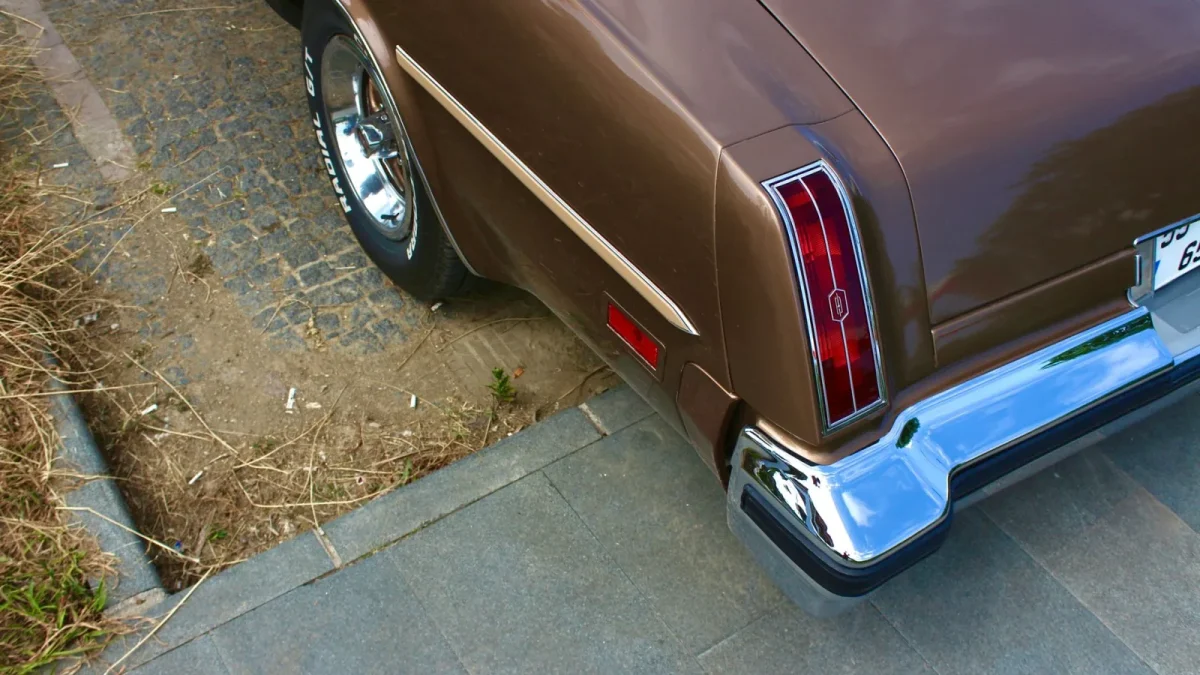
Reach back and run your hand along the rear corner of your car’s bumper. Feels like ordinary painted plastic, right? Tucked a couple of inches behind that skin, on both sides, sits a small radar unit about the size of a deck of cards. That hidden pair is the entire reason an amber triangle lights up in your mirror when a car slides into the lane beside you.
Drivers ask me all the time whether the system watches them through the mirrors, or the backup camera, or some sensor they can point to. Almost none of that is right. Once you understand the actual hardware and how it decides what counts as a threat, the light stops being a mystery and starts being a tool you can trust.
Let me walk you through what lives behind the bumper, how it draws its detection zones, and why the mirror icon behaves the way it does.
Key takeaways
- Blind spot monitoring runs on two short-range radar sensors mounted inside the rear bumper corners, not cameras or the mirrors themselves.
- Each sensor paints a detection zone that starts roughly at your side mirror and extends about one lane over and one car length back.
- The system only alerts on vehicles moving in your direction at a similar or faster speed, which is why it ignores parked cars and slow objects.
- Because the radar sits behind painted plastic, ice, mud, and thick stickers over that corner will weaken the signal enough to shut the feature down.
The hardware hiding behind your bumper
The heart of the system is a component technicians call the blind spot radar module, and there are two of them, one per rear corner. On most cars from about 2015 onward you will find them bolted to a bracket behind the bumper cover, angled outward and slightly rearward.
These are short-range radar units, usually operating around 24 gigahertz on older systems and 77 gigahertz on newer ones. They are not the same as the long-range radar behind your front grille that runs adaptive cruise. Different job, different location, different aim.

Here is the part that trips people up. The sensor cannot see through metal or thick body filler, but it can see through the thin painted plastic of a stock bumper cover. Automakers tune the whole assembly knowing the signal has to pass through that skin, which is exactly why an aftermarket bumper or a heavy repair over that spot can throw the calibration off.
How the sensor knows a car is there
Radar is beautifully simple in principle. The module fires a radio wave, that wave bounces off anything solid nearby, and the sensor times how long the echo takes to come back. From the delay it calculates distance, and by measuring how that distance changes it calculates closing speed.
It does this dozens of times per second, on both sides at once. So the module always knows not just that something is beside you, but whether that something is pulling away, holding steady, or rushing up fast in your blind spot.
Good to know
This is why blind spot monitoring ignores guardrails, parked cars, and roadside signs. Those objects are not moving with traffic, so the system’s speed logic filters them out. It is looking specifically for a vehicle traveling in your direction.
That speed filtering is the smart part. If the module alerted on every stationary object it detected, your mirror would light up constantly on any road with a barrier. Instead it applies rules about relative speed and direction to decide what actually belongs in your blind spot.
Where the detection zone actually sits
People picture the blind spot as some vague area behind them, but the system defines it precisely. The monitored zone typically begins near the outside edge of your side mirror and stretches back roughly one car length, covering about one lane width to each side.
That shape is deliberate. It is designed to catch the exact patch of road your mirrors miss, the wedge where a car is too far back to see straight ahead and too far forward to catch in the mirror. Engineers mapped it to the real geometry of a driver’s sightlines.
The zone is not the whole side of your car. It is the specific slice your own eyes cannot cover, and the radar was aimed to fill that gap and nothing more.
Two things fall outside that zone by design. A car three lanes over will not trip it, and neither will a vehicle that has pulled fully alongside your door, because at that point you can see it in your peripheral vision. If you want the full picture of the confusion this causes, our pillar guide to blind spot monitoring warning lights lays out every icon state in one place.
The two states of the mirror light
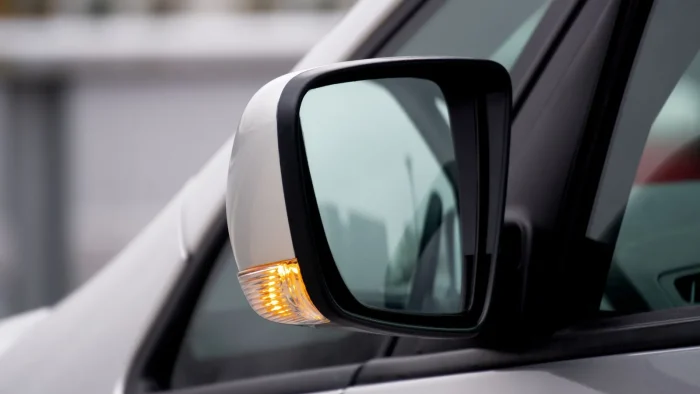
Now for the part you actually watch while driving. The amber icon in your mirror speaks in two clear signals, and telling them apart is the whole game.
Steady glow: just information
A solid, steady amber icon means a vehicle is sitting in your blind spot right now. No alarm, no chime, just a heads-up. The system is quietly telling you the lane beside you is occupied so you do not drift into it.
Flashing plus a chime: an actual warning
When that same icon starts flashing, usually with a beep, the system has escalated. That happens when a car is in your blind spot and you signal toward it or begin moving over. It just went from informing you to warning you to stop.
Watch out
The flash only triggers if you signal or start drifting. If you swing the wheel hard and fast without signaling, some systems cannot react in time. The light is a backup for a proper mirror-and-shoulder check, not a substitute for one.
A few brands add muscle on top of the light. Certain Toyota, Ford, and Hyundai models will gently steer or brake you back if you ignore the flash. Those are separate layered features, but they all start with the same radar reading and the same amber icon.
Why a clean sensor matters so much
Since the entire system leans on a clear radar signal, anything solid parked over that bumper corner is a problem. A clump of packed snow, a crust of dried road salt, or a thick bumper sticker in the wrong spot can absorb or scatter the signal enough that the module gives up and reports a fault.
I have seen spotless cars roll in with a blind spot warning simply because one clump of ice sat over the left rear corner. The radar cares only about the small patch of bumper directly in front of it, so a single obstruction in that exact spot is all it takes. Our rundown of what blocks blind spot sensors ranks the usual culprits from most to least common.
- Wipe both rear bumper corners when you clean your headlights and taillights.
- In winter, brush snow and ice off those two spots before you pull out.
- Keep stickers, decals, and trailer wiring clear of the corner zones.
- Rinse off caked mud and road salt after a wet or slushy drive.
What the system is not built to catch
Trust the radar, but know its blind spots, because it has a few of its own. A motorcycle splitting lanes or weaving fast can slip through between sensor sweeps. A car that lingers exactly at the far edge of the zone may register late or not at all.
The system also shares its rear radar with another feature. When you shift into reverse, those same corner sensors swing their attention to traffic crossing behind you, a function called rear cross-traffic alert. If that piece stops behaving, our guide on rear cross-traffic alert not working covers the parking-lot causes separately from the highway ones.
For a plain-language primer on how these assist features are meant to be used, the folks at MyCarDoesWhat keep a friendly reference, and the safety research behind them lives at the IIHS overview of driver assistance.
Understand the hardware, respect the zone, and keep those two rear corners clean. Do that, and the little amber triangle becomes exactly what the engineers intended: a quiet second set of eyes on the lane your own eyes cannot quite reach.
Questions drivers ask
Almost all systems use radar, not cameras. Two short-range radar modules sit inside the rear bumper corners, one on each side. Honda LaneWatch is the main camera-based exception, and it only watches the passenger side.
The monitored zone usually starts near your side mirror and extends about one car length behind you, covering roughly one lane width to each side. It is aimed at the exact patch your mirrors and peripheral vision miss.
The radar filters detections by speed and direction. It only alerts on vehicles moving in your direction at a similar or faster speed, so parked cars, guardrails, and signs get screened out on purpose.
Yes, through the thin painted plastic of a stock bumper cover. It cannot see through metal, thick body filler, or a heavy aftermarket bumper, which is why repairs over that area can throw off the system.
A steady amber icon means a car is in your blind spot right now. A flashing icon with a chime means a car is there and you signaled toward it or started drifting into that lane, which is the system warning you not to move over.