You hitched up the boat, clipped a four-bike rack onto the trailer hitch, or slid a cargo carrier onto the receiver, and the first thing your dashboard did was throw a warning at you. The blind spot monitor either went dark, flashed an error, or started beeping like the sky was falling every time a car passed. That is not a coincidence, and it is not a coma the car fell into by accident.
The short version: your rear-corner radar just started seeing your own gear as traffic. Let me walk you through why, and what each brand actually does about it.
Key takeaways
- A trailer or hitch-mounted rack sits directly inside the rear radar’s detection zone, so the system either disables itself or false-alarms.
- Some brands (Ford, GM, Ram) offer a dedicated trailer or towing mode that reshapes the blind spot coverage; many mainstream models do not.
- A metal bike rack or aluminum trailer reflects radar far more than the manufacturer expected, which is why steel racks trigger more warnings than plastic ones.
- Turning BSM off while towing is often the correct move, not a failure, but you must turn it back on afterward.
Why the rear radar panics the moment you hitch up
Blind spot monitoring on most vehicles uses two short-range radar units, one behind each rear corner of the bumper. They fire a beam outward and slightly rearward, watching for anything that enters the lane beside and behind you.
Now picture where a trailer tongue, a hitch bike rack, or a cargo box lives: about 18 to 30 inches off your rear bumper, dead center in the overlap of both radar cones. To the sensor, a chunk of metal that close and that stationary looks like a vehicle glued to your tail.
The car has two ways to respond. It can flood you with false blind spot alerts every time the radar sees the rack, or it can decide the signal is garbage and shut the whole system down with a message. If you want the deeper mechanics of what those sensors are doing back there, I broke it down in how blind spot monitoring works behind the bumper.
Good to know
Aluminum and steel reflect radar strongly. A bare metal four-bike rack will confuse the system far more than a single plastic-heavy rack, even at the same distance. Material matters as much as position.
Does towing a trailer disable blind spot monitoring?
On a lot of vehicles, yes, and often on purpose. When you plug a trailer’s wiring harness into a factory tow package, the car frequently registers that a trailer is present and adjusts driver-assist behavior automatically.
Here is where brands split into two camps.
Brands with a real trailer mode
Ford’s tow-capable trucks and SUVs, when equipped with the factory tow package, extend the blind spot zone to cover the length of the trailer. You enter the trailer length in the center screen, and Blind Spot Information System (BLIS) with Trailer Coverage stretches the detection area so it watches past the end of the trailer instead of pinging on the trailer itself.
GM (Chevy, GMC) and Ram offer similar trailering logic on their full-size trucks. The system knows a trailer is attached and reshapes its expectations rather than screaming at your own load.
Brands that simply switch off
Most mainstream cars and crossovers, think Toyota, Honda, Subaru, Hyundai, and Kia, do not have trailer-aware BSM. On those, connecting a trailer harness usually disables the blind spot monitor and rear cross-traffic alert entirely, and you will see a message saying the system is off. That is documented behavior, not a fault. If you see that exact wording, my write-up on the blind spot system unavailable message explains what it does and does not mean.
Watch out
If BSM disabled itself for towing and you unhitch but the light stays on, the car may not have registered the trailer as removed. A short drive usually resets it. If it does not, see my guide on when a blind spot light stays on and refuses to clear.
Bike racks are a different headache
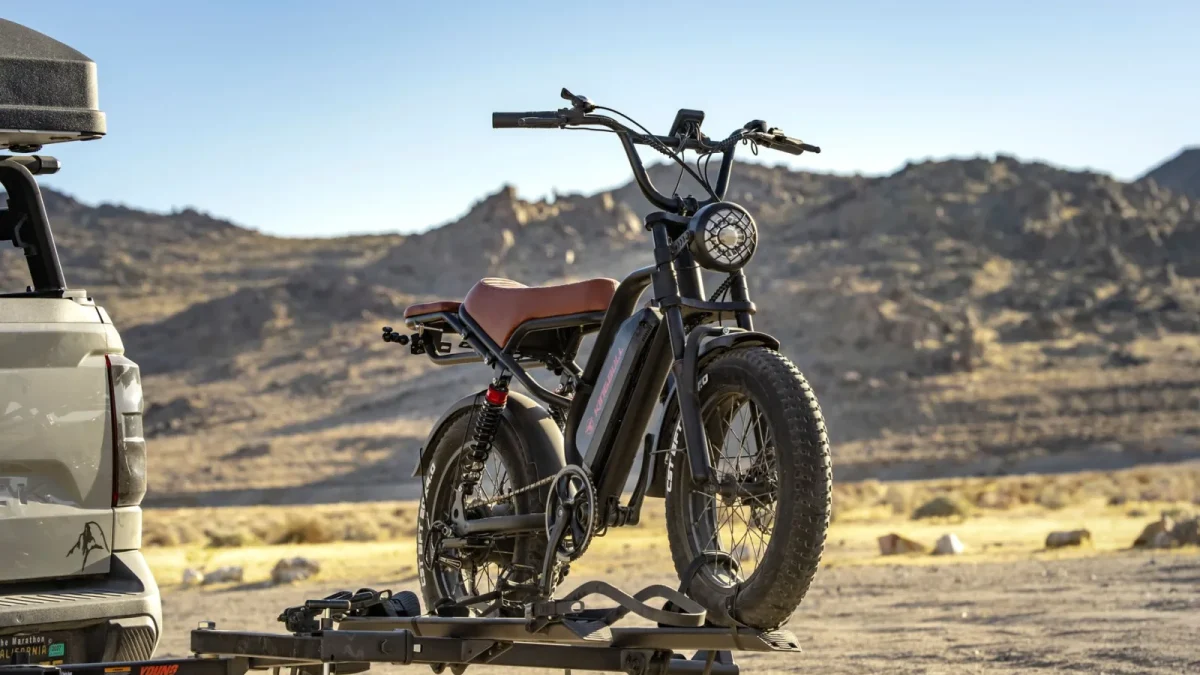
A bike rack rarely triggers the trailer-detection logic, because you are not plugging in a seven-pin harness. So the car has no idea anything changed. It just keeps running BSM as normal, and now it can see a rack full of metal.
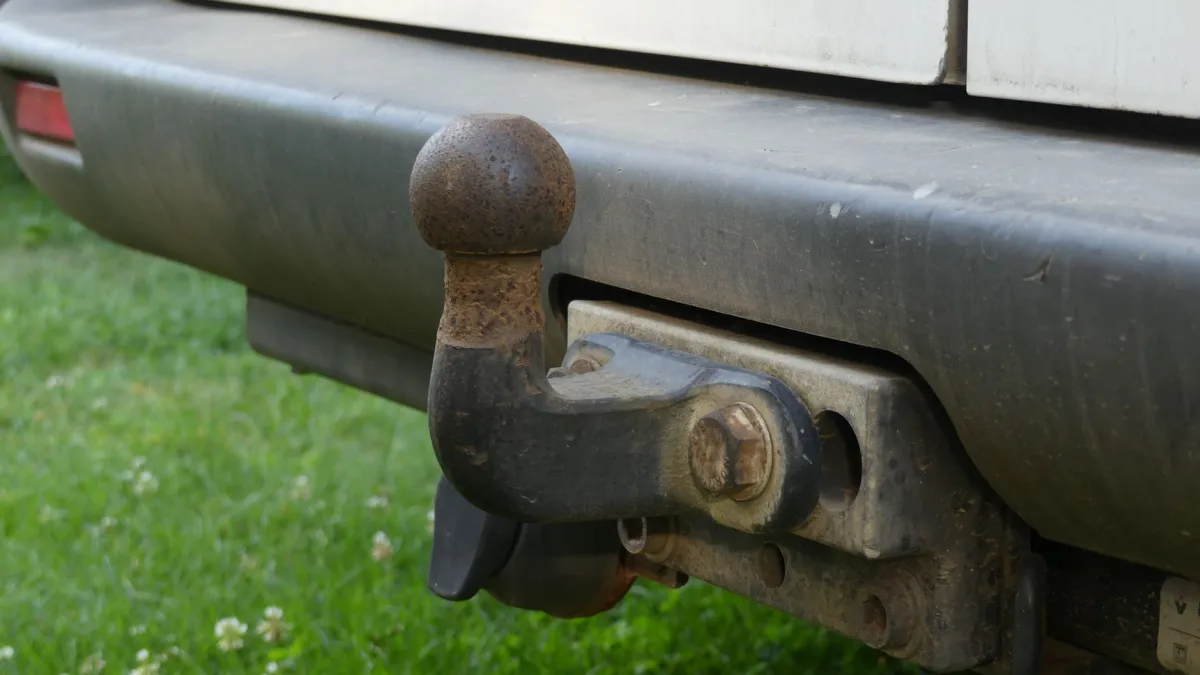
What you get depends on the rack. A hitch-mounted platform rack that holds bikes low and wide is the worst offender, because the tires and frames sit right in the radar path. A trunk-strap rack usually sits higher and closer to the glass, so it interferes less with the bumper-level sensors.
- Empty hitch rack, low profile: often no alerts at all.
- Hitch rack loaded with bikes: frequent false blind spot lights on both sides.
- Roof rack: almost never affects rear-corner radar.
- Metal cargo basket on the hitch: strong, constant false triggers.
What you should actually do
You have three practical options, and the right one depends on your vehicle.
1. Let the system disable itself and drive accordingly
If your car killed BSM when you hitched up, do not fight it. Just go back to shoulder checks and mirror use the way we all drove before radar existed. The system will come back when you unhitch.
2. Turn it off manually for a bike rack
If a rack is throwing constant false alerts, switch off blind spot monitoring in the settings menu so the beeping does not train you to ignore real warnings. That last part matters: an alert you learn to tune out is worse than no alert. Turn it back on the second the rack comes off.
3. Use trailer mode if you have it
Ford, GM, and Ram owners with the tow package should enter the trailer dimensions and let the system extend its coverage. It genuinely works well once configured.
The radar is not broken when it flags your bike rack. It is doing exactly what it was built to do, which is spot a solid object right behind your car.
Brand-by-brand trailer behavior at a glance
| Brand | Trailer-aware BSM? | Typical behavior |
|---|---|---|
| Ford (tow package) | Yes | Extends coverage for trailer length |
| GM / Ram trucks | Yes | Adjusts zone for attached trailer |
| Toyota / Honda | No | Disables BSM with harness connected |
| Hyundai / Kia | No | Disables BCW, shows warning message |
If you drive a Hyundai or Kia and want to know exactly what that dash icon is telling you, my Hyundai and Kia BCW warning light guide covers it. And for the full picture on every icon and message the system can show, start with the pillar on blind spot monitoring warning lights.
When it is a real problem, not just a rack
Here is a mistake I have seen more than once in the bay. A customer tows all summer, unhitches for the season, and the blind spot light never comes back. They assume it is the trailer. It is not. Sometimes the constant vibration and road grime from a season of towing loosened or caked over a sensor.
If your BSM does not return to normal a few minutes after everything is off the hitch, the culprit is usually a dirty or obstructed sensor rather than the rack itself. That is a five-minute check I cover in what blocks blind spot sensors.
Tip
Before a long towing trip, note whether your BSM is normally on. That way, when you unhitch and it is still off or still alerting, you know whether the tow rig caused it or something else did. A 10 second mental note saves a needless service visit.
Trailers and racks putting your blind spot monitor to sleep is normal, expected, and usually reversible. Know which camp your vehicle falls in, respect the shoulder check while you are hauling, and flip the system back on the moment your gear is off the back. For anything the industry says about how these systems are supposed to behave, the IIHS overview of driver assistance is a solid, no-marketing reference.
Questions drivers ask
Plugging a trailer harness into a factory tow package tells the car a trailer is attached. On most mainstream vehicles the system disables blind spot monitoring so it does not false-alarm on the trailer. That is intended behavior, not a fault.
It can. A hitch-mounted rack loaded with metal bikes sits inside the rear radar's zone and often triggers repeated false alerts on both sides. Roof racks rarely affect the bumper-level sensors.
Turn off blind spot monitoring in the vehicle settings menu while the rack is on. Remember to switch it back on the moment you remove the rack so you are not left driving without the assist.
Yes, if you have the factory tow package with Trailer Coverage. You enter the trailer length in the center screen and BLIS extends its detection zone past the end of the trailer instead of alerting on the trailer itself.
A short drive usually resets it once the trailer harness is unplugged. If it stays on after several minutes, check for a dirty or obstructed sensor rather than assuming the trailer caused a fault.