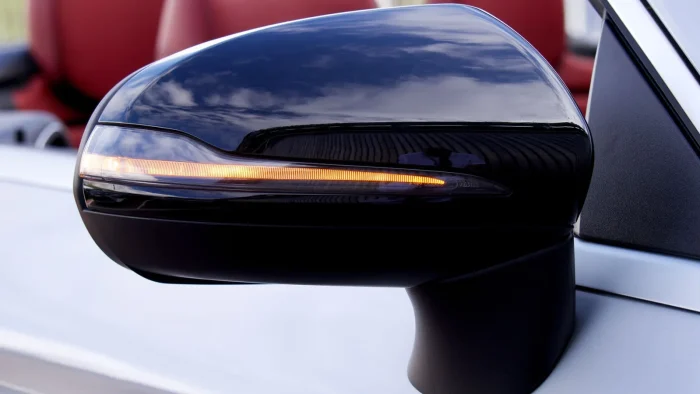
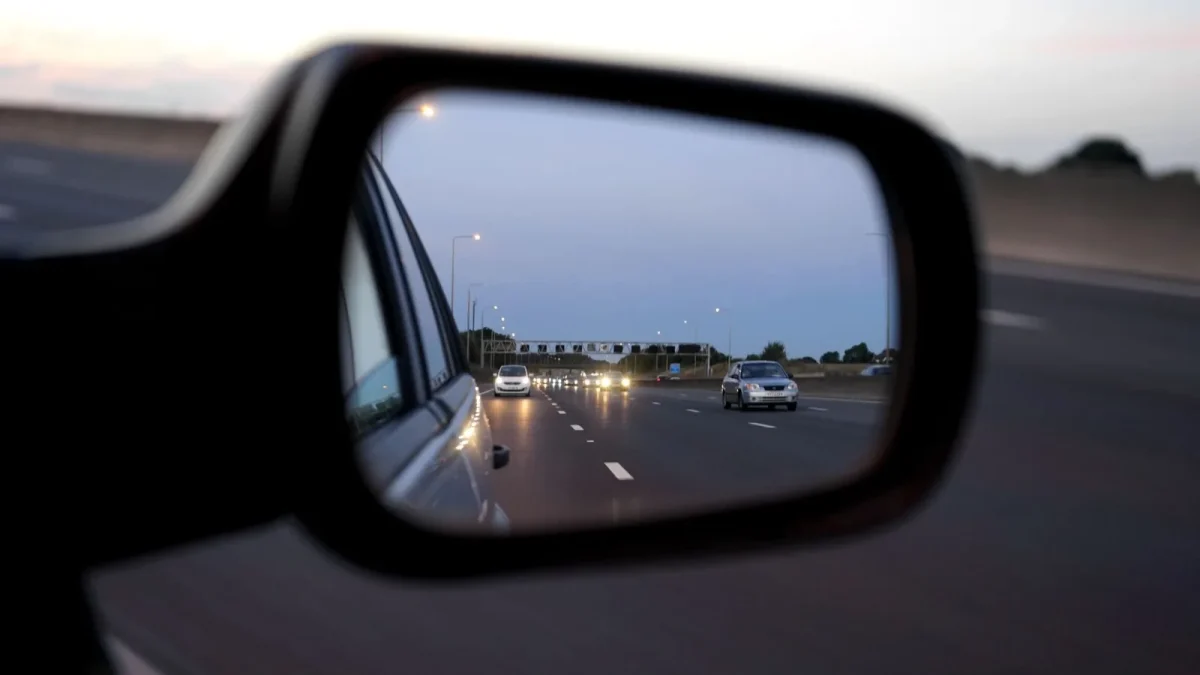
You are merging onto the interstate, you check your mirror, and a little amber triangle in the corner of the glass lights up. Some cars add a chime. A few will nudge the wheel or tug the seatbelt if you keep drifting. That small glowing symbol is blind spot monitoring doing its job, and it is one of the most quietly useful features on any car built in the last decade.
I have spent years explaining these lights to drivers across the service counter, and the confusion is almost always the same. What does the steady light mean versus the flashing one? Why did a warning message pop up on the dash instead of the mirror? And why does the whole thing sometimes just quit?
This is the map for all of it. What every blind spot and rear cross-traffic light means, how the radar behind your bumper actually works, and where to go when a specific problem shows up on your car.
Key takeaways
- The amber mirror icon has two states: a steady glow means a vehicle is in your blind spot, and a flashing icon plus a chime means you signaled or started to move toward it.
- Blind spot monitoring runs on two small radar sensors hidden inside the rear bumper corners, not cameras, so mud, ice, and stickers over that spot will disable it.
- A dash message like “BSM unavailable” or “blind spot system fault” is the car telling you the radar cannot see clearly, and it is usually a blockage rather than a broken part.
- Rear cross-traffic alert shares the same rear radar and warns you of cars crossing behind while you back out of a parking space.
What the mirror light is really telling you
The amber icon in your side mirror has a language, and once you learn it, the system makes sense. There are two distinct signals, and drivers mix them up constantly.
A steady, solid glow means a vehicle is sitting in your blind spot right now. No urgency, just information. The system is saying “someone is beside you, back left or back right, so do not change lanes into them.”
A flashing icon, usually with a beep, is the escalation. That happens when there is a car in your blind spot and you either turn on your signal toward it or begin drifting into that lane. The system just went from informing you to warning you.
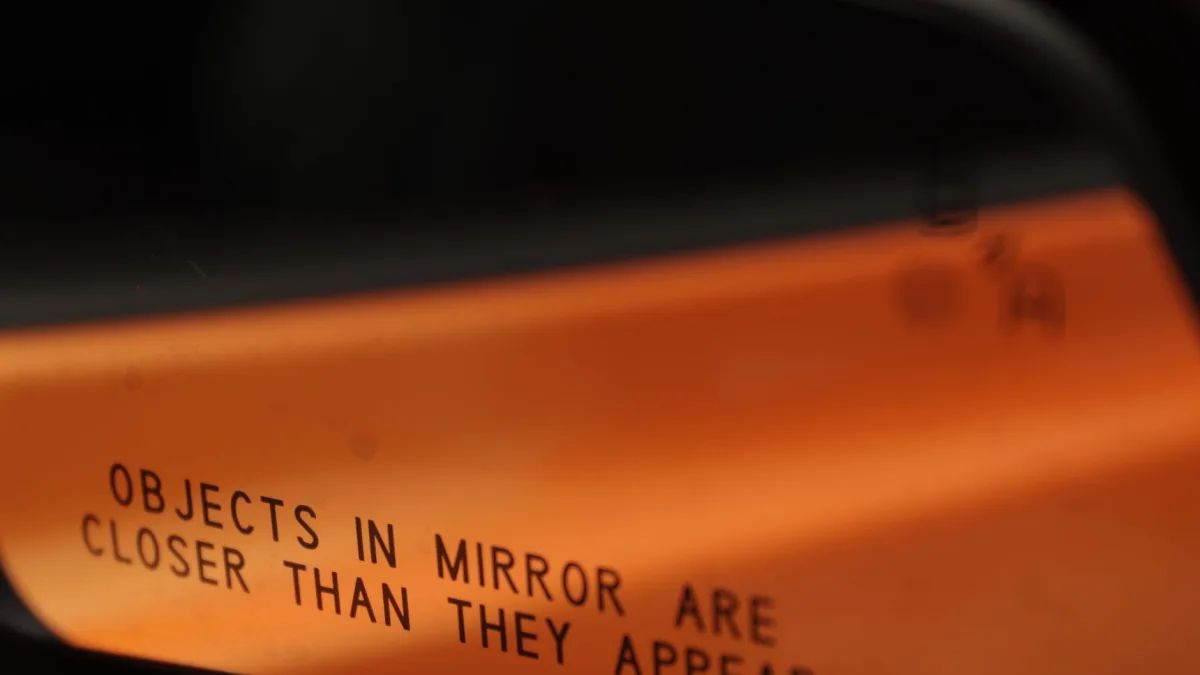
Some brands add a physical nudge on top of the visual. Certain Toyota, Ford, and Hyundai models will apply gentle steering or brake correction if you ignore the flash and keep moving over. Those are separate features layered on top of the basic alert, but they all start with that same amber light.
How the radar behind your bumper works
Here is the part that surprises most people. Blind spot monitoring does not use a camera to watch your blind spots. It uses radar, and the sensors are hidden inside the rear bumper, one on each back corner.
Each sensor sends out a radio signal, waits for it to bounce off a nearby vehicle, and times the return. From that it works out how far away a car is and how fast the gap is closing. It does this many times per second on both sides at once.
Because the sensors sit behind the plastic bumper skin, you cannot see them, and that is by design. It also means a layer of road grime, packed snow, or a thick bumper sticker parked right over that corner can weaken the signal enough to shut the system down. I break down the whole hidden layout in our guide to how blind spot monitoring works behind the bumper.
Good to know
Radar cares only about the small patch of bumper directly in front of each sensor, not the whole car. A spotless vehicle with one clump of ice packed over the left rear corner can throw a blind spot fault while everything else looks perfect.
When the dash throws a warning message
Sometimes the problem is not the little mirror icon but a full text message on your instrument cluster. You might see “Blind Spot Monitor Unavailable,” “BSM system fault,” or “blind spot system disabled.” Different brands word it differently, but the meaning is close to identical.
That message means the radar cannot get a clean, trustworthy signal, so the car has switched the feature off rather than guess. In my experience, the top cause by a wide margin is a blocked sensor, not a failed part.
If you are staring at that exact text, walk through the ordered checks in our piece on the blind spot system unavailable message. It covers what to clear first and when the fault points to something deeper.
The other light: rear cross-traffic alert
Blind spot monitoring has a close cousin that shares the same rear radar. It is called rear cross-traffic alert, or RCTA, and it works when you are in reverse.
As you back out of a parking spot, the same corner sensors sweep sideways and watch for vehicles crossing behind you, the ones you cannot see because of the SUVs parked on either side. When a car approaches, you get an audible alert and often an arrow on the screen showing which direction it is coming from.
The rear radar does not clock out when you shift into reverse. It just changes jobs, watching your sides on the highway and your tail in the parking lot.
If your reverse warning has stopped triggering, the fix path is a little different from the blind spot light. Start with our guide on rear cross-traffic alert not working, which sorts the parking-lot causes from the highway ones.
Why a blind spot light stays stuck on
One of the most common complaints I hear is a mirror icon that glows steadily with no car anywhere beside you. It just sits there, lit, mocking you at every red light.
A stuck-on light usually points to one of a few things: a dirty or iced-over sensor feeding bad data, a radar module reporting a fault, or a glitch that needs a system reset. It is rarely the mirror itself.
Our symptom guide on the blind spot light that stays on ranks these causes the way I actually see them roll into the bay, from the two-minute fix to the module replacement.
Watch out
Do not start trusting a blind spot light that behaves strangely. If it stays lit, flickers, or fails to warn you when a car is clearly there, treat the system as offline and go back to physically turning your head to check the lane until it is fixed.
What blocks the sensors in the first place
Since the whole system rides on a clean radar signal, anything solid over the sensor is the enemy. The usual suspects are predictable once you know where to look.
- Caked mud or road salt over the rear bumper corners after a wet drive.
- Packed snow and ice, which is the number one winter killer of these systems.
- Bumper stickers, trailer wiring, or a dealer decal placed right over a sensor.
- A bike rack, hitch cargo carrier, or trailer sitting inside the radar’s field of view.
- Aftermarket bumper paint or thick body filler from a repair over the sensor area.
We cover the full list, including the sneaky ones, in what blocks blind spot sensors. If you tow or haul, the trailer and bike-rack problem deserves special attention, and our guide on the blind spot monitor turning off after a trailer or bike rack explains why the system reads your own gear as a permanent blind spot obstacle.
Keeping the sensors clean and healthy
Because the radar does all the work, a little maintenance goes a long way. The good news is that cleaning is genuinely simple, but there is a right and wrong way to do it.
You do not need special tools, just a gentle touch. Harsh scraping or a pressure washer aimed straight at the bumper corner can do more harm than good over time. Our walkthrough on cleaning blind spot sensors the right way shows exactly where to wipe and what to avoid.
Winter deserves its own plan. Snow and ice defeat these sensors faster than anything else, and a quick brush of the rear corners before you drive off can save you a dashboard full of warnings. Our seasonal guide on blind spot monitoring in snow and ice covers what to clear and what to simply accept as a cold-weather limit.
Tip
When you clean your car in winter, make the two rear bumper corners part of your routine, right alongside the headlights and taillights. Ten seconds with a mitt over each sensor spot prevents most cold-morning blind spot faults.
Brand names for the same idea
Every automaker slaps its own badge on blind spot monitoring, and the acronym soup is real. Here is a quick map of the big ones so you can match the light on your dash to the right guide.
| Brand | System name | Deep-dive guide |
|---|---|---|
| Toyota / Lexus | Blind Spot Monitor (BSM) | Toyota blind spot monitor light |
| Ford / Lincoln | BLIS | Ford BLIS not available |
| Hyundai / Kia | Blind-Spot Collision Warning (BCW) | Hyundai and Kia BCW light |
| Nissan / Infiniti | Blind Spot Warning + RCTA | Nissan RCTA and blind spot |
Two brands do things their own way and deserve a note. Mazda calls its version Rear Vehicle Monitoring (RVM), and owners chasing a stubborn light should read our Mazda RVM troubleshooting guide. Honda took a different road entirely on many models with a camera-based system called LaneWatch, and the trade-offs are worth understanding in Honda LaneWatch versus blind spot monitoring.
Respect what it can and cannot do
Blind spot monitoring is a genuinely good safety net. Studies from the insurance industry link these systems to real drops in lane-change crashes, and you can read the neutral research at the IIHS overview of advanced driver assistance. For plain-language basics on each feature, MyCarDoesWhat is a friendly starting point too.
But it is a helper, not a replacement for your own eyes. Radar can miss a fast motorcycle splitting between lanes or a car that lingers exactly at the edge of the sensor’s range. Keep signaling, keep glancing over your shoulder, and treat the amber light as a second opinion rather than the final word.
Learn the two states of the mirror icon, keep those rear corners clean, and know which guide to reach for when a warning shows up. Do that, and the little amber triangle becomes exactly what the engineers intended: a quiet backup watching the lane you cannot quite see.
Questions drivers ask
A steady glow means a vehicle is currently in your blind spot on that side. If the icon flashes and beeps, it means a car is there and you either signaled toward it or started drifting into that lane. Treat the flash as a warning not to move over.
Most systems use radar sensors hidden inside the rear bumper corners, one on each side. Because the sensors sit behind the bumper skin, mud, snow, ice, or a sticker over that spot can block the signal and disable the feature. Honda LaneWatch is a camera-based exception.
A message like BSM unavailable or blind spot system fault usually means the radar cannot get a clean signal, most often from a blocked or iced-over sensor. Clean the rear bumper corners first. If it persists, the radar module may need a scan and reset.
They share the same rear radar sensors but do different jobs. Blind spot monitoring watches your sides while driving, and rear cross-traffic alert watches for cars crossing behind you as you back out of a parking space.
Not fully. Packed snow, ice, and heavy road grime over the rear bumper corners are the number one cause of winter blind spot faults. If the light behaves strangely or the system reports a fault, go back to turning your head to check the lane until the sensors are clear.