Most blind spot complaints I hear are about a light that will not turn off. This one is the opposite, and it is quieter and more dangerous. A car is sitting right in your blind spot, plainly there in the mirror, and the amber warning never appears. No chime, no glow, nothing.
That kind of silent failure is easy to miss until the day you really need the alert and it does not come. Let me walk you through how I track down a blind spot indicator that has stopped lighting up, roughly in the order I check things in the bay.
Key takeaways
- Start with the obvious: the system may simply be switched off in a menu.
- A blocked or dirty rear sensor is the most common silent cause.
- One dead corner means the failure is likely a module or wiring fault, not a setting.
- If detection is gone with no warning message, get it scanned before you trust it again.
First, confirm the system is actually on
Before anything else, rule out the simplest explanation. Blind spot monitoring can be turned off through the infotainment menu or a physical button, and it is easy to disable by accident. On some cars a valet or a curious passenger bumps the setting and nobody notices for weeks.
Dig into the driver-assist settings and confirm the feature toggle is on. On many vehicles the system also stays off until you pass a low speed threshold, usually around 10 to 20 mph, so a test in the driveway can look like a failure when it is not.
Tip
Test the system properly by driving on a road with traffic beside you at 25 mph or more. Parking-lot creep speeds are below most systems’ activation threshold, so the light staying dark there is normal.
Check for a blocked or dirty sensor
If the setting is on and the light still never fires, look at the rear corners of the car. Radar modules hide behind the bumper cover, and a layer of caked mud, road salt, ice, or even a thick sticker can quietly kill detection.
Winter is the worst offender. Slush freezes into a solid plug over the sensor, and the system either warns you or, on some cars, just goes silent. Our guide to what blocks blind spot sensors lists every common culprit I find back there.
Watch out
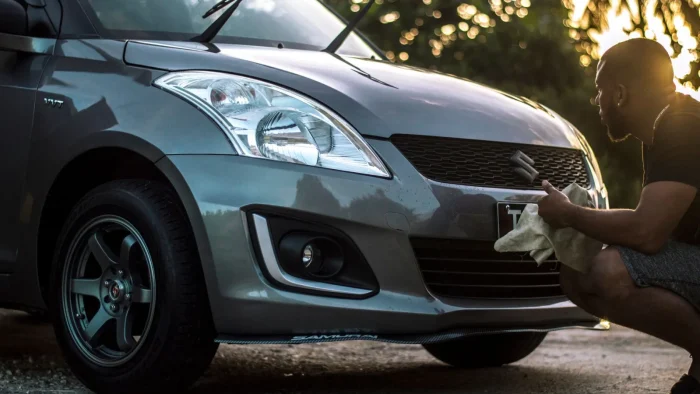
Do not scrape the bumper over a sensor with a metal tool. You can crack the radar cover or scratch it enough to scatter the signal. A proper blind spot sensor cleaning uses a soft cloth and gentle pressure, nothing more.
One side dark or both?
This is the single most useful diagnostic question, so I ask it early. Watch both mirrors while a helper drives a car up alongside on each side, or use a parking lot and a friend’s vehicle.
Both sides silent
If neither indicator ever lights, the cause is usually system-wide: a disabled setting, a blown fuse, a lost communication link, or a stored fault that shut the whole feature down. This pattern points away from a single failed part.
Only one side dark
If one mirror works and the other never lights, you have narrowed it beautifully. That corner’s radar module, its connector, or its wiring is the likely fault. A single dead zone almost never comes from a setting.
| Symptom | Likely cause | Next step |
|---|---|---|
| Both sides dark | Setting, fuse, or system fault | Check menu, then scan for codes |
| One side dark | Module or wiring on that corner | Inspect connector, scan that module |
| Warning message shown | Blocked or unavailable system | Clean sensor, recheck |
Look for a warning message you may have dismissed
Sometimes the car did try to tell you. A blind spot system unavailable message may have flashed at startup and cleared before you read it. That message changes everything, because it means the car knows the system is down, which usually points to a blockage or a temporary fault rather than a dead sensor.
If you saw such a message, treat the sensor as blocked first. Clean the corners, drive again, and see whether normal detection returns.
Good to know
Rear cross-traffic alert runs off the same radar modules. If that feature has also gone quiet, it is strong evidence of a hardware fault rather than a simple setting. Our piece on rear cross-traffic alert not working shares the diagnostic path.
Trailer, bike rack, and hitch interference
Here is one drivers rarely connect. Many cars automatically disable blind spot monitoring when they sense a trailer plugged into the tow harness, and a bike rack hanging over the rear bumper can physically block the radar or trip that same shutoff.
If your light stopped working right after you mounted a rack or towed something, that is almost certainly your answer. Walk through the details in our guide on the blind spot monitor turning off after a trailer or bike rack.
When a safety light goes quiet, assume it failed until you have proof it is fine. Silence is not the same as safe.
When to scan for codes
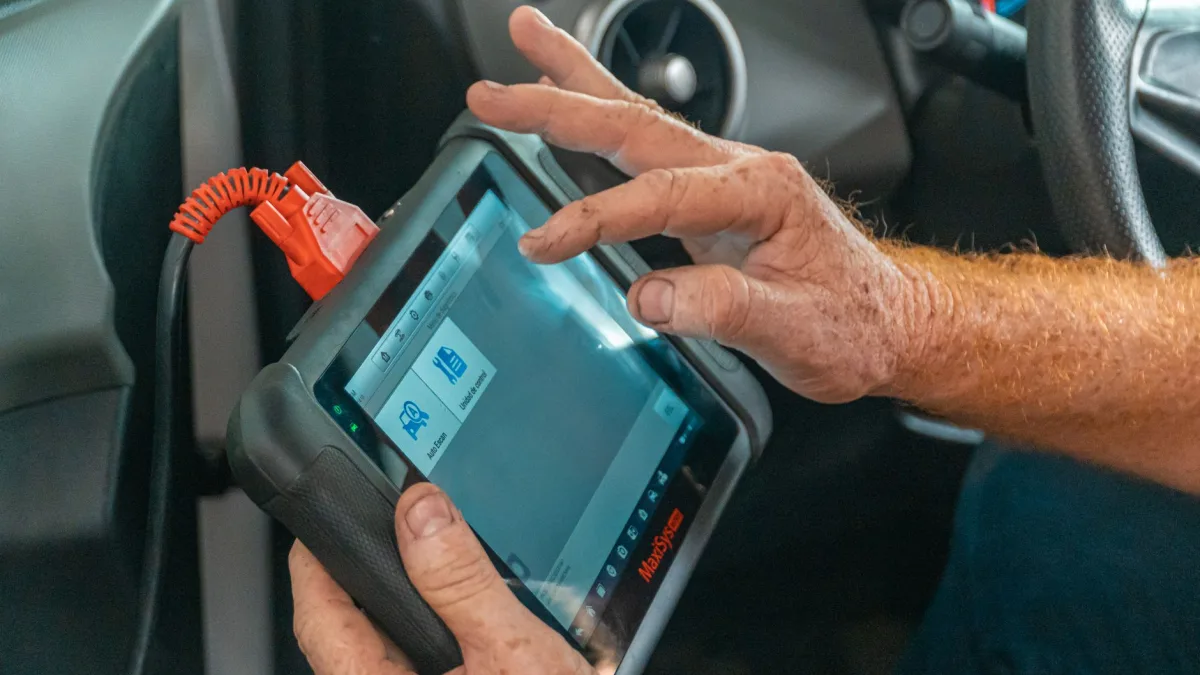
If the setting is on, the sensors are clean, nothing is hanging off the back, and detection is still gone, it is time for a scan tool. A brand-capable scanner reads the blind spot module directly and pulls the stored fault, whether that is a radar hardware failure, a communication dropout, or a low-voltage condition.
- Confirm the feature is enabled in the settings menu.
- Clean and inspect both rear bumper corners.
- Test at 25 mph or more with traffic on both sides.
- Note whether one side or both are affected.
- Scan the blind spot modules for stored fault codes.
A generic code reader often will not touch these modules, so an independent ADAS shop or dealer is usually the right call at this stage. For the wider picture of what every one of these alerts means, keep our guide to blind spot monitoring warning lights nearby, and the plain-language safety summaries at NHTSA are worth a look for how these systems are supposed to perform.
A blind spot indicator that never lights is not a minor quirk. It is a safety system that has stopped watching your back without telling you. Work down this list, and by the time you hand it to a tech you will already know whether you are chasing a setting, a smudge, or a genuine fault.
Questions drivers ask
The most common reasons are a disabled setting in the menu, a blocked or dirty rear sensor, or testing below the system's speed threshold. If those check out and detection is still gone, a module or wiring fault is likely.
Usually not. Most systems stay off until you pass a low threshold, often around 10 to 20 mph. A light staying dark while you creep through a lot is normal, so test on a road with traffic at 25 mph or more.
A single dead corner almost always points to that side's radar module, its connector, or its wiring rather than a setting. Inspect the connector and have that module scanned for a stored fault.
Yes. A rack over the rear bumper can physically block the radar, and many cars disable the system automatically when they sense a trailer or hitch. If the light quit right after you mounted a rack, that is the likely cause.
If the feature is enabled, the sensors are clean, nothing is hanging off the back, and detection is still missing, have a brand-capable scan tool read the module. Generic code readers usually cannot access these systems.