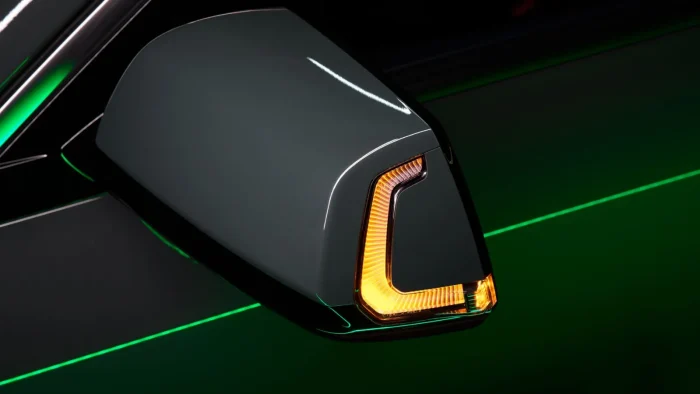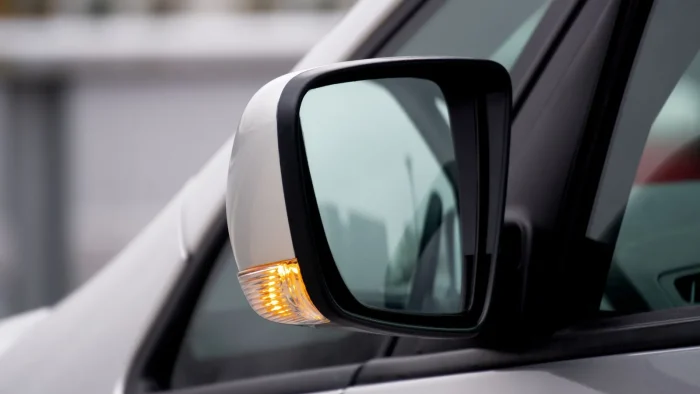
There is a special kind of annoyance that comes from a warning light that refuses to leave. You are sitting at a red light, wide open road on both sides, not a car in sight, and that amber blind spot triangle in your mirror is glowing like it has something to say. It does not. It is stuck.
I see this one roll into the shop more than almost any other blind spot complaint. The good news is that a light stuck on is usually a cheap, quick fix. The less good news is that a few causes do point to real hardware, so it helps to know which camp you are in.
Let me walk you through it the way I would if you pulled up to my bay, from the two-minute fixes to the ones that need a scan tool.
Key takeaways
- A blind spot light stuck on with no car beside you is almost always a blocked or dirty rear radar sensor, not a broken mirror.
- Start with the cheapest fix: wipe the rear bumper corners clean, then try a full key-off reset before assuming the worst.
- If cleaning and a reset do not clear it, the radar module has likely logged a fault code that needs a scan tool to read.
- Never keep trusting a light that behaves oddly. Go back to checking the lane by turning your head until it is fixed.
First, know which light you are dealing with
Before you chase a fix, be sure of what you are seeing. The amber icon has two normal behaviors, and one of them fools people into thinking the system is broken when it is working fine.
A steady glow is supposed to appear when a car is genuinely in your blind spot. That is normal. The problem we are solving here is a steady glow that stays lit when the lanes beside you are empty.
A flashing icon means the system detected a car and you signaled or drifted toward it. If yours only flashes at the right moments, nothing is wrong. It is the constant, car-free steady light we are chasing down.
Good to know
Some cars briefly light the blind spot icon during a self-test every time you start up. A flash for a second or two at startup is normal. A light that stays on well into your drive is the actual symptom.
The number one cause: a blocked sensor
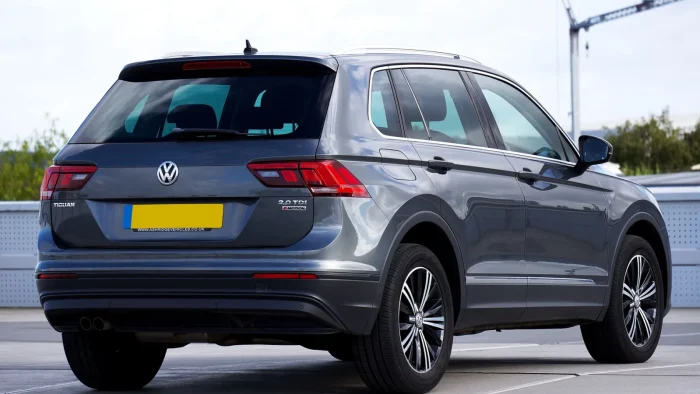
Nine times out of ten, a stuck-on blind spot light comes down to a rear radar sensor that cannot see clearly. Remember, these sensors hide inside the rear bumper corners, and they read the world through a patch of plastic no bigger than your palm.
When that patch is covered, the radar gets confused. A thick layer of caked mud, road salt, packed snow, or ice over the corner can make the system think something is permanently sitting in your blind spot. So it lights up and stays lit.
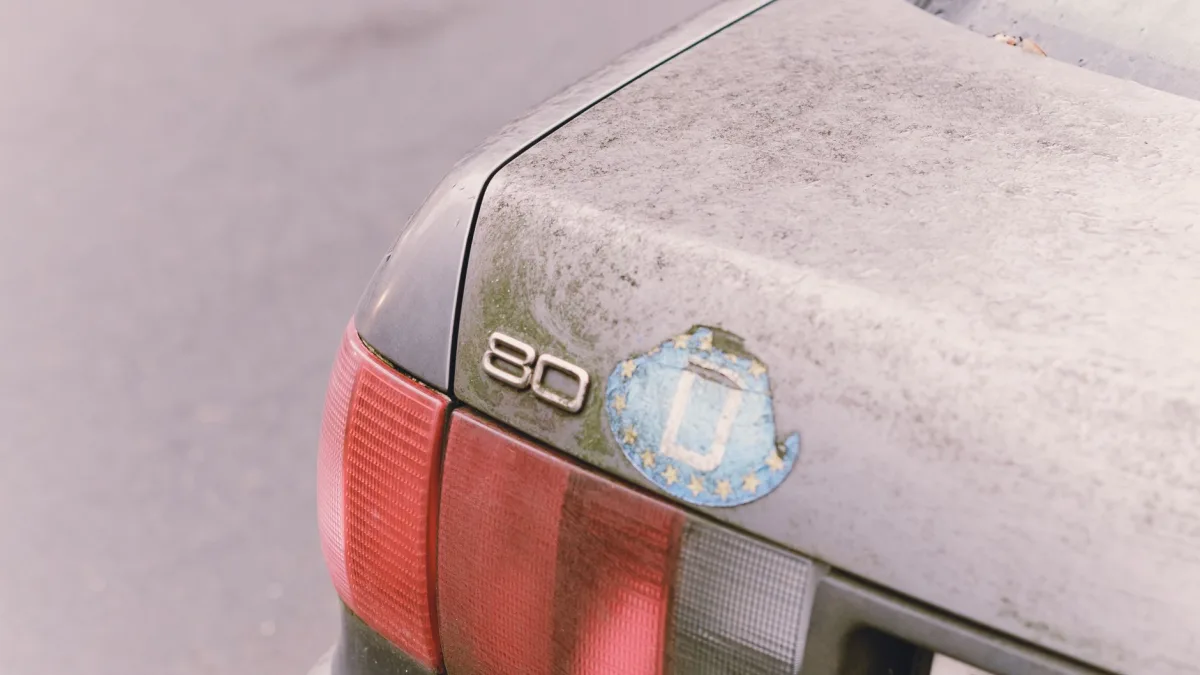
The fix is exactly as simple as it sounds. Walk to the back of the car and wipe both rear bumper corners with a damp cloth. If you want the right technique so you do not do more harm than good, our guide on cleaning blind spot sensors the right way lays it out. Winter grime is its own beast, covered in blind spot monitoring in snow and ice.
Check for something you added to the car
Here is a cause people almost never suspect: their own gear. The radar cannot tell the difference between a car in your blind spot and a solid object bolted to your bumper.
A hitch-mounted bike rack, a trailer, a cargo carrier, or even a large aftermarket bumper sticker sitting in front of a sensor will read as a permanent obstacle. The light comes on and never leaves because, as far as the radar is concerned, something really is there.
If your stuck light started right after you mounted a rack or hooked up a trailer, that is your answer. Our guide on the blind spot monitor turning off after a trailer or bike rack explains the workaround. For the full list of surprising blockers, see what blocks blind spot sensors.
Tip
If you tow or haul often, learn your car’s menu switch to turn blind spot monitoring off manually while the rack or trailer is on. It saves you from a constantly lit mirror and a dashboard full of nagging alerts on every trip.
Try a full reset
If the bumper is clean and you have not added anything, the next step costs nothing. Electronic modules occasionally latch onto a bad reading and hold it until they get a proper power cycle.
Do a genuine key-off reset, not just a quick restart at a stoplight. Here is the routine I use:
- Park in a safe, open spot away from other vehicles and walls.
- Turn the car fully off and remove the key or let the push-button system go completely dark.
- Wait at least two to three minutes so the modules power down all the way.
- Restart and drive a short loop on a clear road to let the system re-scan.
- Check whether the light clears once you are moving with empty lanes beside you.
A surprising number of stuck lights vanish after a proper reset. If yours does, keep an eye on it, but do not panic over a one-time glitch.
When it is a real fault
If you have cleaned the corners, checked for racks and trailers, and done a full reset, and the light is still stuck, the system is likely reporting an actual fault. At this point the radar module has usually logged a diagnostic trouble code.
Those codes are not readable by eye. A technician connects a scan tool that talks to the blind spot module and pulls the specific fault, whether it is a sensor that has failed, a wiring issue, or a calibration that drifted out of range after a bumper repair.
A stuck light that survives a good cleaning and a reset is not being stubborn. It is trying to tell you a code, and a scan tool is the only thing that can read its language.
This overlaps closely with the dash-message problem, so if you also see text on your cluster, cross-reference our guide on the blind spot system unavailable message. And to understand what the module is doing behind the scenes, our explainer on how blind spot monitoring works behind the bumper gives you the full picture.
What it usually costs to fix
Price depends entirely on where the trouble lives. Most drivers land at the cheap end, so do not brace for the worst before you have tried the free steps.
| Cause | Typical fix | Rough cost |
|---|---|---|
| Dirty or iced sensor | Clean the bumper corners | $0 |
| Software glitch | Full key-off reset | $0 |
| Aim off after body work | Radar recalibration | $150 to $400 |
| Failed radar sensor | Replace and calibrate | $500 to $1,200 |
Watch out
While the light is misbehaving, do not lean on it. A blind spot system that lights up for phantom cars can just as easily fail to light for a real one. Turn your head and check the lane the old-fashioned way until the fault is cleared.
Which brand do you drive?
The steps above apply to nearly every car, but the exact menu names and quirks vary. If you want brand-specific guidance, our library has you covered.
Toyota and Lexus owners should read the Toyota blind spot monitor light guide, and Ford drivers seeing trouble will want Ford BLIS not available. For the complete overview of every warning light and how the pieces fit together, start at our pillar guide on blind spot monitoring warning lights.
The short version
A stuck blind spot light is almost never the disaster it feels like. Clean the rear corners, check for a rack or trailer, and do a proper reset. Those three free steps clear the vast majority of cases I see.
If it survives all that, book a scan so a tech can read the code and aim the fix at the right part. For a neutral outside look at how much these systems reduce real crashes, the IIHS overview of advanced driver assistance is worth a read while you decide how urgent the repair feels. Until it is fixed, trust your mirrors and your own eyes over the amber triangle.
Questions drivers ask
The most common reason is a dirty or iced-over rear radar sensor reading a false object, or something you added to the car such as a bike rack or trailer. Wipe the rear bumper corners clean and do a full key-off reset before assuming a hardware fault.
Often yes. Turn the car fully off, wait two to three minutes so the modules power down, then restart and drive a short loop on a clear road. Many stuck lights caused by a temporary glitch clear after a proper reset.
Most fixes are free because the cause is a dirty sensor or a glitch. If the radar needs recalibration after body work it runs about $150 to $400, and a failed sensor that must be replaced and calibrated can reach $500 to $1,200.
You can drive, but do not trust the system while it is faulty. A light that stays on for phantom cars can also fail to warn you of a real one. Check your lanes by turning your head until the problem is fixed.
Yes. The radar cannot tell your own bike rack, trailer, or cargo carrier from a car in your blind spot, so it reads the gear as a permanent obstacle and keeps the light lit. Turn the system off manually while the rack is mounted.