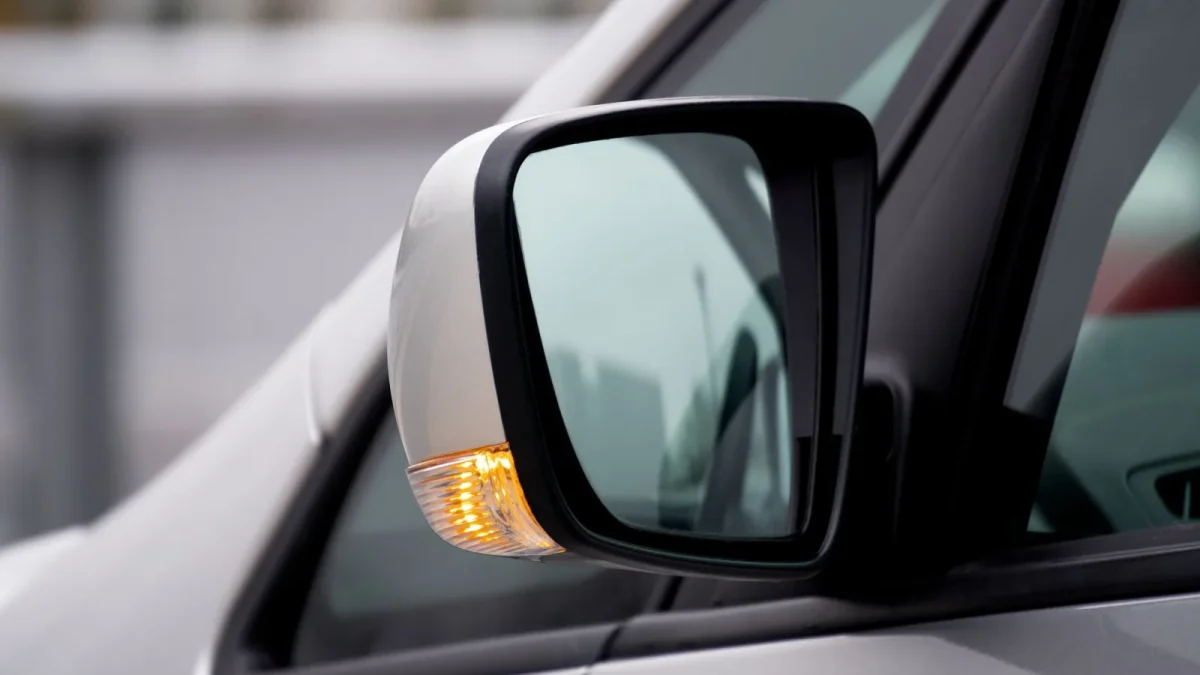
A little amber car icon glows on your Toyota’s side mirror, or a message pops up on the dash that reads “Blind Spot Monitor unavailable,” and now you are wondering whether something expensive just broke. Take a breath. On most Toyotas that light is doing exactly one of two normal jobs, and neither one usually means a trip to the dealer.
I have decoded this system for more RAV4, Camry, and Highlander owners than I can count. The Toyota version behaves a little differently than the Honda or Ford setups, and that trips people up.
Let me answer the questions drivers actually ask me at the counter, in the order they tend to ask them.
Key takeaways
- A steady amber mirror icon that lights when a car is beside you is the system working, not a fault.
- The dash message “Blind Spot Monitor unavailable” almost always means a blocked or dirty rear bumper sensor.
- Toyota’s BSM button lets you turn the whole system off by accident, which is the single most common false alarm I see.
- Toyota BSM is radar-based and works at speed, so it will not warn you in a parking lot the way cross-traffic alert does.
- Ice, road salt film, and a rear bumper repair are the top three reasons the message stays on.
What does the Toyota blind spot monitor light actually mean?
Here is where the confusion starts, because Toyota uses the same little car symbol for two very different things.
When the amber icon lights up only as a vehicle enters the lane beside you, that is the normal alert. The system saw a car in your blind spot and is telling you not to change lanes. That is the feature earning its keep.
When the same icon glows steady, or a text message appears at startup, that is a status warning telling you the system is switched off or cannot see. Same symbol, opposite meaning, and Toyota does not make that obvious.
Good to know
Toyota’s Blind Spot Monitor is a radar system, not a camera. Two small radar units sit behind the rear bumper corners, one on each side. That is why the sensors live where you cannot see them and why a fender-bender back there can knock the system out.
If you want the full picture of how these radar units read the road, our explainer on how blind spot monitoring works behind the bumper lays it out without the jargon.
Why does my Toyota say Blind Spot Monitor unavailable?
This is the message that sends people to the search bar. Nine times out of ten it is not a broken part.
The rear bumper radar needs a clear line of sight through the plastic. Cake that area with ice, packed snow, road salt film, or mud and the radar loses confidence and shuts itself down. Toyota would rather disable the feature than give you a false read.
I had an Avalon owner drive two hours to the shop over this message. The problem was a solid crust of winter road spray across the lower rear quarter panels. Fifteen minutes with warm water and a soft cloth, and the message never came back.
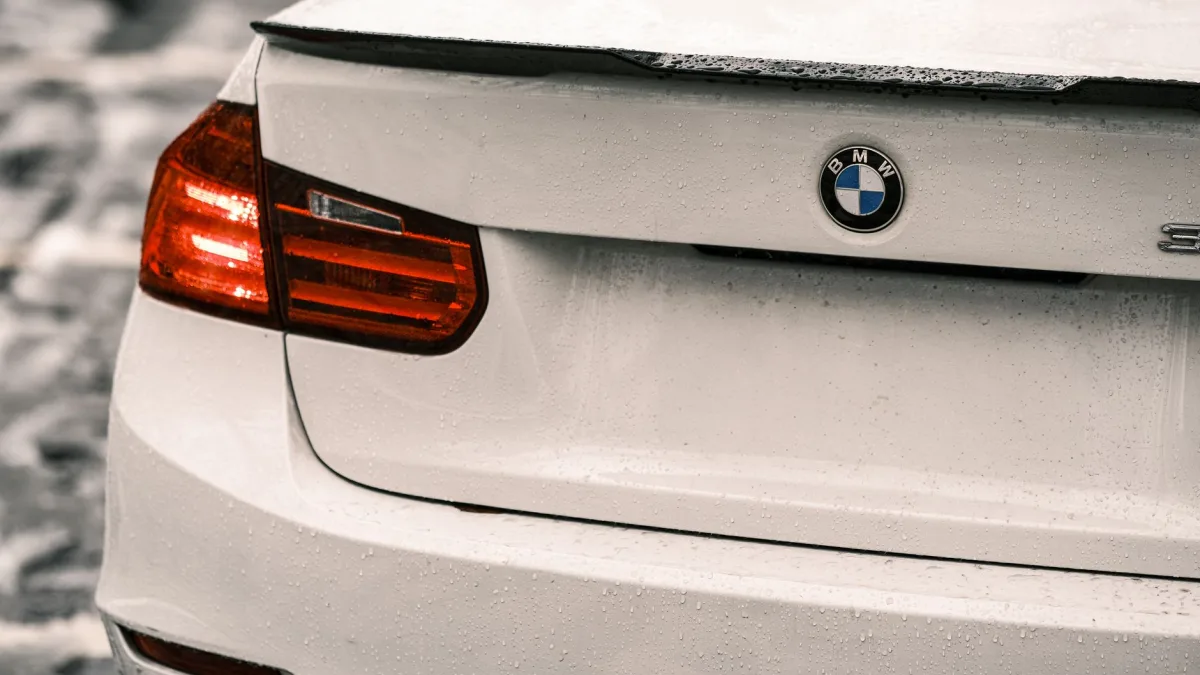
Before you panic, walk the back of the car and look at both rear bumper corners. Clean them gently. If you want the right technique so you do not scratch the sensor covers, our guide on cleaning blind spot sensors the right way covers it, and the deeper list of what blocks blind spot sensors is worth a skim.
Watch out
Do not blast the rear bumper corners with a pressure washer at close range. I have seen high-pressure water force moisture into the sensor housing and cause an intermittent fault that is far more annoying than the dirt you were trying to remove. Warm water and a cloth is all it takes.
Where is the Toyota BSM button and what does it do?
This one causes more false alarms than any actual failure. Toyota puts a physical BSM on/off button in different spots depending on the model and year.
On many 2018 onward RAV4 and Camry models it is a small button to the left of the steering wheel, low on the dash near your knee. On others it lives in the touchscreen settings menu under the safety or driver assist section. The button shows the same little car-with-waves symbol.
Press it once by accident, brush it with your knee getting in, and the whole system goes dark. Then the light stays off, you assume it broke, and nothing is actually wrong.
- Look for a BSM button low on the dash to the left of the wheel.
- If there is no button, open the touchscreen settings and find the driver assist or safety menu.
- Confirm Blind Spot Monitor is toggled on.
- Watch for the brief amber flash at startup that tells you the system ran its self-check.
If the light is stuck on rather than off, that is a different story with its own causes. Our piece on when the blind spot light stays on ranks those, and the broader blind spot system unavailable message guide covers the cross-brand version of this warning.
How is Toyota BSM different from other brands?
Owners coming from a Ford or Honda expect the Toyota system to behave the same way. It does not, and knowing the difference saves you a wasted dealer visit.
Toyota’s system is a straightforward rear-corner radar setup, similar in concept to Ford BLIS. It is not a camera in the mirror like Honda LaneWatch, so there is no video feed on your screen. If you came from a Honda and expected a picture, our comparison of Honda LaneWatch versus blind spot monitoring explains why the experience feels so different.
| Trait | Toyota BSM | Rear Cross-Traffic Alert |
|---|---|---|
| When it works | Driving, roughly above 10 mph | Reverse, backing out of a space |
| What it watches | The lane beside you | Cars crossing behind you |
| Shared hardware | Rear bumper radar | Same rear bumper radar |
Because they share the same radar units, a blocked bumper corner usually kills both at once. If your cross-traffic alert quit too, that is a strong clue the problem is a dirty or damaged rear sensor, and rear cross-traffic alert not working walks through it.
The Toyota mirror light is not a warning that something is wrong with your car. It is a warning that something is wrong beside your car.
Does a trailer or bike rack turn the Toyota system off?
Yes, and this one surprises people. A trailer, a hitch-mounted bike rack, or even a heavy cargo carrier can sit right in the radar’s field of view.
The system sees a large stationary object glued behind you, decides it cannot tell that apart from a real hazard, and either floods you with false alerts or shuts down with the unavailable message. That is normal behavior, not a defect.
Some Toyotas let you disable BSM manually while towing so it stops nagging. Our guide on the blind spot monitor off after a trailer or bike rack covers how to handle it without chasing a phantom fault.
Why does it act up in winter specifically?
Winter is peak season for the unavailable message on Toyotas, and the reason is simple. Snow, slush, and salt spray collect exactly where the radar lives.
A morning of highway driving through wet snow can build a solid film over both rear corners in under an hour. The system goes quiet, the message appears, and it clears once you wipe the area or the crud melts off. If your Toyota only misbehaves when it is cold and wet, read our seasonal breakdown of blind spot monitoring failing in snow and ice before assuming the worst.
Tip
Make wiping the two rear bumper corners part of your winter routine, the same way you clear the backup camera. A ten second swipe with a glove keeps the system alive on the exact days you most want it.
When should a Toyota BSM light actually worry you?
After cleaning the sensors, confirming the BSM button is on, and ruling out a trailer or weather, if the unavailable message still refuses to clear, then it is time to have it scanned.
A genuine fault, a mis-aimed radar after rear body work, or wiring damage from a parking-lot tap all leave a stored code. A technician can pull that in well under an hour and tell you whether it needs a recalibration or a part. Recalibrations after a rear bumper repair often run in the $150 to $400 range depending on shop and model.
For the master overview that ties every one of these symptoms together, start with our pillar on blind spot monitoring warning lights explained. And if you want a neutral, plain-English take on what these safety systems are designed to do, the folks at MyCarDoesWhat explain blind spot monitoring without any sales pitch. In my experience, the Toyota light is honest. Give it a clean line of sight and the right settings, and it goes right back to quietly watching your flank.
Questions drivers ask
When it lights only as a vehicle enters the lane next to you, the system is warning you not to change lanes, which is normal. When it glows steady or shows a dash message, the system is either switched off or cannot see out of a blocked sensor.
The rear bumper radar is usually blocked by ice, packed snow, road salt film, or mud over the bumper corners. Clean both rear corners gently with warm water. If the message clears, nothing was broken.
On many 2018 onward RAV4 and Camry models it sits low on the dash to the left of the steering wheel. On others it lives in the touchscreen safety or driver assist menu. It is easy to bump off with your knee and forget.
Yes. A hitch bike rack, trailer, or cargo carrier sits in the radar field and confuses the system, so it either floods you with alerts or shuts down. Some Toyotas let you disable BSM manually while towing so it stops nagging.
No. Toyota uses two rear bumper radar units, not a camera, so there is no video feed on your screen. That is why the experience feels different from a Honda with LaneWatch in the passenger mirror.