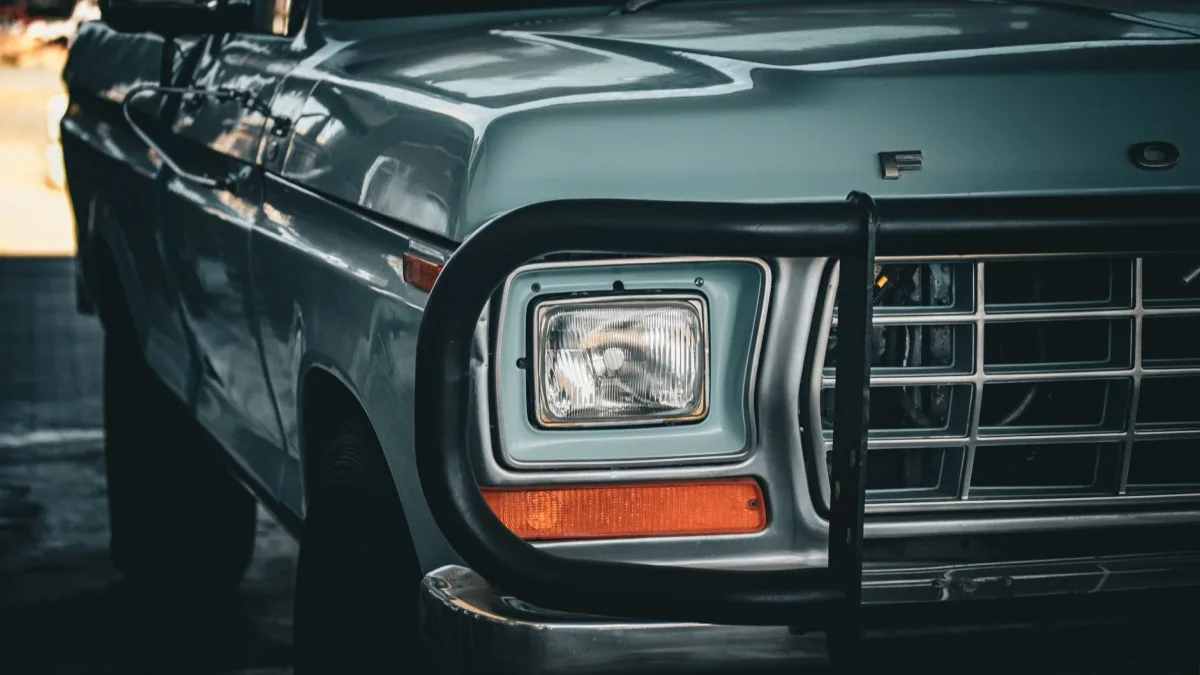
A guy rolled into my bay last spring with a brand-new steel bull bar bolted to the front of his half-ton, proud as could be, and a dashboard lit up like a Christmas tree. Adaptive cruise dead. Automatic braking disabled. A little amber warning that said the front sensor was blocked. He was convinced the truck had a fault. It did not. He had just parked a slab of chrome directly in front of the radar.
This is one of the most common self-inflicted ADAS problems I see, and it almost never gets connected to the accessory that caused it. So let me explain what that front radar is actually doing behind your bumper, and why a bull bar, grille guard, or winch can quietly choke it.
Key takeaways
- Front radar reads through plastic just fine, but dense metal like a bull bar, grille guard, or winch reflects and scatters the signal.
- A blocked radar most often shows up as failed adaptive cruise, disabled automatic emergency braking, and a “front sensor obstructed” warning.
- The problem is position, not just material: metal sitting directly in the radar’s line of sight is what causes trouble.
- Fixes range from repositioning the accessory to choosing a radar-friendly design, and sometimes a recalibration afterward.
What your front radar is and where it hides
Almost every vehicle built from about 2016 onward with adaptive cruise or forward collision braking carries a front-facing radar unit. It is a small sealed box, usually the size of a deck of cards, mounted low and central on the nose of the car.
You will not see it. Manufacturers tuck it behind the grille, right behind the badge, or low in the bumper near the license plate. That is fine, because radar happily reads straight through painted plastic and thin emblems.
The radar sends out invisible radio waves, listens for the echo bouncing off the car ahead, and calculates distance and closing speed. It feeds adaptive cruise control and the emergency braking system. If you are unsure exactly where yours lives, I mapped every sensor in where ADAS sensors are located on a car.
Why metal blocks radar when plastic does not
Here is the physics without the headache. Radio waves pass through non-conductive materials like plastic, rubber, and painted composite with barely any loss. That is the whole reason your radar can hide behind the bumper cover.
Metal is the opposite. It reflects and absorbs those same radio waves. When you bolt a steel or aluminum bar across the nose of the truck, you put a mirror in front of the radar’s mouth.
Two bad things happen. Part of the signal bounces straight back off the bar and confuses the radar into seeing a fake object one inch away. The rest gets scattered so the real car ahead returns a weak, noisy echo.
Good to know
It is not only bull bars. A winch mounted on a front bumper, a heavy skid plate that wraps up over the radar zone, and even a dense aftermarket grille insert with thick metal mesh can all do the same thing. The common thread is dense material sitting in the radar’s direct forward path.
What a blocked radar looks like from the driver’s seat
You rarely get a message that says “your bull bar is in the way.” Instead the car reports the symptom, and it is your job to connect it to the accessory you just installed.
The classic signs are a front radar obstructed or unavailable warning, adaptive cruise that refuses to engage or drops out constantly, and automatic emergency braking showing as disabled. On some trucks you also lose the forward collision alert chime.
The giveaway is timing. If the system worked perfectly for years and then quit the same week you added a bar or winch, the accessory is your prime suspect, not a broken sensor.
Watch out
A partly blocked radar is more dangerous than a fully dead one. If the system still engages but reads a weak or distorted signal, it can misjudge distance and brake late or not at all. Do not assume that a working cruise control means the radar is seeing clearly.
Phantom braking: the sneaky failure mode
Not every blocked radar shuts down cleanly. Sometimes the reflection off the metal bar makes the car think something is right in front of it, and it slams on the brakes for no reason on an open road.
I have seen a lifted SUV with a chunky grille guard do exactly this at highway speed. Terrifying for the driver, and a nightmare to diagnose if you do not know to look at the accessory first. The rear of the car has its own version of this problem, which I cover in license plate frames blocking rear sensors.
The radar does not know the difference between a car stopping ahead and a steel bar six inches from its face. Both look like a solid object. That is how a bull bar turns into phantom braking.
Not all bars are equal
Before you write off every accessory, know that design matters a lot. A thin tubular bull bar with open space where the radar looks through can be fine. A solid plate-style guard that covers the whole lower grille is trouble.
Here is a rough guide to how different setups tend to behave.
| Accessory type | Radar risk | Why |
|---|---|---|
| Open tubular bull bar | Low to moderate | Gaps let signal pass if tubes miss the radar line |
| Solid plate grille guard | High | Dense metal blankets the radar’s forward path |
| Front-mounted winch | High | Motor and drum sit directly in front of low radar |
| Thin decorative badge bar | Low | Small footprint, usually off to the side |
How to fix a bull bar radar problem
Good news: this is almost always solvable without giving up your accessory. Run through these steps in order.
- Locate your exact radar position first, behind the badge, grille, or low bumper, so you know what the bar is covering.
- Check whether the bar’s tubes or plate sit directly in front of that spot, or just to the side of it.
- If it lines up with the radar, reposition or space the bar outward so metal is not in the direct path.
- For a winch, ask about a low-mount or offset kit that keeps the drum out of the radar zone.
- Choose accessories the manufacturer lists as radar-compatible, which many off-road brands now offer.
- After moving anything near the front sensors, have the radar aim checked and recalibrated if the system still complains.
That last step matters more than people expect. If the bar shifted the radar or you had to loosen a bracket, the aim can be off even after the metal is clear. My rundown of when ADAS calibration is required covers the situations that call for it.
Tip
Before you buy any front-end accessory for a car with adaptive cruise, call the maker and ask two questions: does this fit a vehicle with front radar, and where does the radar sit on my year and model. Ten minutes on the phone beats a dead cruise control and a wasted install.
When to bring it to a shop
If you have repositioned the bar and the warning will not clear, or the system throws stored fault codes, it is time for a scan tool. A technician can read exactly which sensor is unhappy and whether the radar needs re-aiming.
Expect a diagnostic to run $100 to $200, and a radar recalibration to land somewhere in the $150 to $400 range depending on your vehicle and whether it needs a target setup or a road drive. That is the same ballpark I break down in the ADAS calibration cost guide.
The bigger picture on front sensors
A bull bar blocking radar is really just one example of the golden rule with driver-assist gear: these sensors need a clear, unobstructed view of the world, and anything you add to the outside of the car can interfere. Tint over a camera, mud on an ultrasonic sensor, a thick plate frame over rear radar, all the same lesson.
For the full map of how every camera and radar on your vehicle works together and what throws each one off, the hub guide to ADAS cameras and sensors ties it all together in one place.
If you want an independent take on how these front systems are tested and why their sightlines matter, the IIHS advanced driver assistance page is a solid neutral read. And the federal NHTSA site covers why automatic braking is being pushed as standard safety equipment.
Enjoy your bull bar. Just make sure your truck can still see past it before you trust the cruise control on the interstate.
Questions drivers ask
Not always. A thin tubular bull bar with open space in front of the radar can be fine, while a solid plate grille guard almost always causes problems. What matters is whether dense metal sits directly in the radar's forward line of sight.
Often yes, if you use a low-mount or offset winch kit that keeps the drum and motor out of the radar zone. Locate your radar first, then position the winch so metal is not directly in front of it. Have the system checked afterward.
The metal reflects the radar signal straight back, so the system thinks a solid object is inches away and brakes for it. This phantom braking is a classic sign that the guard sits in the radar's path and needs to be repositioned.
Sometimes. If the accessory shifted the radar or you loosened its bracket, the aim can be off even once the metal is clear. If the warning will not clear or codes are stored, have the radar aim checked and recalibrated.
Call the accessory maker and ask if the part fits a vehicle with front radar, then check your owner's manual for where the radar sits on your year and model. Many off-road brands now list radar-compatible designs specifically.