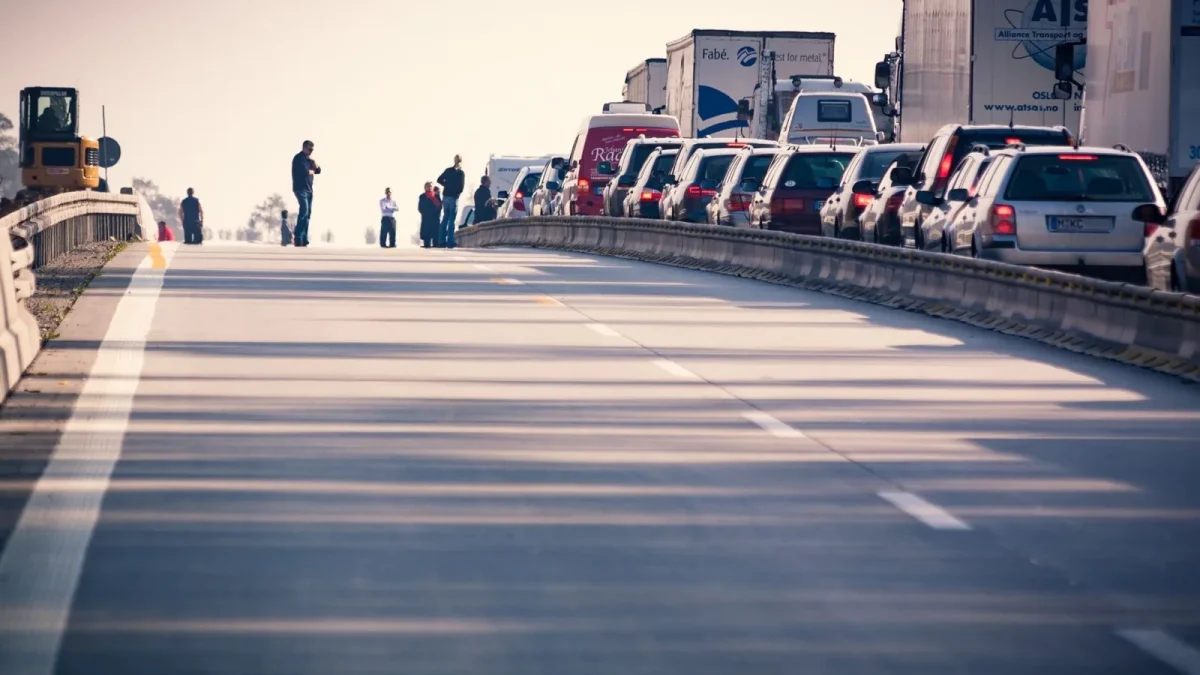
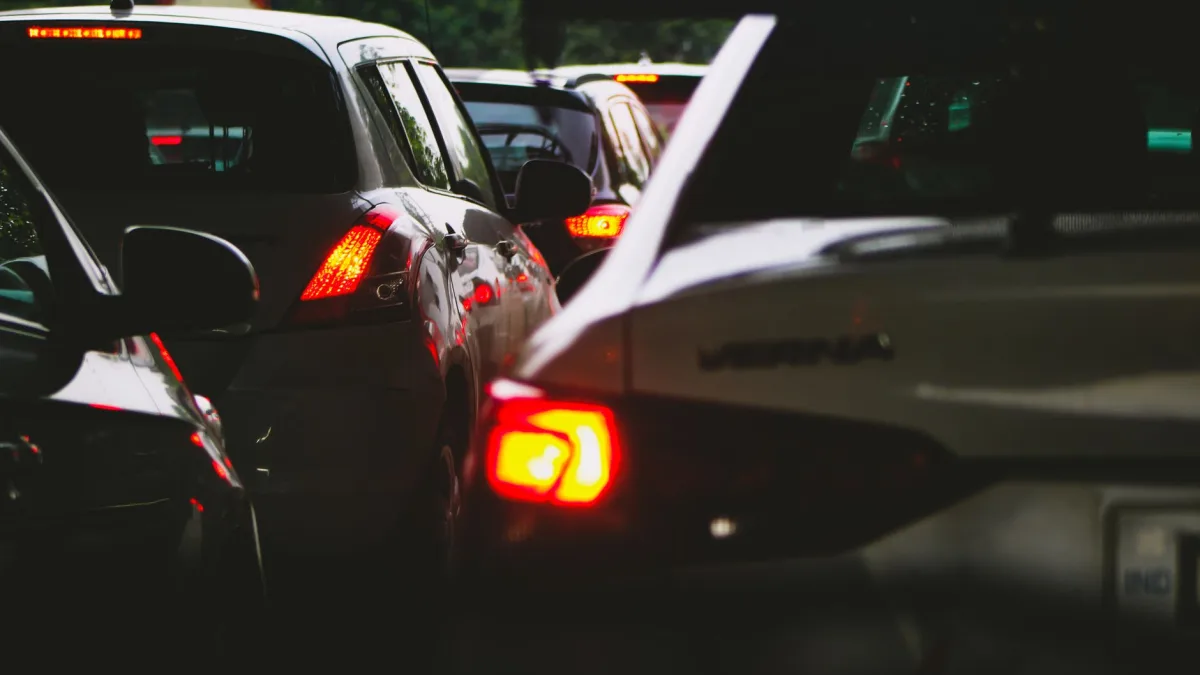
Bumper-to-bumper traffic is where a car earns its keep. That grinding crawl of brake, roll, brake, roll for forty minutes is the most exhausting driving most of us do, and it is exactly the moment newer adaptive cruise systems shine.
The feature has a few different names depending on who built your car. Traffic Jam Assist, Low-Speed Follow, full-speed-range cruise, stop-and-go. They all describe the same trick: the car follows the vehicle ahead down to a complete stop and then pulls away again when traffic moves.
Done right, it turns the worst commute of your week into something you can actually tolerate. Let me explain how it works, what it will and will not do, and where drivers get burned by trusting it too much.
Key takeaways
- Stop-and-go cruise brings the car to a full halt and resumes without you touching the pedals.
- Not all adaptive cruise does this, many older systems switch off below 20 to 25 mph.
- After a longer stop, most systems need a tap of the pedal or a button to resume for safety.
- It is a comfort feature for gridlock, not a hands-off or self-driving mode.
- You must stay alert, because the radar can miss a stopped car it did not track slowing down.
What stop-and-go actually does
Standard adaptive cruise holds a set speed and backs off when it closes on slower traffic. The stop-and-go version simply extends that ability all the way down to zero. When the car ahead stops, your car stops. When the car ahead moves, your car follows.
The radar and, on some cars, a forward camera track the vehicle in front and manage the throttle and brakes for you. You steer, and in true gridlock you may barely touch a pedal for miles. That is the whole appeal.
The key word is follow. The system is not reading traffic lights or stop signs. It is shadowing the car directly ahead. If nobody is in front of you, it reverts to holding your set speed like normal cruise, which is why it feels different on an open road than in a jam.
Does your car even have it
This is the first thing to sort out, because plenty of drivers assume they have stop-and-go when they do not. The dividing line is what happens at low speed.
If your adaptive cruise shuts off and hands control back to you around 20 to 25 mph, you have an older or highway-only system without full stop-and-go. If it keeps working in a crawl and can bring you to a full stop on its own, you have the good stuff.
What the brands call it
The names are a marketing jungle, so here is a quick translation. Toyota folds Low-Speed Follow into its Dynamic Radar Cruise Control on many recent models. Honda calls it Low-Speed Follow within Adaptive Cruise Control. Subaru builds it into EyeSight. Hyundai and Kia use Smart Cruise Control with Stop and Go, and Nissan bundles it into ProPILOT Assist.
Same idea, different badges. Check your owner’s manual for the exact wording, since even within one brand the base trim might have highway-only cruise while the higher trim gets full stop-and-go.
Good to know
A system that stops on its own is not the same as a system that will sit stopped forever. Most cars only auto-resume if the stop was brief, often a few seconds. After a longer halt, the car makes you confirm before it moves, which is a safety feature, not a bug.
The resume rule that trips people up
Here is the detail that surprises new users. When traffic stops for only a moment, the car creeps forward on its own the instant the vehicle ahead moves. Nice and smooth.
But when you have been stopped for longer, usually more than a handful of seconds, the system parks itself and waits. To get going again you tap the accelerator or press the resume button. The car will not lurch forward after a long stop, because it cannot be certain the road ahead is still clear.
That pause is deliberate. Imagine sitting at a dead stop while a pedestrian crosses in front of you. You do not want the car deciding on its own that the gap opened up. So it hands the decision back to you. Learn your car’s resume behavior early, because sitting there wondering why it will not move while horns blare behind you is a rough way to find out.
Watch out
Stop-and-go is a comfort aid, not autopilot. The radar tracks moving traffic well, but it can be slow to react to a car that was already stopped when you came around a bend. If the vehicle ahead swerves to reveal stationary traffic, you may need to brake yourself. Keep your foot ready.
Where it saves your sanity, and where it does not
The sweet spot is a steady jam on a divided highway. Traffic is dense, speeds are low, everyone is moving in the same direction, and lane markings are clear. In that setting the feature is genuinely wonderful and takes real strain off your right leg and your nerves.
It struggles in a few predictable places. Tight surface streets with cross traffic, sharp curves that break the radar’s line of sight, and situations where cars cut in aggressively can all confuse it. And again, it reads no traffic signals, so it will happily follow a car through a green and keep following it, which is fine, but it will not stop you at a red on its own.
Traffic jam assist is at its best when the driving is boring and predictable. The more chaotic the road gets, the more you have to be the one paying attention.
A real-world scenario
A driver I helped had a new sedan with full stop-and-go and a 90 minute commute she dreaded. She told me the car was “broken” because it kept stopping and then refusing to move on its own.
Nothing was wrong. Her stops were long enough to trip the resume requirement, and she did not know she had to tap the pedal. Once she understood that quick stops auto-resume and long stops need a nudge, her commute went from a battle to the easiest part of her day. The feature was working perfectly. She just needed the manual.
How gap and weather change the experience
Your following distance setting matters even more in stop-and-go than on the open road. A short gap means the car closes tight on the vehicle ahead and brakes firmly every cycle, which feels jerky in a crawl. A longer gap makes the whole thing smooth. Our breakdown of following distance settings explains how to dial that in.
Weather also has a say. Heavy rain, fog, or a snow-packed grille can knock out the radar and disable the feature exactly when traffic is worst. If yours quits in bad conditions, that is a known limitation covered in our guides on adaptive cruise in fog and rain and adaptive cruise in snow and ice.
And if the system drops out mid-jam for no obvious reason, our rundown of adaptive cruise dropping out while driving ranks the usual culprits.
Using it well: a quick checklist
Run through these habits and stop-and-go becomes a tool you trust instead of one that startles you.
- Confirm your car actually has full-speed-range or stop-and-go cruise, not highway-only.
- Learn whether short stops auto-resume and long stops need a pedal tap or button.
- Set a longer following gap for a smoother, less jerky crawl.
- Keep your foot near the brake, especially around curves and merges.
- Turn it off on tight surface streets with cross traffic and traffic lights.
For the bigger picture of how adaptive cruise reads the road at every speed, our complete adaptive cruise control guide pulls it all together. And for an independent take on what these assistance systems are designed to do, the IIHS overview of driver assistance is a clear, unbiased read.
Used within its limits, stop-and-go cruise is one of the genuinely great features on a modern car. It will not drive for you, but it will carry the tedious load of a traffic jam, and after a long day that is worth a lot. Learn its resume rule, keep your eyes up, and let it do the boring work.
Questions drivers ask
It is a version of adaptive cruise that follows the car ahead all the way down to a full stop and then pulls away again when traffic moves. It manages the throttle and brakes for you in gridlock while you steer. Standard highway-only cruise switches off at low speed instead.
No. Many older or base systems disable adaptive cruise around 20 to 25 mph and hand control back to you. Only full-speed-range systems can bring the car to a complete stop and resume. Check your owner's manual, since trim level often decides which one you have.
Most systems only auto-resume after a brief stop of a few seconds. After a longer halt they park and wait, so you have to tap the accelerator or press resume. This is a safety measure so the car does not creep forward when the road ahead may not be clear.
No. It is a comfort feature that follows the car directly ahead in slow traffic. It does not read traffic lights or stop signs, and you must stay alert and ready to brake. Treat it as an assistant that reduces strain, not a system that drives for you.
It can. The radar tracks moving traffic well but may react slowly to a vehicle that was already stopped, especially around a curve or after the car ahead swerves away. Keep your foot near the brake so you can take over if the system is late.