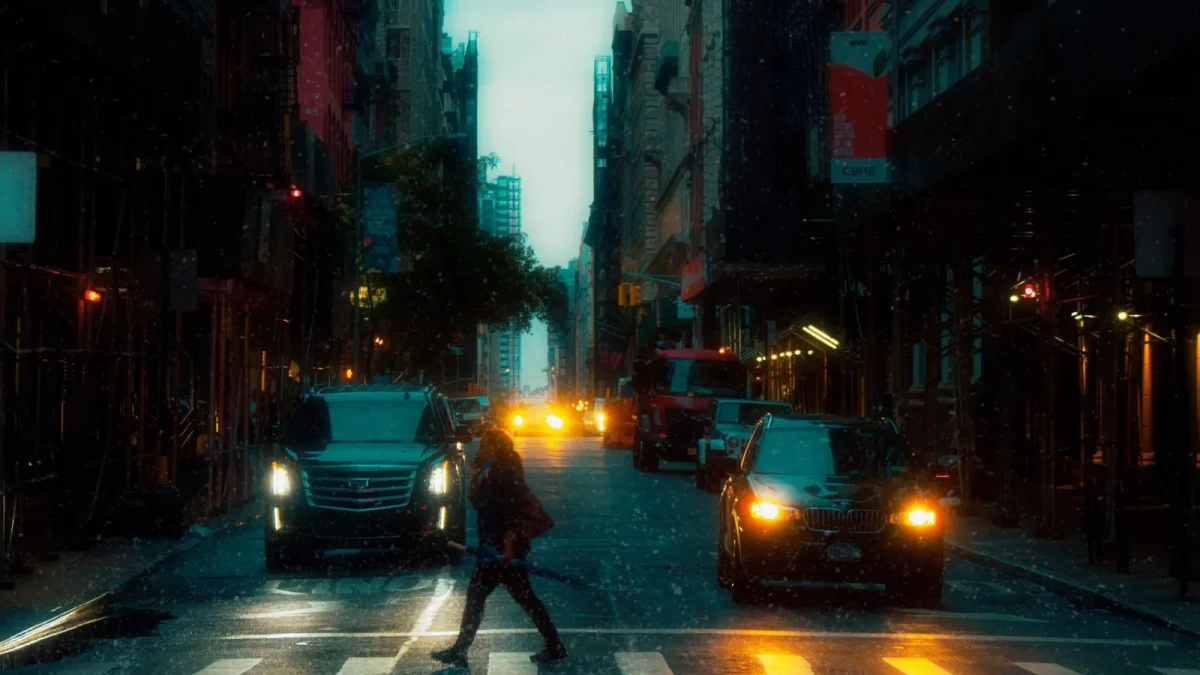
A kid chases a ball into the street. A cyclist drifts out of the bike lane at dusk. A jogger steps off the curb while you are glancing at your mirror. These are the split seconds where pedestrian detection braking earns its place on your car, and where it also has real limits you should know about.
Here is the honest version most owner’s manuals bury in fine print. This technology is genuinely good and getting better every model year. It is also not magic, and treating it like a guaranteed safety net is how people get hurt.
Let me show you how it actually sees a person, when it will grab the brakes, and the exact conditions where it goes blind.
Key takeaways
- Pedestrian detection uses a camera to recognize human shapes, often paired with radar to confirm distance and speed.
- Most systems work best from roughly 5 to 40 mph and struggle at higher speeds or in the dark.
- Darkness, rain, glare, and partial views of a person are the biggest reasons the system fails to react.
- It is a backup, not a driver. Testing shows it misses more often at night, exactly when you need it most.
How the car recognizes a person
Regular automatic emergency braking is mostly about the car in front of you. A big metal box on wheels is easy for radar to spot. A person is a harder target: smaller, softer, and constantly changing shape as they walk.
That is why pedestrian detection leans heavily on the forward-facing camera. The camera runs image recognition trained to spot the outline of a human, the way legs move, and the proportions of a body against the background.
Radar or, on some cars, lidar then confirms how far away that shape is and how fast the gap is closing. The camera says “that is a person.” The radar says “and they are 40 feet out, closing fast.” Both have to agree before the car acts.
Good to know
This is why a clean windshield matters so much for pedestrian detection specifically. The camera does the recognizing, and it looks straight through the glass near your rearview mirror. Bugs, film, or a chip in that spot degrade its ability to pick a person out of a busy scene.
What triggers the brakes, step by step
The sequence mirrors standard AEB but with tighter timing, because people move unpredictably. If you want the full mechanics of the underlying system, our overview of automatic emergency braking explained is the place to start.
First comes a warning. You get a visual alert and usually an urgent beep, the same family of alert as a forward collision warning, telling you to brake now.
If you react, the car may add brake assist, boosting your pedal pressure so a light tap becomes a hard stop. If you do nothing and impact looks certain, the system applies the brakes itself.
The speed window where it works best
This is the number that surprises people. Pedestrian detection is tuned for lower speeds, roughly 5 to 40 mph on most systems, which covers city streets, parking lots, and neighborhoods where pedestrians actually are.
Below about 3 to 5 mph, many systems will not fire because you are crawling and expected to be in full control. Above 40 to 50 mph, the physics get brutal. There simply is not enough distance to stop for a person who appears suddenly.
A camera can see a pedestrian in a fraction of a second, but stopping two tons of car still obeys the laws of physics.
Watch out
Do not assume the system covers you on a fast road. At highway speed, a pedestrian in the lane may reduce your impact speed but the car often cannot avoid the collision entirely. Your eyes and your foot are still the primary safety system.
When pedestrian detection goes blind
In the bay and on test tracks, the failure patterns are consistent. These are the conditions where I tell drivers to trust nothing but themselves.
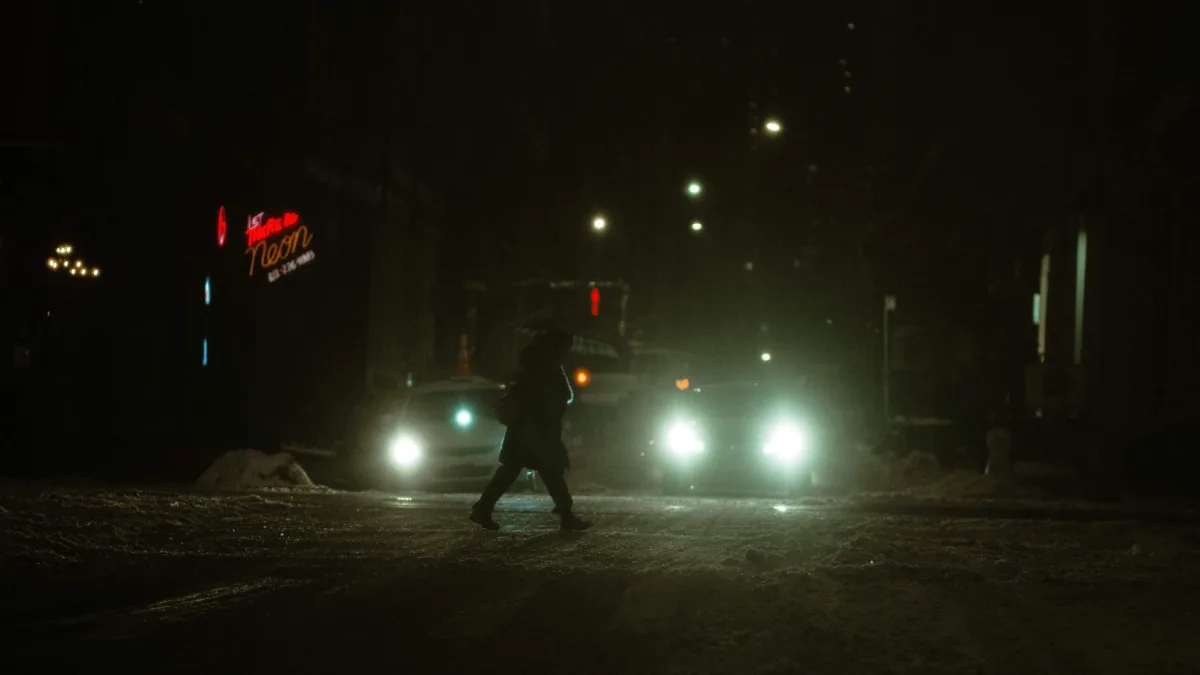
- Darkness with no street lighting, where the camera cannot resolve a human shape
- Heavy rain, snow, or fog that fills the camera’s view with noise
- Direct low sun or oncoming headlights washing out the image
- A person only partly visible, stepping out from between parked cars
- Someone wearing colors that blend into the background
- Unusual poses, like a person bent over or a child who is very short
Independent testing has repeatedly shown that many systems that pass daytime pedestrian tests do far worse at night. The Insurance Institute has published extensively on this, and it is worth reading their findings at the IIHS ADAS resource before you put full faith in the feature.
Tip
At night in town, slow down and cover the brake near crosswalks and bus stops. The system may catch what you miss, but it is far more likely to miss what you would have caught. You are the better night-vision system.
Cyclists, and why they are a special case
Bicycles are their own puzzle. A cyclist is a moving human on a fast, narrow object, and they approach from angles a pedestrian never would, cutting across your path from a side street or a bike lane.
Newer systems from 2020 onward increasingly include cyclist detection, and many brands market it separately. Older cars may detect the person but not react in time to the speed of the bike.
The takeaway is simple. If your car is more than five or six years old, assume its cyclist protection is weaker than its pedestrian protection, and its pedestrian protection is weaker at night.
Keeping the system honest
Because everything depends on the camera, a little maintenance goes a long way. A blocked or miscalibrated camera is the most common reason these systems underperform, and it often shows up as a warning message rather than a silent failure.
- Clean the windshield inside and out at the camera zone near the mirror
- Keep the front camera area free of stickers, dash-cam mounts, and toll tags
- Recalibrate the camera after any windshield replacement
- Address any AEB warning light promptly rather than ignoring it
If your system starts braking when no one is there, that is a different problem worth reading up on in our piece on why your car brakes for no reason. And if the whole feature shuts off, the guide on what it means when AEB turns itself off walks through the fixes.
The right way to think about it
Pedestrian detection braking is one of the most valuable safety features ever put in a mainstream car. It has measurably reduced pedestrian injuries in the speed range where most of them happen.
But it is a second pair of eyes that sometimes shuts, not a chauffeur. Use it as insurance for the moment you are human and miss something, not as permission to look away. Slow down at night, keep that camera clean, and let the system do its job as the backup it was designed to be.
Questions drivers ask
It works, but far less reliably than in daylight. The system leans on a camera to recognize a human shape, and darkness with poor street lighting can hide a person from it. Independent testing consistently shows more misses at night, so slow down and stay alert near crosswalks after dark.
Most systems are tuned for roughly 5 to 40 mph, covering city streets and neighborhoods. Below about 3 to 5 mph it usually will not fire because you are crawling and in full control. Above 40 to 50 mph there often is not enough distance to fully avoid a person who appears suddenly.
Many newer cars from 2020 onward add cyclist detection, sometimes marketed as a separate feature. Bicycles are harder because a cyclist moves faster and approaches from different angles. If your car is more than five or six years old, assume its cyclist protection is weaker than its pedestrian protection.
The most common causes are darkness, heavy rain or fog, glare from the sun or headlights, and a person only partly visible from between parked cars. A dirty or miscalibrated windshield camera also degrades detection. Treat the feature as a backup, not a guarantee.
Keep the windshield clean inside and out at the camera zone near the mirror, and avoid stickers, dash-cam mounts, or toll tags in that area. Recalibrate the camera after any windshield replacement. Address any AEB warning light promptly instead of ignoring it.