Not everyone wants a car that brakes for them, and that is a fair position in the right situation. Maybe you are backing a trailer into a tight boat ramp, crawling over rocks on a trail, or dealing with a system that fires off false alarms until it gets fixed. Whatever the reason, you have every right to switch automatic emergency braking off, and I am going to show you how.
The trick is that no two automakers hid the switch in the same place, and many cars quietly turn the feature back on the next time you start up. So a plan that works on a Honda will leave a Toyota owner hunting through the wrong menu.
Here is the clear, brand-aware walkthrough I wish came printed in the glovebox.
Key takeaways
- Most vehicles let you disable AEB through a dashboard menu or a physical button, and the path differs by brand.
- Many systems reset to on every time you restart the car, so a permanent off is often not possible by design.
- Turning AEB off makes sense for towing, off-roading, or a car chained to false alerts, but not for everyday driving.
- Re-enabling is usually as simple as flipping the same switch or restarting the vehicle.
Before you switch it off, think it through
I am a tech, not a scold, but I would be doing you a disservice if I skipped this. Automatic emergency braking is a proven safety feature, and the crash data behind it is not marketing fluff.
If your only reason for wanting it off is an annoying beep now and then, consider fixing the cause instead. Frequent false alerts often point to a sensor issue, and our guide to why your car brakes for no reason can save you from disabling a system you actually want.
Watch out
Turning AEB off means the car will not brake for you in an emergency, full stop. Only disable it for a specific task like towing or trail driving, then switch it back on for normal roads. Leaving it off permanently trades away real protection.
The general method that works on most cars
Before the brand specifics, here is the universal starting point. Nine times out of ten the control lives in one of two places.
- A settings or driver-assist menu inside the infotainment screen or the cluster display.
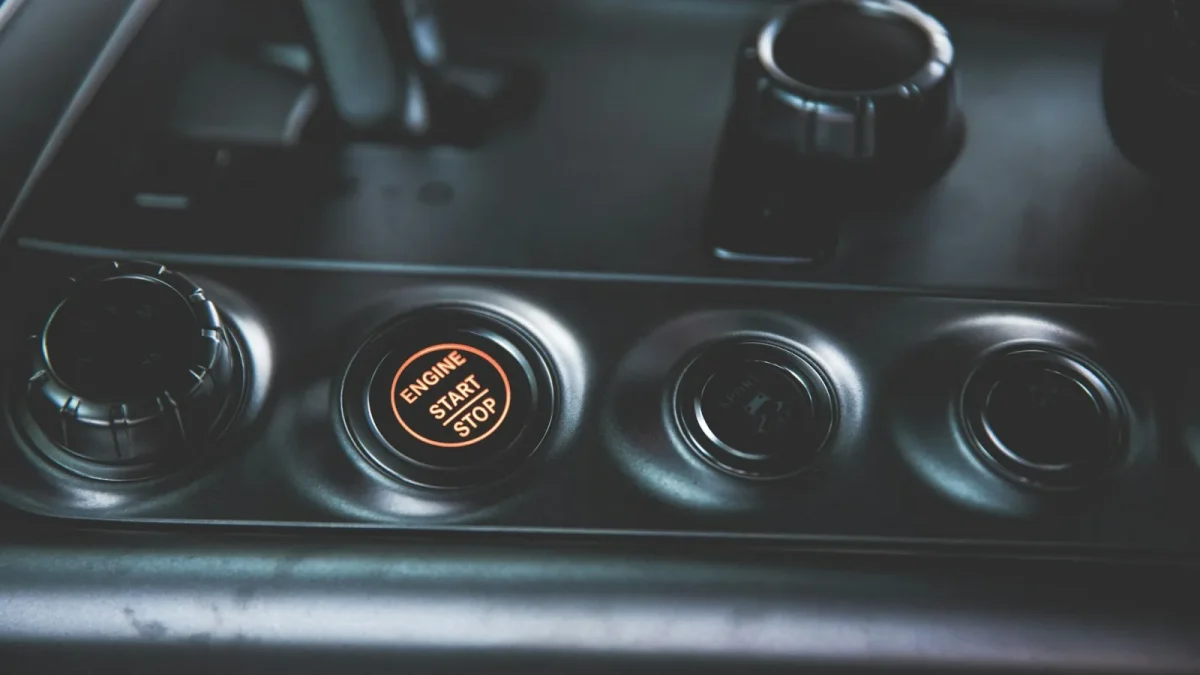
- A dedicated physical button, often marked with a car-and-obstacle icon, near the shifter or on the lower dash.
- On some models, a specific icon in the vehicle settings labeled Pre-Collision, Collision Mitigation, or Emergency Braking.
Put the car in park, wake the screen, and look under vehicle settings or driver assistance. If you cannot find it there, sweep your eyes across the lower dash for a button with that little icon.
Brand-by-brand: where the switch lives
Here is where the guesswork ends. These are the paths I use most often across the vehicles that roll through my bay.
| Brand | System name | Typical off path |
|---|---|---|
| Toyota | Pre-Collision System | Settings menu on cluster or screen |
| Honda | CMBS | Button left of the steering wheel |
| Subaru | EyeSight / Pre-Collision Braking | Dash button, sometimes a menu |
| Ford | Pre-Collision Assist | Settings, driver assist menu |
Toyota and the Pre-Collision System
On most modern Toyota and Lexus models, you dig into the cluster menu with the steering-wheel arrows or the touchscreen settings. Look for Pre-Collision System and set it off. If your Toyota still throws unexpected warnings, our Toyota Pre-Collision System warning guide explains what each one means before you disable anything.
Honda and CMBS
Honda makes it refreshingly simple. There is usually a physical button to the left of the steering wheel with the CMBS icon. Press and hold it for a couple of seconds until you hear a beep and the CMBS-off indicator lights. For the full picture of how the system behaves, see our breakdown of Honda CMBS collision braking.
Subaru and EyeSight
Subaru’s EyeSight sits behind a dash button on many trims, though some route it through a settings menu. Because EyeSight leans on a dual-camera setup, its behavior shifts with weather, and our EyeSight pre-collision braking guide covers those quirks.
Good to know
Even when you switch pre-collision braking off, the forward collision warning may stay active on some brands, or vice versa. They are separate functions. If you only want to quiet the alert, you may not need to disable the braking at all.
Does it stay off, or does it reset?
This is the question that trips people up. On a large share of vehicles, especially newer ones, AEB switches itself back on every time you restart the car.
That is not a glitch. Regulators in several markets pushed automakers to make these systems default to on for safety, so a truly permanent off is often not offered from the factory. You may have to disable it fresh for each drive where you need it off.
If your car keeps turning AEB back on after every start, it is not broken. It is doing exactly what the safety rules asked it to do.
If yours resets and you genuinely need it off for a repeated task, that repetition is the tradeoff. There is rarely a hidden permanent switch, and adding aftermarket workarounds can create new problems.
Turning AEB back on
Re-enabling is the easy part. In most cases you simply reverse whatever you did: press the button again until the off indicator disappears, or flip the menu setting back to on.
And if your car resets on restart, you may not have to do anything at all. Shut it off, start it again, and the system is usually back and armed.
What if it will not turn back on?
Here is where it gets interesting. If you try to re-enable AEB and the car refuses, or shows an unavailable message, that is a different problem entirely. The system may be blocked or faulted rather than simply switched off. Our explainer on why automatic emergency braking turned itself off covers that scenario.
When turning it off is the right call
To close the loop, disabling AEB is genuinely appropriate in a handful of cases. Backing a trailer, where a jackknifed load can look like an obstacle. Off-road crawling, where brush and rocks trigger false stops. Or a car sending a badge or a car wash on rails that the radar misreads.
Outside those situations, leave it on. To understand the whole system you are toggling, our hub on automatic emergency braking explained ties it together, and the independent IIHS overview of advanced driver assistance lays out why these systems earn their keep.
Switch it off when the task calls for it, switch it back on for the open road, and you get the best of both worlds.
Questions drivers ask
On most modern cars you cannot make it permanent. Safety regulations pushed automakers to default AEB back to on at every startup. You can disable it for a single drive through the menu or button, but expect it to re-arm the next time you start the car.
On the majority of newer vehicles, yes. The system resets to on each time you start the engine. If you need it off for towing or off-roading, you usually have to disable it fresh at the start of each drive.
In most regions it is legal to switch it off using the built-in controls, since the manufacturer provided them. What varies is whether the car lets it stay off. Permanently defeating it with aftermarket devices can raise safety and liability concerns.
It is usually either a physical button near the shifter or lower dash marked with a car-and-obstacle icon, or a setting inside the driver-assist menu on the screen or cluster. Honda often uses a button left of the wheel, while Toyota tends to use a menu.
It can be worth disabling while backing a trailer, since a jackknifed load or the trailer itself may read as an obstacle. Turn it back on for normal highway driving once the trailer is hitched and tracking straight behind you.