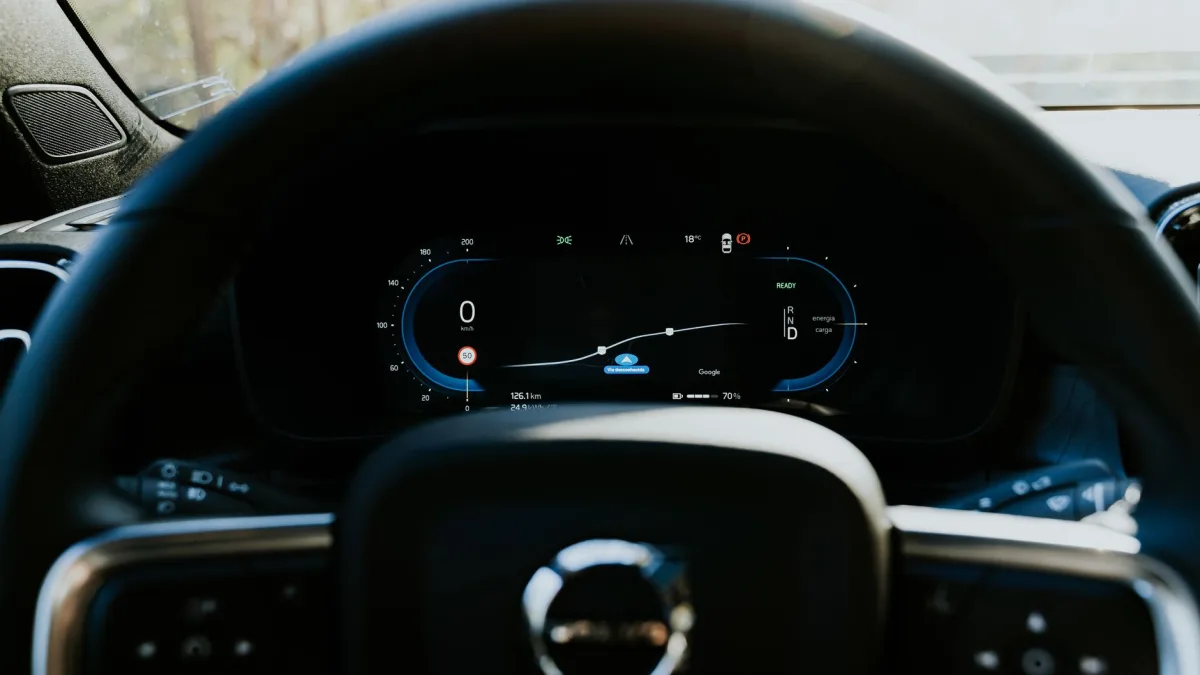
Pull up to a red light in a modern Volvo and glance at the driver display: somewhere in that cluster sits a little car icon with a bracket in front of it. That is City Safety keeping watch. It is the system that will stand on the brakes for you if the traffic ahead stops and you do not. Most Volvo owners never think about it until the day it saves them, or the day a message pops up saying it has gone quiet for a few minutes.
I have had plenty of Volvos through my bay, from early XC60s to the newer XC40 Recharge, and City Safety is one of the more polished emergency braking setups on the road. But polished does not mean invisible. When it works, you feel a firm, sudden grab of the brakes. When it cannot work, it tells you, and that message throws people off.
Let me walk you through what City Safety actually does, where its limits are, and what those “temporarily unavailable” messages really mean.
Key takeaways
- City Safety is Volvo’s automatic emergency braking system, standard on every model since the mid-2010s and active from about 2.5 mph upward.
- It uses a forward-facing camera and radar behind the windshield and grille to spot cars, pedestrians, cyclists, and large animals.
- A “City Safety temporarily unavailable” message usually means the camera or radar is blocked by snow, fog, dirt, or heavy rain, not a broken part.
- The system is a backup, not a replacement for braking yourself, and it will not always prevent a crash at higher speeds.
What City Safety Braking Actually Does
City Safety is Volvo’s umbrella name for its collision-avoidance braking. Volvo has run some version of it since 2008, and it has been standard equipment across the lineup for years now. If you bought a Volvo from roughly 2015 onward, it has City Safety whether you paid extra or not.
The system watches the road ahead and calculates whether you are closing on something too fast to stop in time. It works in three stages. First it warns you with a red flashing light on the windshield and an urgent tone. If you still do not react, it pre-charges the brakes so they respond instantly. If a crash becomes unavoidable, it applies full braking on its own.
At low city speeds, roughly 2.5 to 30 mph, City Safety can often stop the car completely before contact. That is where the name comes from. At higher speeds it may not prevent the crash entirely, but shaving 15 or 20 mph off an impact changes everything about how that collision ends.
Good to know
City Safety also detects pedestrians, cyclists, and large animals like deer, not just other cars. The animal detection works best in daylight and at speeds above roughly 45 mph, which is exactly where a deer strike does the most damage.
The Camera and Radar Behind the Curtain
City Safety relies on two sets of eyes working together. There is a camera mounted behind the rearview mirror, up near the top of the windshield, and a radar unit tucked behind the grille badge or lower bumper depending on the model. The camera reads shapes, lane lines, and pedestrians. The radar measures distance and closing speed even when visibility is poor.
This is the same sensor pairing you find in most modern braking systems. If you want the broader picture of how these setups compare across brands, our overview of how automatic emergency braking works lays out the common architecture. Volvo’s version is tuned to be a little more aggressive than some rivals, which is a deliberate safety choice.
Because the camera sits behind the glass, anything on that glass matters. A cracked windshield, a cheap aftermarket replacement, or even a heavy smear of road film can degrade what the camera sees. I have watched a perfectly healthy City Safety system throw faults simply because the owner never cleaned the strip of windshield in front of the camera.
Tip
When you clean your windshield, spend an extra ten seconds on the area directly in front of the camera housing behind the mirror. A clean camera window prevents more false faults than any other single thing you can do.
What “City Safety Temporarily Unavailable” Means
Here is the message that lands people in my bay worried they broke something. You are driving along and the display reads “City Safety temporarily unavailable” or “Front collision warning temporarily unavailable.” Nine times out of ten, nothing is broken at all.
The word that matters is temporarily. Volvo uses that phrasing when the sensors are being blinded, not when a component has failed. The camera or radar has decided it cannot trust what it is seeing, so the car politely steps back rather than guess.
Common causes of the temporary message
- Snow, slush, or ice packed over the camera or radar
- Dense fog or heavy rain scattering the radar signal
- Mud, salt spray, or bug splatter on the windshield or grille
- Low sun glare washing out the camera’s view
- A dirty or cracked windshield in the camera’s line of sight
In every one of those cases, the fix is the same: clear the obstruction and keep driving. The message almost always clears itself within a few minutes once conditions improve or the sensor warms up. This is closely related to the winter weather problems that disable emergency braking on nearly every brand, not just Volvo.
Watch out
While that message is showing, the automatic braking is not active. You are driving a car without its safety net. Do not assume the system will catch you until the message clears and the normal City Safety icon returns.
When to Stop Waiting and Get It Checked
Temporary is one thing. Persistent is another. If that unavailable message shows up on a clean, dry, sunny day, or if it refuses to clear after you have wiped everything down, the sensors themselves may need attention.
A stubborn fault after a windshield replacement is a classic one. Modern Volvos need the forward camera recalibrated after the glass comes out, and skipping that step leaves the system confused. That is a common thread with any camera-based braking setup, and it overlaps heavily with the reasons a car brakes for no reason when a sensor is misaligned.
A quick reference for the pricing side: here is roughly what these repairs run when the sensor really is at fault.
| Issue | Typical cause | Ballpark cost |
|---|---|---|
| Temporary unavailable message | Blocked or dirty sensor | $0, clean it yourself |
| Camera recalibration | After windshield or bumper work | $150 to $400 |
| Radar sensor replacement | Impact damage or failure | $500 to $1,200 |
If you want the full breakdown of what these components cost when they fail for real, our guide to the cost to fix automatic emergency braking covers parts and labor across brands. The Volvo numbers land right in the middle of that range.
Living With City Safety Day to Day
Most owners find City Safety fades into the background, which is exactly the point. You should not feel it working under normal driving. If you do feel it grabbing the brakes when nothing is there, that is worth a conversation with your technician, because a system that cries wolf gets turned off, and a system that is off cannot save you.
The best emergency braking system is the one you forget is there right up until the moment you desperately need it.
A few honest limits worth keeping in mind. City Safety is not a self-driving feature. It will not steer around trouble, and it does not free you to look at your phone. It struggles with stationary objects at high speed, small motorcycles, and unusual shapes. Volvo has been clear about this for years, and the independent testing from the IIHS on driver-assist systems backs up that these tools reduce crash rates without eliminating them.
One scenario I see often: a driver assumes City Safety failed because it beeped but never braked. Usually the system did its job and the driver simply braked first, which is precisely what should happen. The alert is the point. Understanding the difference between a warning and an actual brake application is worth reading up on in our look at how AEB differs from forward collision warning.
So the next time your Volvo flashes that little bracketed car, or tells you City Safety has stepped out for a moment, you will know what it is saying. Clean the glass, clear the snow, and let the system do the quiet work it was built for.
Questions drivers ask
It almost always means the forward camera or radar is blocked by snow, fog, heavy rain, dirt, or low sun glare. The car disables braking rather than trust a bad reading. Clear the obstruction and the message usually clears itself within a few minutes.
The pedestrian and collision warning sensitivity can be adjusted in the settings menu, but the core City Safety auto-braking is designed to stay on and resets to active every time you restart the car. Volvo intends it to always be available.
Yes, but its ability to fully stop the car drops as speed rises. Below about 30 mph it can often prevent a collision entirely. At highway speeds it works to reduce impact speed rather than avoid the crash outright.
Yes. The forward camera sits behind the windshield and must be recalibrated after the glass is replaced. Skipping this leaves the system misaligned and prone to faults or false braking. Expect roughly $150 to $400 for the calibration.
It can detect pedestrians, cyclists, and large animals such as deer, and will warn and brake for them. Animal detection works best in daylight at higher speeds, though no system catches every situation, so stay alert.