A customer rolled into my bay a few winters back convinced his adaptive cruise control was broken because it “let him” drift toward the car ahead in a snow squall. Nothing was broken. The radar was doing exactly what the engineers designed it to do, which is politely bow out when conditions get sketchy. The gap between what drivers think this feature does and what it actually does is where most of the trouble lives.
So let’s clear the fog. I’ve spent years explaining these systems across a service counter, and the same handful of myths come up again and again. Some of them are harmless. A few of them are the kind that put a bumper into someone’s trunk.
Key takeaways
- Adaptive cruise control is a convenience feature, not a self-driving system, and it never removes your responsibility to steer and brake.
- Many systems will not bring you to a full stop, and even the ones that do can still miss stopped objects at speed.
- Rain, snow, fog, low sun, and a dirty sensor can all make the system quietly reduce or drop its function.
- Radar and camera hardware needs a clear line of sight, so a plowed-over grille or a fresh windshield can change how it behaves.
Myth 1: Adaptive cruise control means the car drives itself
This is the big one, and it’s the myth I most want dead. Adaptive cruise control, whether it’s Toyota DRCC, Subaru EyeSight, Honda ACC, or Ford’s system, only manages your speed and following distance in your lane. It does not steer the car for you.
Even when a manufacturer bundles it with lane centering, you are still the driver. Your hands belong on the wheel and your eyes belong on the road. I’ve watched dashcam clips of folks reading their phone at 70 mph because “the car has cruise,” and it makes my stomach drop every time.
Watch out
No production adaptive cruise system sold to regular buyers is a hands-free autopilot. Treating it like one is how low-speed fender benders turn into highway pileups. For a plain-language breakdown of what these features actually promise, the MyCarDoesWhat education site is a solid starting point.
If you want the full picture of how the technology is meant to be used, our complete guide to adaptive cruise control lays out the intended role start to finish.
Myth 2: It will always stop the car for me
Here’s where model year and trim matter a lot. Plenty of older systems, roughly 2014 to 2018 on some brands, only operate above about 25 mph and will hand control back to you before a full stop. Newer stop-and-go capable systems can bring you to zero and creep again in traffic, but not all of them do.
Even the stop-and-go systems have a blind spot: a completely stationary object detected late. Radar is tuned to track moving traffic, so a stopped car at the end of a highway backup, or a stalled truck around a bend, can get missed at speed.
If your car does the full crawl-and-go dance, it’s worth understanding the limits in our piece on stop-and-go traffic jam assist. And if you’ve noticed the system letting go at low speeds, that behavior might actually be normal for your model, which we cover in the following distance settings explainer.
Adaptive cruise is a co-pilot with a short attention span. Great on the open highway, unreliable the moment things stop moving.
Myth 3: Weather doesn’t affect it
I wish. Weather is probably the single most common reason drivers think their system “failed” when it was actually protecting itself. A radar sensor packed with slush or a camera staring into blinding low sun simply cannot see well enough to trust.
When that happens you’ll usually get a message like radar obstructed or the little cruise icon will gray out. That’s the system telling you it’s stepping back, not that it’s broken.
What the weather actually does
- Heavy rain scatters the radar and camera signal, so the system may shorten its range or drop out.
- Snow and ice can physically block the sensor behind the grille or emblem.
- Dense fog reduces camera confidence, especially on camera-only setups like some EyeSight versions.
- Low winter sun straight into the windshield camera can wash out the image entirely.
We go deep on the cold-weather side in adaptive cruise control in snow and ice, and on the wet side in using it in fog and rain. If you keep seeing that obstruction warning, the radar obstructed fix walkthrough is the one to bookmark.
Tip
Before a road trip, wipe down the front camera area of the windshield and clear any snow, mud, or bugs off the grille sensor. Thirty seconds with a microfiber cloth prevents most weather-related dropouts.
Myth 4: A dirty or damaged sensor is no big deal
The hardware behind your adaptive cruise is fussier than most people expect. On a lot of cars the radar lives behind the front emblem or in the lower bumper, and the camera sits at the top of the windshield behind the mirror. Cover either one and the feature changes behavior.
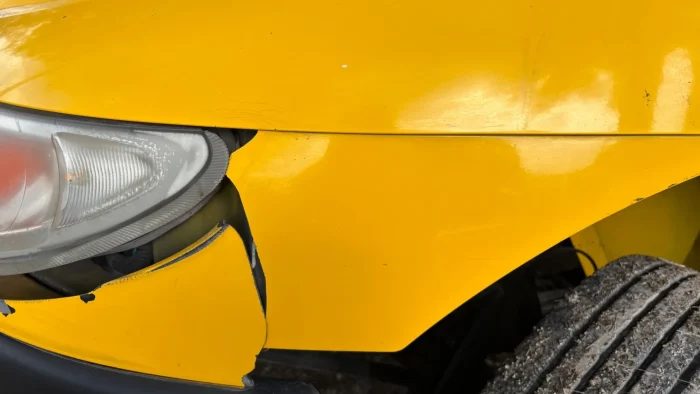
This is why body work matters. A windshield replacement can knock the forward camera out of calibration, and a bumper repair or repaint can shift the radar’s aim by a couple of degrees, which is enough to throw off distance readings.
I once had a car come in reading following distances that made no sense, and the cause was a hair-thin layer of body filler over the radar behind a freshly painted bumper cover. Radar hates being buried.
If you’ve had glass or bodywork done recently, read adaptive cruise after windshield replacement and adaptive cruise after bumper repair or paint before you assume the system is faulty.
Myth 5: If it acts up, the system is broken
Nine times out of ten, an adaptive cruise “problem” is a temporary condition, not a failure. Sensor obstruction, a low battery on start-up, a software hiccup, or a genuinely tricky driving scene will all cause the system to bail out for a moment.
A real fault sets a warning light that stays on and often stores a trouble code. A one-off dropout on a rainy on-ramp does neither. Knowing the difference saves you a needless service visit.
| What you see | Usually means | What to do |
|---|---|---|
| Cruise icon grays out in bad weather | Sensor stepping back on purpose | Resume when conditions clear |
| “Radar obstructed” once | Snow, mud, or spray on sensor | Clean the grille and camera |
| Warning light stays on, cruise dead | Possible fault or calibration issue | Scan for codes, get it checked |
When a fault really is stored, our guides on adaptive cruise control not working and adaptive cruise dropping out while driving walk through the likely causes and what a shop will look at.
Myth 6: Every brand’s system behaves the same
They really don’t. Radar-only systems, camera-only systems like Subaru EyeSight, and radar-plus-camera setups each have their own quirks and their own failure patterns.
A Toyota DRCC dropout and a Nissan ProPILOT that won’t engage often come from completely different root causes. Trim level, model year, and even a pending software update can change the story on the same badge.
Good to know
Independent crash-avoidance testing shows real differences between systems and generations. The IIHS driver assistance research is a useful reality check if you’re comparing what your car can and can’t do.
If you want brand-specific help, we have targeted pieces on Toyota DRCC problems and fixes, Subaru EyeSight troubleshooting, and Nissan ProPILOT not engaging.
The honest summary
Adaptive cruise control is a genuinely good feature that takes real fatigue out of a long drive. It is not magic, it is not a chauffeur, and it does not shrug off weather or a grimy sensor.
Respect its limits, keep the sensors clean, stay awake at the wheel, and it will serve you well for years. Treat it like a self-driving car and it will teach you an expensive lesson.
Questions drivers ask
No. It only manages your speed and following distance in your own lane. Even when paired with lane centering, you must keep your hands on the wheel and stay ready to steer and brake at all times.
Not reliably. Some older systems shut off before a full stop, and even stop-and-go capable systems can miss a stationary object detected late. Automatic emergency braking is a separate feature and is not a guarantee either.
The radar or camera cannot see well enough to trust the reading, so the system steps back on purpose. You will usually get a radar obstructed message or a grayed-out cruise icon. It resumes once the sensor has a clear view again.
Yes. The forward camera behind the windshield and the radar behind the bumper both need precise aim. Glass replacement or bodywork can throw off calibration, so the system may need to be recalibrated afterward.
Usually not. A single dropout on a rainy ramp or in low sun is normal self-protection. A real fault leaves a warning light on and often stores a trouble code that a scan tool can read.