A customer named Renee came into my bay last spring genuinely rattled. She had been merging onto the interstate in her 2020 Honda CR-V when the dashboard lit up red and a harsh beep filled the cabin. “BRAKE,” the display shouted. She braced for the car to grab the wheel and stop itself. It never did. She stopped it herself, heart pounding, and then spent the rest of the drive convinced her safety system was broken.
It was not broken. In fact, it had worked exactly as designed. But Renee’s confusion is one of the most common things I hear about emergency braking, and it is worth walking through her real drive to explain what actually happened.
Because the truth surprises people: a collision warning that beeps but never brakes is usually the system doing its job, not failing at it.
Key takeaways
- The loud beep and red “BRAKE” alert is forward collision warning, a separate stage from the actual automatic braking.
- If you brake yourself after the warning, the car has no reason to brake for you, so it stays out of your way.
- Automatic braking only fires when a crash is judged unavoidable and you have not reacted, which is rarer than most drivers expect.
- A warning with no brake is normal. A missing warning, or braking with no reason, is what should concern you.
The Drive, Second by Second
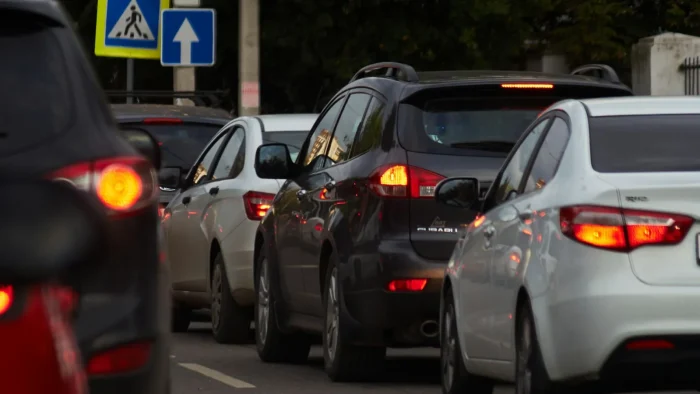
Let me reconstruct Renee’s merge, because the timing is everything here. She was accelerating up the on-ramp behind a slower sedan that suddenly hit its own brakes. Her CR-V’s camera and radar saw the gap closing fast and did the math: at this closing speed, contact is coming.
Stage one fired. The Forward Collision Warning flashed red and beeped hard. That alert exists to make you look up and react. Honda calls the braking layer beneath it CMBS, the Collision Mitigation Braking System, and you can read exactly how those layers stack in our guide to how Honda CMBS collision braking works.
Here is the key moment. Renee reacted. Within a fraction of a second of that beep, her foot was hard on the brake pedal. The car sensed a driver actively braking and decided, correctly, that it did not need to intervene. She had the situation handled.
Good to know
Almost every automatic braking system treats the driver as the primary controller. The moment you brake firmly, the car steps back. It only takes over when it concludes you are not going to act in time.
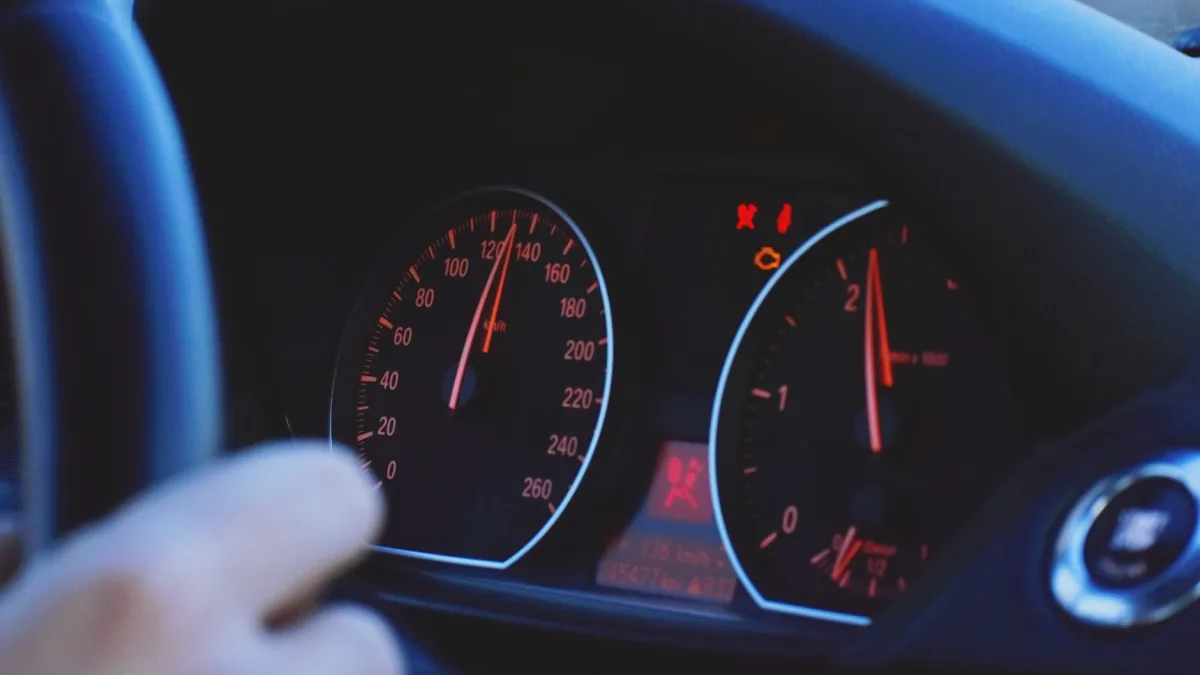
Warning and Braking Are Two Different Jobs
This is the heart of Renee’s misunderstanding, and probably yours too if you have felt the same scare. People assume the beep and the brake are one event. They are not. They are two separate stages with two separate triggers.
Stage one: the warning
Forward collision warning is an alarm clock for your attention. It triggers early, while there is still time to respond, and it triggers often because a false alarm that makes you look up costs nothing. Its whole purpose is to hand the problem back to you.
Stage two: the braking
Automatic emergency braking is the last resort. It only engages when the system calculates that a crash is now unavoidable and the driver has not braked, not steered, and not backed off the throttle. If you have already reacted, stage two has no reason to fire.
The distinction matters enough that we wrote a whole comparison on the difference between AEB and forward collision warning. Once you understand they are separate systems, Renee’s drive makes perfect sense.
The warning is a question. The braking is the answer the car gives only when you do not answer first.
Why the Car Chose Not to Brake
So why, specifically, did the CR-V hold back? Three factors lined up in Renee’s favor, and understanding them tells you when your own car will and will not step in.
- She braked in time. Active, firm pedal input tells the car the driver is in control.
- The gap never became unrecoverable. Her braking opened enough distance that the system’s crash prediction reversed.
- She was steering deliberately. A controlled merge reads differently than a driver frozen at the wheel.
Any one of those can be enough for the system to stay quiet on the brakes. All three together made it a certainty. The alert had already succeeded the instant she reacted.
Tip
If you want to feel how your car’s thresholds behave, an empty parking lot and a stationary cardboard box let you experiment safely at 5 to 10 mph. You will quickly learn that reacting to the beep almost always keeps the auto-brake from firing.
When a Missing Brake Actually Is a Problem
I do not want to leave you thinking the system can never fail, because it can. There is a version of “it beeped but did not brake” that genuinely worries me, and it is worth separating from Renee’s harmless case.
The concerning version is when the car should have braked and did not, meaning the driver was frozen, the gap was truly closing, and the vehicle still made no attempt to stop. That points to a real sensor or system fault. If your emergency braking has stopped intervening entirely, or you have seen an automatic emergency braking turned itself off message, that is a different conversation and it belongs in a service bay.
Watch out
Never test whether your car will brake for you by refusing to brake yourself in real traffic. These systems are backups, not autopilots. Testing them at speed with a real vehicle ahead is how a near miss becomes a crash.
Here is a simple way to sort a normal event from a real fault.
| What happened | Likely meaning | Action |
|---|---|---|
| Beeped, you braked, car did not | Normal, you reacted first | None needed |
| Beeped, you froze, car braked | System working as designed | None needed |
| Beeped, you froze, car did nothing | Possible sensor fault | Get it scanned |
| Braked hard with nothing there | False activation | Investigate sensor |
That last row is its own headache. A car that slams the brakes for empty road is the opposite failure, and we cover it in our piece on why a car brakes for no reason. Between phantom braking and a warning that never braked, the second one is far less alarming.
What Renee Learned, and What You Should Too
By the time Renee left, she was almost embarrassed at how simple the answer was. Her CR-V had warned her, she had responded, and the car had wisely deferred to a competent driver. Nothing had failed. The system had, if anything, proven it works.
The broader lesson sits inside the whole family of emergency braking behavior, which our overview of automatic emergency braking explained ties together. These systems are layered on purpose. The beep is early and frequent. The brake is late and rare. When they line up the way they did on Renee’s ramp, that is the design working, not breaking.
If you take one thing from her story, make it this: react to the warning every single time. The independent crash data collected by the NHTSA shows these systems reduce rear-end collisions significantly, but they do it best with an alert driver, not instead of one. A beep with no brake usually means you were exactly that driver.
Questions drivers ask
In most cases it beeped as a forward collision warning and you reacted by braking yourself, so the car had no reason to intervene. Automatic braking is a last resort that only fires when a crash is judged unavoidable and the driver has not acted. A warning without braking is usually the system working correctly.
Not by itself. If you braked or steered after the warning, the car correctly stepped back. It only becomes a concern if you did nothing, the gap kept closing, and the car still made no attempt to stop. That points to a possible sensor fault worth scanning.
Usually yes. Most systems escalate from a visual and audible warning to brake pre-charging, then to full automatic braking. If you respond during the warning stage, the later stages never trigger because the danger has passed.
Never test it in real traffic by refusing to brake. These systems are backups, not autopilots. If you want to understand your car's behavior, an empty lot with a soft object at very low speed is the only safe way to explore it.
Forward collision warning is the alert stage, meant to grab your attention early and often. Automatic emergency braking is the physical braking stage that only engages late, when a crash appears unavoidable. They are two separate systems working in sequence.