A customer once pulled into my bay convinced her new Honda had a steering fault. Every time she took the long sweeping ramp onto the interstate, the lane keep assist would fade out halfway through the bend and hand the wheel back to her. She wanted it fixed. Nothing was wrong. The curve was simply tighter than her system was built to hold.
That question comes up more than almost any other: does lane keep assist actually work on curves, or is it a straight-highway trick? The short answer is yes, but only up to a point, and that point is a lot sooner than most drivers expect.
Let me answer this the way I would across the counter, question by question, so you know exactly what your car can and cannot do around a bend.
Key takeaways
- Lane keep assist handles gentle highway curves well but drops out on sharper bends by design.
- Most systems track curves with a radius above roughly 250 to 300 meters, which covers typical freeway sweepers.
- Tight on-ramps, mountain switchbacks, and city corners usually exceed what the camera and steering can manage.
- Speed matters: the same curve that holds at 45 mph can drop out at 70 mph.
- When it fades on a curve, that is the system respecting its limits, not a fault to repair.
Does lane keep assist steer me through curves at all?
Yes, on gentle ones. On a modern system with lane centering, the car will actively follow a highway curve, easing the wheel to keep you between the lines. It feels smooth and genuinely useful on a long freeway sweep.
The catch is that basic lane keep assist and full lane centering are not the same thing. The basic version only nudges you back when you drift toward a line. The centering version steers continuously. That difference matters a lot on curves, and it is worth knowing which one your car has.
If you are unsure which system you are driving, our comparison of lane centering versus lane keep assist lays out the practical difference. It changes what you can expect around every bend.
Why does it drop out on sharp curves?
Two limits collide on a tight bend: what the camera can see, and how hard the system is allowed to turn the wheel.
The forward camera reads the painted lines ahead of you. On a sharp curve, the inside line sweeps out of the camera’s field of view before the car reaches it, so the system loses its reference and backs out.
The second limit is steering authority. These systems are deliberately capped on how much they will turn the wheel, both for safety and for comfort. A curve that demands more steering angle than that cap allows will simply exceed the system, and it hands control back to you.
Good to know
Dropping out on a sharp bend is intended behavior. The engineers would rather the system release cleanly and warn you than try to muscle through a curve it cannot safely complete. A quiet handoff is the safe design choice.
What curve radius can these systems actually track?
Here is where drivers want a real number. Most current lane keep and lane centering systems reliably hold curves with a radius above roughly 250 to 300 meters. That range covers the great majority of interstate curves, which are engineered to be gentle.
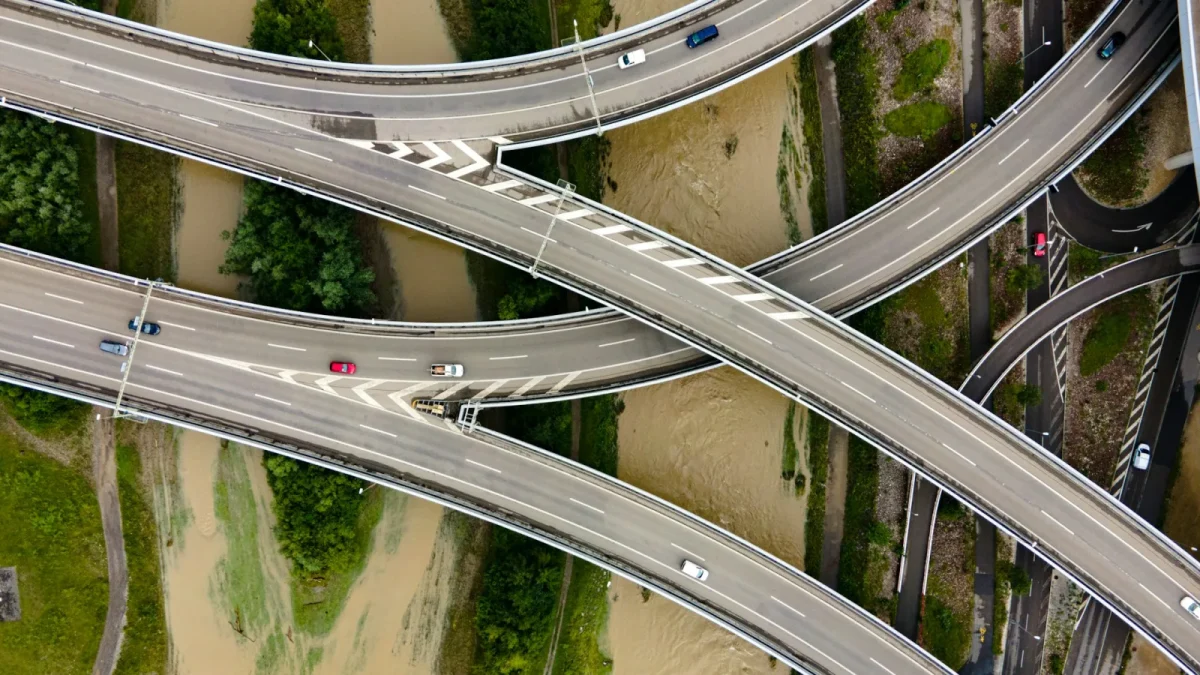
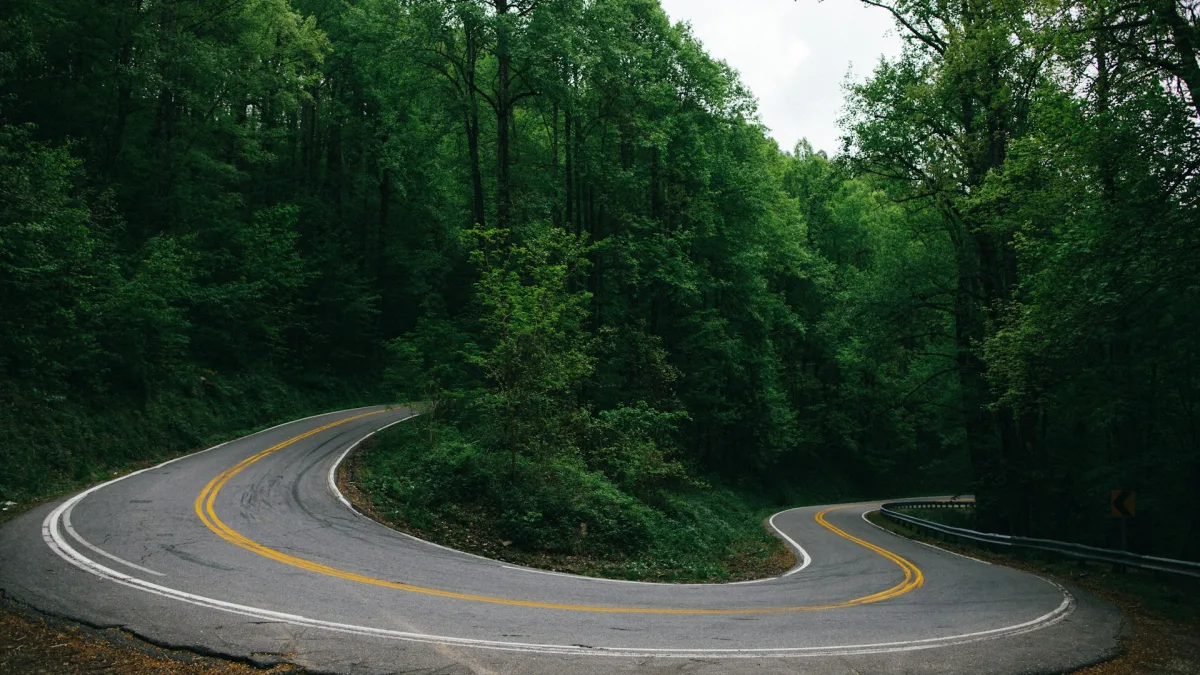
Drop below that radius, into the tight stuff, and you enter the territory where systems start letting go. A cloverleaf loop or a downtown corner has a radius far smaller than any of these systems will attempt.
| Road type | Typical radius | Will it hold? |
|---|---|---|
| Interstate sweeper | Over 300 m | Yes, comfortably |
| Highway on-ramp | 150 to 250 m | Sometimes, speed-dependent |
| Cloverleaf loop | Under 100 m | No |
| Mountain switchback | Under 50 m | No |
Every automaker tunes this differently, and the manual rarely publishes a hard number. Treat the table as a real-world rule of thumb, not a spec sheet.
Why does the same curve work one day and not the next?
Speed is the hidden variable. A curve you take at 45 mph gives the system time to read the line and turn gently. Take that identical curve at 70 mph and the geometry gets harsher, the required steering angle climbs, and the system may bail.
Lane paint plays a role too. Fresh, crisp lines give the camera a strong reference through the bend. Faded or patchy paint on a curve is a double handicap, and it is a frequent cause of curve drop-outs.
If your system fades on curves that should be well within range, worn paint is a likely culprit. Our look at why lane keep assist fails on faded lane lines explains how much the camera leans on good paint, especially mid-curve.
A curve is not one fixed difficulty. Add speed or subtract paint, and a bend the car held yesterday becomes one it releases today.
Do different brands handle curves differently?
They do, and the gap is noticeable. Subaru EyeSight and Toyota’s Lane Trace Assist tend to feel confident on freeway curves. Honda’s LKAS with Road Departure Mitigation is competent but more conservative about when it lets go.
Hyundai and Kia’s Lane Following Assist has improved a lot on recent model years and holds sweepers well when paired with Smart Cruise. Older systems from around 2018 and earlier, across most brands, are noticeably weaker on curves than what you get on a 2022 onward vehicle.
If you drive a Honda and want to understand its curve behavior specifically, our guide to Honda LKAS and Road Departure Mitigation gets into how that system reads bends and when it intervenes.
Is it dangerous when it drops out mid-curve?
Not if you are doing your job as the driver, which is keeping your hands on the wheel and your attention on the road. The whole point is that you are still driving. The assist is a helper, not a chauffeur.
The risk shows up only when a driver over-trusts the system and mentally checks out on a winding road. If you expect it to fade on the tight stuff and stay ready, a handoff is a non-event.
Watch out
Never treat lane keep assist as hands-free steering on a curvy road. On tight bends it can release with little warning, and if your hands are in your lap the car will drift toward the outside of the turn. Keep a real grip, especially on unfamiliar mountain roads.
How do I get the best curve performance from my car?
You cannot change your system’s engineered limits, but you can give it the best shot at holding a bend.
- Keep the windshield clean in front of the camera so it reads lines through the curve.
- Ease off the throttle slightly before a bend rather than carrying max speed into it.
- Favor roads with fresh, clear paint when you want the assist engaged.
- Keep a firm, active hand on the wheel so a handoff never surprises you.
- Learn where your specific car tends to let go, and expect it there.
For an authoritative primer on what these systems are designed to do and where their limits sit, MyCarDoesWhat is a genuinely useful, plain-language resource.
The honest bottom-line answer
Lane keep assist works on curves, but it is a highway tool, not a canyon-carver. Gentle freeway sweepers, yes. Tight ramps, cloverleafs, and switchbacks, no, and it will tell you so by handing back the wheel.
Knowing that boundary turns a confusing drop-out into predictable behavior you can plan around. To see how curve tracking fits into everything else the system does, from speed thresholds to those steering nags, spend a few minutes with our complete lane keep assist guide.
Questions drivers ask
Generally no. Mountain switchbacks and tight corners have a radius far smaller than these systems can track, so the assist releases and hands you the wheel. Lane keep assist is tuned for gentle highway curves, not sharp bends.
Most current systems reliably hold curves with a radius above roughly 250 to 300 meters, which covers typical interstate sweepers. Tighter curves like on-ramps, cloverleafs, and switchbacks usually exceed the camera and steering limits.
Speed is usually the reason. A curve you hold at 45 mph can drop out at 70 mph because the harsher geometry demands more steering than the system is allowed to apply. Faded lane paint on the bend makes it worse.
Yes, as long as you keep your hands on the wheel and stay attentive. The system is a helper, not a chauffeur. The danger only appears when a driver over-trusts it and lets go on a curvy road.
Subaru EyeSight and Toyota Lane Trace Assist feel confident on freeway curves, while Honda LKAS is competent but more conservative. Newer 2022 onward systems handle bends noticeably better than 2018 and earlier ones.