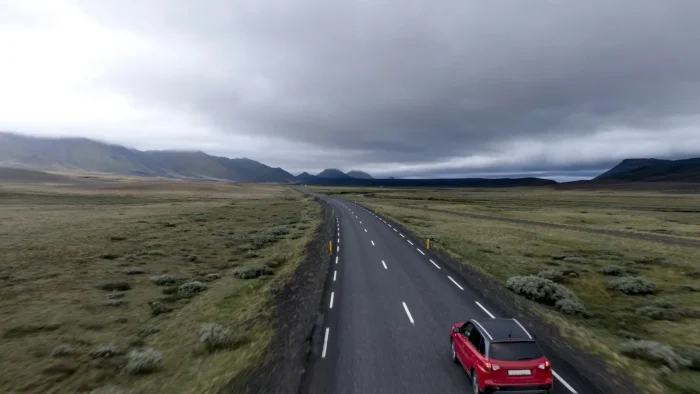
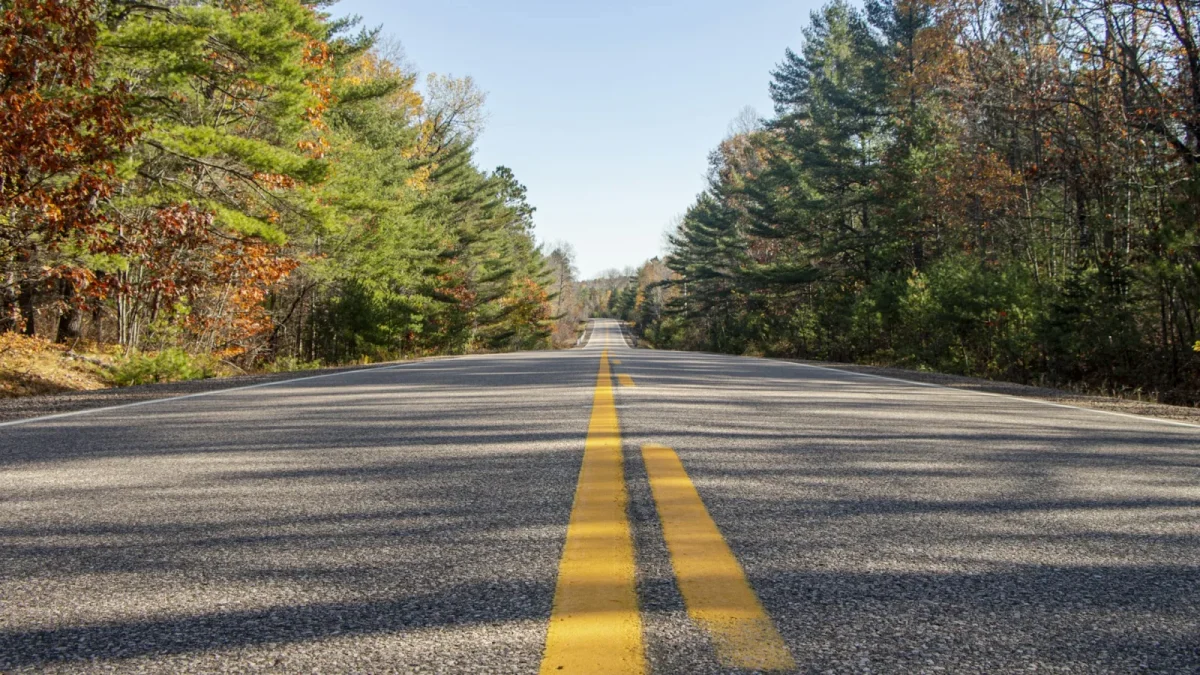
There is a stretch of two-lane highway near my old shop where the paint has worn down to a pale suggestion of a line. Every car I ever drove down it, no matter the brand, dropped its lane keep assist at the same spot. Drivers would come in swearing something was wrong. Nothing was. The road had simply gone blind, and so had the camera.
Faded lane lines are, in my experience, the single biggest reason lane keep assist quits on you in daily driving. And because the fault lies in the road rather than the car, no amount of shop time will fix it.
Let me show you what the camera actually sees, why worn paint throws it off, and how to tell a road problem from a real defect.
Key takeaways
- Lane keep assist needs clear, high-contrast painted lines, and faded paint starves it of the reference it needs.
- Worn markings, patched pavement, and double-painted work zones are the most common culprits.
- The tell is location: if the assist drops at the same worn spot every time, the road is the cause.
- There is no repair for faded paint on your end, but you can rule out camera and windshield problems that mimic it.
How the camera reads a lane, and why paint matters
Your lane keep system watches the road through a forward camera mounted behind the windshield, usually up near the rearview mirror. It looks for the strong light-to-dark contrast where white or yellow paint meets darker asphalt.
That contrast is everything. The software traces the edges of those lines dozens of times a second and builds a picture of where the lane sits. When the paint is crisp, the picture is sharp and the assist holds steady.
When the paint fades to a ghost, the contrast collapses. The camera cannot separate line from pavement, and without a confident read, the system does the responsible thing and backs out rather than steer you off a line it cannot see.
Good to know
The camera is not lazy or cheap. Even the best lane systems on the road, Subaru EyeSight, Toyota LTA, Honda LKAS, all depend on the same basic principle. Faded paint defeats every one of them roughly equally, because they are all reading contrast.
The roads where this happens most
Certain places practically guarantee a drop-out. Once you know them, the behavior stops feeling random.
- Older county and rural highways where paint has worn thin over years.
- Freshly repaved sections that have not been restriped yet.
- Patched pavement where new asphalt covers the old line.
- Construction zones with old lines and new temporary lines both visible.
- Toll plazas and interchanges where lines split, merge, or vanish.
- Heavily trafficked lanes where tire wear has scrubbed the paint away.
That last one surprises people. On a busy interstate, the most-driven lane often has the most worn paint, simply from millions of tires polishing it down.

What faded lines actually look like to the system
Picture the difference between reading black text on white paper and reading the same text after it has sat in the sun for a decade, gone gray and patchy. You can still make out some of it, but you second-guess every word. That is your camera on faded paint.
The system does not need a line to exist. It needs a line it can be confident about. A faint stripe it half-sees is worse than useless, so it lets go.
This is why the assist can flicker on and off along a marginal road. Where the paint is decent, it engages. Where it thins out, it drops. That stuttering pattern is a dead giveaway that the paint, not the hardware, is the issue.
How to tell a road problem from a real fault
This is the part that saves you money. Before you assume your camera is broken, run a simple test based on location and consistency.
The location test
Pay attention to where the drop-outs happen. If the assist cuts out at the same faded stretch, the same repaved section, or the same exit split every single time, the road is your answer. A genuine hardware fault does not politely wait for one specific location.
The good-road test
Now drive a road you know has fresh, crisp paint, ideally a recently striped highway on a clear, dry day. If the assist engages and holds confidently there, your camera and system are fine. The faded roads were the problem all along.
Tip
Combine both tests on the same trip. Note where it drops on the bad road, then find a well-painted highway nearby and confirm it works. Ten minutes of driving usually settles the question for good, no scan tool required.
Things that mimic faded paint (rule these out)
A few other issues produce the same symptom, so clear them before blaming the road entirely.
A dirty or hazy windshield in front of the camera does the same thing faded paint does: it kills contrast. Clean the glass inside and out, focusing on the strip directly ahead of the camera housing near the mirror. It is the cheapest fix you can try, and it works more often than people expect.
Snow and heavy rain also hide the lines, and that is a seasonal cousin of the faded-paint problem. If your drop-outs cluster in winter, our guide on lane keep assist not working in snow covers that scenario in detail.
Watch out
If the assist refuses to work even on fresh, crisp paint on a clear day, that is no longer a lane-line issue. A camera that stays dark on good roads may be out of calibration or faulted, often after a windshield swap or front-end work. That deserves a proper diagnosis.
What you can and cannot do about it
Let me be honest, because you deserve it. You cannot repaint the highway, and you cannot make the camera see a line that is not there. When faded paint is the cause, the assist dropping out is the system working correctly, not failing.
What you can do is stop over-relying on the feature on roads you know are marginal. Treat faded stretches as manual-driving zones and keep your own hands and eyes doing the work. The assist is a bonus on good roads, not a crutch on bad ones.
You can also report chronically faded stretches to your state or county road authority. It will not help today, but restriping does eventually happen, and squeaky wheels get the paint.
Where this fits in the bigger picture
Faded paint is one member of a whole family of reasons lane keep assist disengages. If you want the ranked list of everything that makes it cut out, from speed thresholds to camera glare, our guide on why lane keep assist keeps turning off puts them in order of how often I actually see each one.
And if you are still building your understanding of how the whole system works and what to expect from it, start with our complete lane keep assist guide. For a neutral outside take on how these safety features are meant to perform, Consumer Reports on car safety is a sensible reference.
The main thing to hold onto is this: when the paint disappears, your car is not broken. It is being honest about what it can see. Drive the faded roads yourself, let the assist help you on the clear ones, and you will never mistake worn paint for a repair bill again.
Questions drivers ask
Old roads often have worn, faded paint, and the camera needs strong light-to-dark contrast between the line and the asphalt to work. When the paint fades, the contrast collapses and the system backs out rather than steer by a line it cannot confidently see.
Use two tests. If the assist drops at the same worn stretch every time, the road is the cause. Then drive a freshly striped highway on a clear day. If it engages and holds there, your camera is fine and the faded roads were the issue.
There is no repair on your end for faded highway paint. You cannot repaint the road or make the camera see a line that is not there. The drop-out is the system working correctly. Drive faded stretches manually and let the assist help on well-marked roads.
It can. A hazy windshield in front of the camera kills contrast the same way faded paint does. Clean the glass inside and out, focusing on the strip ahead of the camera near the mirror, before you blame the road entirely.
Yes, roughly equally. Subaru EyeSight, Toyota LTA, Honda LKAS, and the rest all read paint contrast through a forward camera. Faded markings defeat every one of them, because they share the same basic principle of tracing high-contrast lines.