You are cruising along, lane centering doing its thing, hands resting lightly on the wheel, and then it happens. A steering wheel icon flashes, a chime goes off, and a message barks at you to put your hands on the wheel. Your hands are already on the wheel. So why is the car yelling at you?
This is the nag, and it is one of the most misunderstood alerts on any modern dashboard. It is not a malfunction. It is your car checking that a human is still awake and holding the reins.
Key takeaways
- The nag alert means the system cannot detect steering input, so it thinks your hands are off the wheel.
- Most systems measure torque (twisting force), not touch, so resting a limp hand can still trigger it.
- Ignoring the nag makes it escalate: louder chimes, brighter warnings, then the assist shuts off.
- A light, steady grip with a small amount of turning pressure keeps the alert quiet.
What you are actually seeing
The alert shows up as a steering wheel symbol, often in red or amber, paired with words like “Hold Steering Wheel,” “Keep Hands on Wheel,” or “Steering Required.” Different brands word it differently. Toyota, Subaru EyeSight, Honda Sensing, Ford, and the Hyundai and Kia systems all have their own phrasing, but they mean the same thing.
It typically appears while a lane centering feature is doing the steering for you. On a straight, smooth highway, that is exactly when your hands relax and the trouble starts.
Good to know
The nag is tied to active lane centering, not basic lane departure warning. If you are unsure which feature your car has, our comparison of lane keep assist versus lane departure warning makes the distinction clear, and the nag mostly belongs to the centering side.
Why it happens: the torque sensor is the key
Here is the piece almost nobody explains. Most cars do not have a “hands-on” sensor that feels your palms. Instead, they use the steering torque sensor, the same sensor the power steering relies on, to detect whether you are applying twisting force to the wheel.
When lane centering is steering, it constantly makes tiny corrections. If you are holding the wheel with any real grip, your hand naturally resists those corrections a little, and the sensor reads that resistance as torque. That tells the car a human is engaged.
But if you rest a hand on the wheel like a wet noodle, applying zero twisting force, the sensor reads nothing. As far as the car knows, that could be a jacket draped over the wheel. So it nags.
Your car cannot feel your hands. It feels your effort. Give it a little steering resistance and it stops worrying about you.
This is why the classic “just rest your hand there” advice fails for so many drivers. Resting is not steering. You have to give the wheel a gentle, living grip.
How the escalation works
Automakers designed the nag to get harder to ignore, on purpose. It climbs a ladder.
- Stage one: a visual steering wheel icon appears, sometimes with a soft chime.
- Stage two: the chime gets louder and more insistent, and the icon may flash red.
- Stage three: some systems add a brake pulse or seat vibration to jolt you.
- Stage four: lane centering shuts off entirely and locks out for the rest of the drive.
That final stage matters. Once the system decides you are not participating, it does not just pause. It disables assistance until you stop the car, because it assumes you may be impaired or asleep.
Watch out
Do not treat the nag as an annoyance to be gamed. It exists because a driver aid is not a driver. If you find yourself constantly triggering it because you are barely touching the wheel, that is the system telling you that you have drifted too far into treating it like autopilot.
How to make the nag stop
The right way to hold the wheel
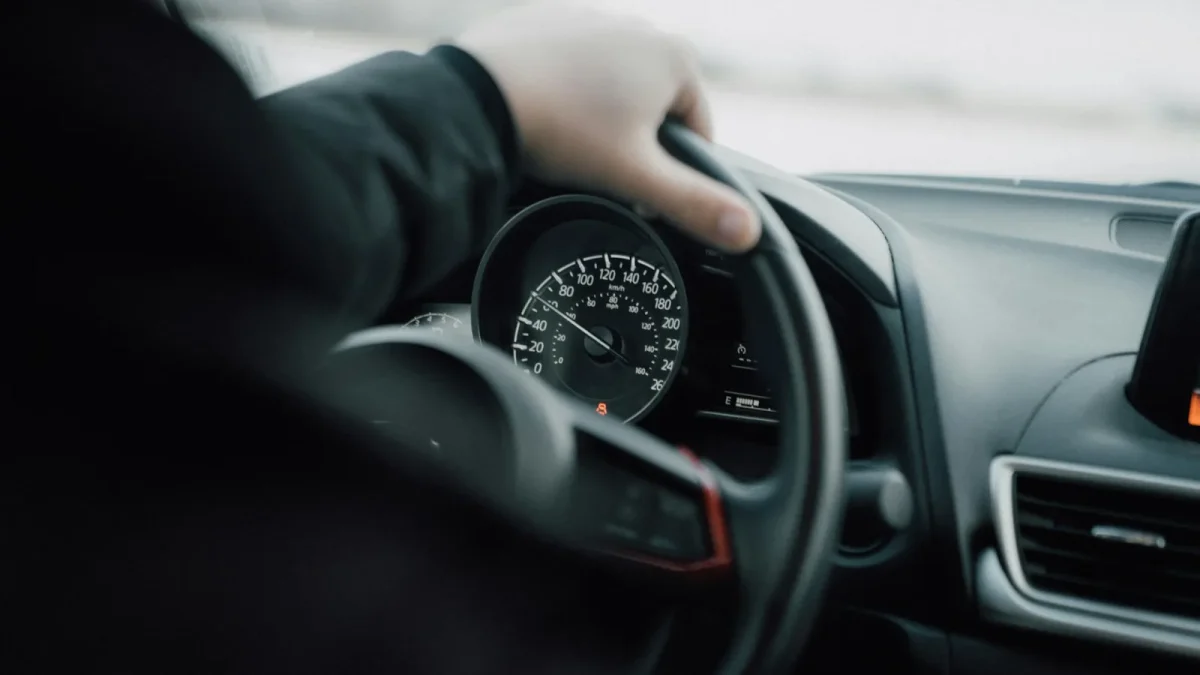
Rest your hands at a comfortable position, low on the rim if you like, and keep a light but genuine grip. The trick is to let your hand apply a small amount of steering pressure, as if you are lightly guiding the car yourself. That constant micro-tension is what the torque sensor reads.
Some drivers give the wheel a barely perceptible wiggle every so often. A tiny nudge in one direction resets the timer instantly. You do not need to fight the system, just remind it you are there.
Tip
If the nag fires within seconds no matter what you do, the issue may not be your hands. A recurring, oversensitive nag can point to a system that is dropping out and re-checking constantly. Our walkthrough on why lane keep assist keeps turning off covers the camera and calibration faults that can make the alert misbehave.
When the alert is not your fault
Sometimes the nag really is a symptom of something else. A camera that keeps losing the lane will re-enter and re-check engagement over and over, throwing the alert far more often than normal.
Faded paint is a big one, since the system engages and disengages as it loses and finds the lines. Our piece on faded lane line failures explains that pattern. After a windshield replacement, an uncalibrated camera can do the same thing, which ties into lane keep assist acting up after a windshield swap.
Should you turn the assist off instead?
Some drivers decide the nag is not worth it and simply switch lane centering off. That is a legitimate choice, and there is no shame in it. If a system fights your driving style, you are allowed to drive without it.
If you go that route, do it correctly rather than pulling fuses or covering the camera. Our guide on how to turn off lane keep assist walks through the proper menu steps for the major brands so you keep the rest of your safety features intact.
Good to know
Turning off lane centering does not disable emergency systems like automatic emergency braking. Those are separate, and you want to leave them on. The nag only relates to the steering-assist layer.
Common questions I get at the counter
Is my car about to break?
Almost never. The nag is a designed behavior, not a fault code. Unless it is paired with a hard warning light or a message that the system is unavailable, treat it as normal operation.
Why does it happen more on smooth, straight roads?
Because that is where you relax. On curves, you naturally apply more grip and torque, so the sensor sees you clearly. On a dead-straight interstate, your hands go slack and the sensor loses you. Ironically, the easiest roads trigger the most nags.
Safety groups are clear that these systems assume an attentive driver. The NHTSA and independent testers all frame lane centering as assistance, and the nag is the enforcement of that assumption.
The takeaway from the service bay
The steering wheel nag is your car doing its job, not failing at it. Give the wheel a real, light grip with a whisper of steering pressure and it goes quiet. If it will not go quiet no matter what, look at the camera and calibration, not the alert itself.
For the full picture of how lane centering, warnings, and calibration all connect, start with our complete guide to lane keep assist. Understand why the nag exists and it stops feeling like nagging. It starts feeling like a co-pilot double-checking that you are still flying the plane.
Questions drivers ask
Most systems measure steering torque, not touch. If you rest your hands without applying any twisting force, the torque sensor reads nothing and assumes the wheel is unattended. A light grip with a little steering pressure fixes it.
Keep a genuine light grip and apply a small amount of steering pressure so the wheel senses your effort. A tiny wiggle of the wheel also resets the timer instantly. You are giving the torque sensor something to read, not fighting the system.
Almost never. It is designed behavior meant to confirm a driver is engaged, not a fault code. Only worry if it appears alongside a hard warning light or a message that the assist system is unavailable, which points to a camera or calibration issue.
It escalates. The chime gets louder, the icon flashes, some cars add a brake pulse or seat vibration, and finally lane centering shuts off and locks out for the rest of the drive. The car assumes you may be impaired or asleep.
Because that is where drivers relax their grip. On curves you naturally apply more torque, so the sensor sees you clearly. On a dead-straight road your hands go slack and the sensor loses your input, triggering the alert more often.