The truck rolled into my bay on a Tuesday with a two-day-old windshield and a driver who was, in his words, ready to trade the whole thing in. His 2020 RAV4 had gotten new glass after a rock strike on the interstate. Ever since, the lane keep assist was dead and a yellow warning glowed on the dash.
He was convinced the glass shop had broken his camera. They had not. But they had left one critical step undone, and it took me about forty minutes to prove it and fix it.
This is that job, start to finish, because it is one of the most common after-service failures I see, and the fix is almost always the same.
Key takeaways
- A dead lane keep assist right after a windshield swap is almost always an uncalibrated camera, not a broken one.
- New glass shifts the forward camera’s aim just enough that the car disables the feature and posts a warning.
- The fix is calibration, either static targets in a shop or a scan-tool road drive, not a new part.
- Ask about calibration before the glass work so you are not surprised by a second visit or a second bill.
The complaint, in the driver’s words
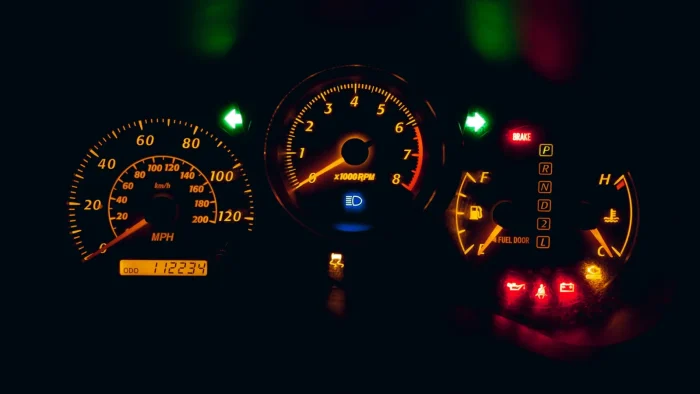
He described it clearly, which helped. Before the windshield, lane keep assist worked fine on his highway commute. After the swap, the steering wheel icon on the dash was amber, the assist would not engage at all, and a message read something like “Pre-Collision System unavailable.”
He had already done the reasonable-owner things. He restarted the car a dozen times. He cleaned the glass. He checked that the feature was switched on in the menu. Nothing changed.
That amber icon is worth understanding on its own, and if you have seen it, our piece on the amber lane departure symbol and what it means breaks down exactly what your car is telling you.
First look: ruling out the obvious
Before I reach for a scan tool, I check the cheap stuff. On this RAV4 the camera housing behind the mirror was seated and clean. No cracked glass in front of the lens. The wiring connector was clicked home. No obvious damage from the install.
Then I pulled codes. The system had logged a calibration-required status on the forward camera. Not a failure code, not a dead-sensor code. It simply did not trust its own aim anymore.
Good to know
Toyota’s system here is Lane Tracing Assist, which rides on top of the forward camera. When that camera loses calibration, several features go quiet at once, which is why the driver saw more than just lane keep assist drop out. If you drive a Toyota, our explainer on Toyota Lane Trace Assist shows how the pieces connect.
Why new glass breaks the aim
Here is the part that surprises people. The camera itself was never touched during the swap. So how does new glass blind it?
The camera reads the road through the windshield, and it assumes the glass in front of it has an exact thickness, curve, and angle. The factory calibrated it to that original piece. A replacement windshield, even a good one, sits a hair differently and bends light a hair differently.
To the camera, the lane lines now appear at a slightly wrong position. The car is smart enough to know it cannot trust that, so it shuts the feature off and warns you rather than steer on bad information. That shutdown is the safety system working, not failing.
The glass shop replaced the window and did the mechanical job right. What they skipped was teaching the camera to see through the new glass.
The fix: calibrating the camera
This RAV4 called for static calibration, meaning targets set up in front of the car in the bay. Here is how the job actually went.
- Parked the truck on the level section of the floor and set tire pressures to spec, because ride height affects camera angle.
- Measured and squared the target board to the vehicle centerline at the factory-specified distance and height.
- Confirmed the fuel level and removed any load, since weight changes how the car sits.
- Ran the calibration routine through the scan tool and let the camera study the target.
- Waited for the pass confirmation, then cleared the warning and road-tested it.
About forty minutes of real work. On the test drive the lane keep assist engaged on the first marked road and held the truck steady. The amber icon was gone. The driver’s “broken” camera had never been broken at all.
Tip
If your car needs dynamic calibration instead, the technician drives a set route while the scan tool learns from real lane lines. That means clear weather and decent paint matter. A rainy day with faded markings can stall the process, so a reschedule is not the shop stalling you.
What this cost, and what it should cost you
For this RAV4 the static calibration ran about $250 on its own. Had it been bundled into the original windshield job, it might have added $150 to $300 to that invoice instead of becoming a separate second visit with its own diagnostic time.
That is the real lesson on money here. Calibration done in the same appointment as the glass is cheaper than calibration chased down later. We break the full pricing picture down in our guide to lane keep assist camera calibration cost, including static versus dynamic and where luxury numbers climb.
Watch out
Some budget glass installers leave calibration off the quote to look cheaper, then hand you a car with a dark lane camera and no mention of why. If nobody said the word calibration during your windshield job and your assist is now dead, that is almost certainly the missing step.
How to avoid this whole headache
The driver did nothing wrong, but he could have sidestepped two days of frustration with one question up front.
Before any windshield work on a car with lane keep assist, ask the shop directly: does this car need ADAS calibration, do you perform it in house, and is it on the quote? A reputable glass shop will answer without flinching. A vague answer is a warning sign.
Keep the calibration pass report when the job is done. It has your VIN on it and proves the camera was actually retaught, not just cleared of codes. If a feature acts up later, that paper tells the next technician where to start.
What I told the driver before he left
I handed him the calibration report and told him the truth: his glass shop did a clean install and simply left the last step to someone else. His camera was fine the whole time. The car had been protecting him by refusing to guess.
If you want the full context on how the system reads the road and why its aim is so fragile, start with our complete lane keep assist guide. And for a neutral, safety-focused look at how these driver-assist features are meant to perform, the IIHS overview of advanced driver assistance is a solid outside reference.
A dead assist after new glass feels like a disaster in the driveway. Nine times out of ten it is a forty-minute calibration and a warning light that never should have scared you in the first place.
Questions drivers ask
The new glass shifts the forward camera's aim just enough that it no longer trusts its own reading. The car disables lane keep assist and posts a warning. The camera is not broken, it just needs calibration.
Usually not. The most common cause is a missing calibration step, not damage. A scan tool typically shows a calibration-required status rather than a failure code, and calibration restores the feature.
No. Calibration needs factory targets and a level bay for static work, or a scan tool and a set road route for dynamic work. It is a shop procedure, not a DIY reset or a menu toggle.
The shop that replaced the glass should either perform calibration or tell you it is required and where to get it. Ask before the job so it is on the quote and you avoid a surprise second visit.
Right away, ideally in the same appointment as the glass work. Driving with an uncalibrated lane camera means the assist is disabled or misreading the road, so there is no benefit to waiting.