Somewhere between “turn it off and on again” and “pull the battery for ten minutes,” drivers get handed a lot of reset advice that mixes two very different things into one word. The trouble is that one of them is harmless and the other can cost you real money.
I hear both called a “reset” every week, as if they were interchangeable. They are not. Knowing which is which, and when each one actually helps, saves a lot of wasted effort and the occasional unnecessary trip to the dealer.
So let me lay the two side by side, in plain terms, the way I would explain them to a customer deciding what to try in the driveway.
Key takeaways
- A soft reset is a gentle restart, an ignition cycle or a short relearn drive, and it is safe to try first.
- A hard reset means cutting power, and on modern cars that can erase calibration and cause bigger problems.
- Soft resets clear temporary hiccups. They cannot fix a mis-aimed or damaged sensor.
- Neither reset replaces a true recalibration after glass or bumper work.
- When in doubt, always start soft and stop before you reach for the battery.
What a soft reset actually is
A soft reset is the mild version. You are not erasing anything permanent. You are asking the car’s computers to close out and restart, the same way rebooting a phone clears a frozen app.
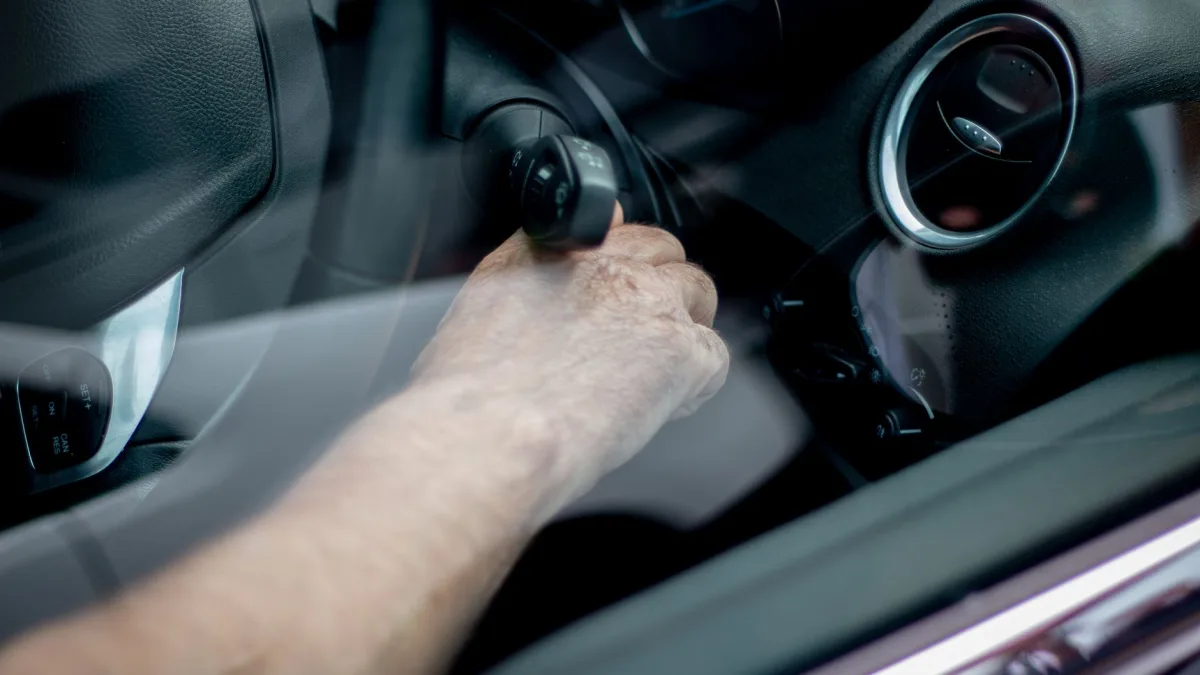
In practice that means shutting the engine fully off, waiting about thirty seconds, and restarting. Sometimes it also means a short “relearn drive,” a few miles on well-marked roads in good light, so camera-based systems like Subaru EyeSight or Toyota LTA can re-establish their references.
Nothing about a soft reset touches stored calibration. It is completely safe to try, and it is where every diagnosis should start. If your warning just appeared, walk through our calm triage on what to do when an ADAS warning comes on first, since a soft reset is one of its core steps.
Tip
Before any reset, clean the windshield in front of the camera and wipe the grille over the radar. A surprising share of “I need a reset” cases are just a dirty sensor, and no reset fixes dirt.
What a hard reset really means
A hard reset is the aggressive version, and this is where people get into trouble. It means physically cutting power to the car, usually by disconnecting the negative battery terminal, sometimes for ten minutes or more.
On an older, simpler car, that was a legitimate trick to clear stubborn faults. On a modern vehicle packed with driver-assist modules, it is a blunt instrument. Cutting power can wipe the learned values those modules depend on.
The result is often more warnings, not fewer, plus relearns you now have to complete. Our full breakdown of battery disconnect and ADAS warnings shows exactly what a power loss does to these systems, and why it is rarely the shortcut people hope for.
Watch out
Never disconnect the battery just to “reset” a driver-assist light on a 2018 onward vehicle. You can erase steering angle centering and calibration references, turning a nuisance light into a scan-tool relearn job. This is the mistake I see most often.
Soft versus hard, side by side
Here is the comparison at a glance, so you can see why one belongs first and the other belongs almost never.
| Feature | Soft reset | Hard reset |
|---|---|---|
| What you do | Restart engine, short relearn drive | Disconnect the battery |
| Risk level | Very low, safe to try | Can erase calibration data |
| Time needed | 1 to 15 minutes | 10 minutes plus relearns after |
| Good for | Temporary glitches and stale faults | Rarely the right first move |
What each reset can and cannot fix
This is the part that saves money, so read it twice. A reset only clears the software state. It does nothing to the physical hardware.
What a soft reset handles well
- A one-time glitch after the sensor was briefly blocked by snow or a bag.
- A stale warning that lingered after a weather event already cleared.
- A minor fault that set once and needs the module to re-check.
- Relearning marked-lane references after a short, low-drama interruption.
What no reset can touch
If a camera or radar is aimed wrong after a windshield swap or bumper repair, no reset on earth corrects that. The sensor is pointed at the wrong spot, and only a physical recalibration with targets fixes it.
Same story for a genuinely failed sensor, a chewed wire, or a cracked bracket. Resets clear memory. They cannot straighten metal or restring a harness. For the honest limits, our guide on what an ADAS reset can and cannot fix draws that line clearly.
A reset is a reboot, not a repair. It clears confusion, never damage. If the hardware is off-aim or broken, the smartest reset in the world just hands you the same light again.
Where recalibration fits in
People lump recalibration in with resets, and it is a different job entirely. Recalibration physically re-aims a camera or radar to precise factory targets, using either a static setup with boards in the shop or a dynamic drive at set speeds.
It is what you need after the sensor’s position was disturbed, most often by glass replacement, front-end body work, or a suspension change. A soft reset will not do it and a hard reset can make it worse. If that word keeps coming up for your car, our ADAS recalibration basics for beginners explains when it is truly required and roughly what it costs.
Good to know
Order of escalation matters. Clean the sensor, then soft reset, then scan for codes, and only then consider recalibration if the codes point there. Jumping straight to a hard reset skips the safe steps and often creates the very problem you were trying to solve.
A simple decision path
When a driver asks which reset to try, I give the same answer every time. Start soft, escalate slowly, and never let the battery be your first idea.
Clean the sensors. Do a full ignition cycle. Take a short relearn drive on marked roads. If the light clears, you are done and it cost you nothing. If it stays, that is your cue to have codes read rather than reach for the wrench.
Skipping the scan and pulling the battery is how a five-minute nuisance becomes a shop visit. The independent testers at Consumer Reports make the same point about respecting how these systems are meant to be serviced.
The takeaway for your driveway
Soft reset first, always. It is safe, quick, and fixes the everyday hiccups. Save the hard reset for the rare situations a professional actually recommends, because on a modern car it usually makes things worse.
For the wider picture of every warning you might meet and how these systems behave, keep our ADAS warning lights explained for beginners guide close. It ties resets, relearns, and recalibration into one clear map.
Questions drivers ask
A soft reset is a gentle restart, an ignition cycle plus a short relearn drive, and it is safe to try. A hard reset means disconnecting the battery, which on modern cars can erase calibration data and cause more warnings than it clears.
Almost never on a 2018 or newer car. Cutting power can wipe steering angle centering and calibration references, turning a nuisance light into a scan-tool relearn job. Start with a normal engine restart instead.
No. A reset only clears the software state. If a camera or radar is aimed wrong after windshield or bumper work, it needs a physical recalibration with targets. No soft or hard reset can re-aim the hardware.
Clean the camera and radar sensors first, then do a soft reset with a short relearn drive, then have codes scanned. Only consider recalibration if the codes point there. Skipping to a battery pull often creates new problems.
A relearn drive is part of a soft reset. After restarting the car, driving a few miles on well-marked roads in good light lets camera-based systems re-establish their references. It is gentle and safe, unlike disconnecting power.