A little amber symbol you have never seen before pops up on the dash, maybe with the word “unavailable” stuck to it, and your stomach drops. Is the car about to fail? Do you pull over right now, or keep going to work?
Take a breath. In fifteen years of pulling cars into the bay, I can tell you that the vast majority of driver-assist warnings are not emergencies. They are the car telling you a helper feature stepped aside, not that the car is unsafe to drive.
What follows is the exact triage I run in my own head, in order, from the second a light appears. Work through it calmly and you will know within a minute or two whether this is a clean-the-sensor moment or a call-the-shop moment.
Key takeaways
- Most ADAS warnings mean a driver-assist feature paused, not that the car is undrivable.
- Read the exact words on the screen first. They usually name the cause.
- A blocked or dirty camera and radar sensor is the number one trigger, and it is free to fix.
- A red light, a brake warning, or a stability control light means slow down and take it seriously.
- If the warning stays after basic checks, get a scan for codes before you spend money.
First, tell an amber light from a red one
Color is your fastest read on urgency. Carmakers picked these colors on purpose, and they mean roughly the same thing across brands.
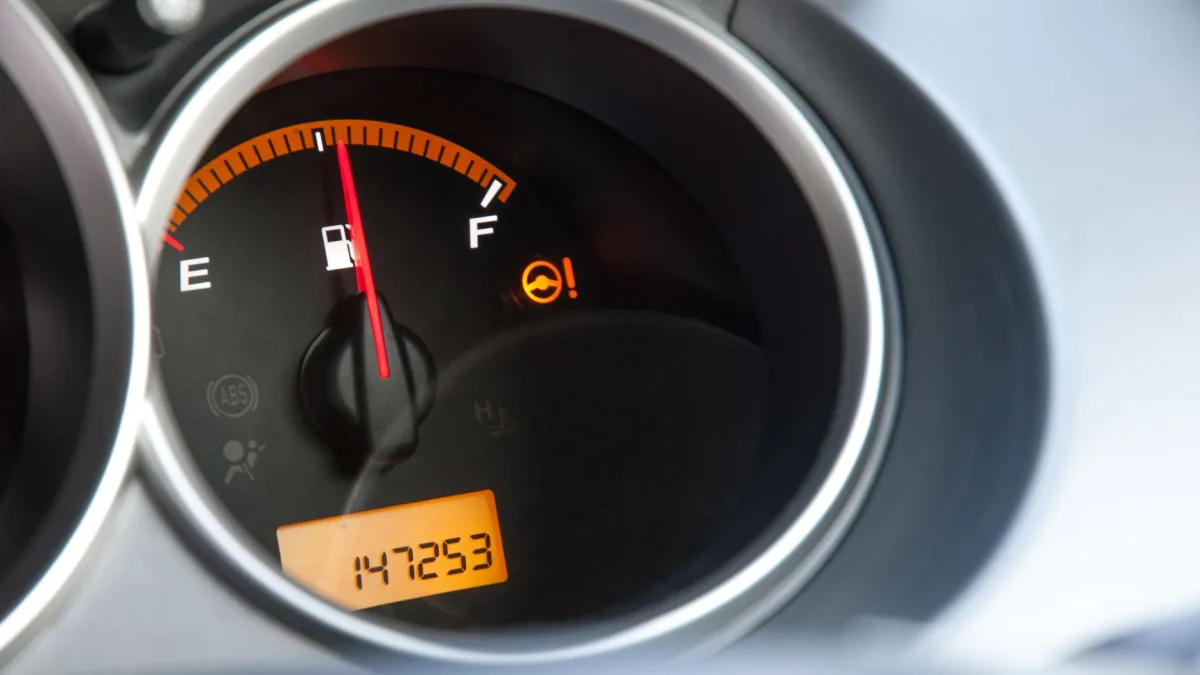
An amber or yellow symbol is a caution. Something needs attention soon, but you are generally fine to keep driving to a safe stop. Most ADAS warnings, like lane keep or adaptive cruise going dark, live here.
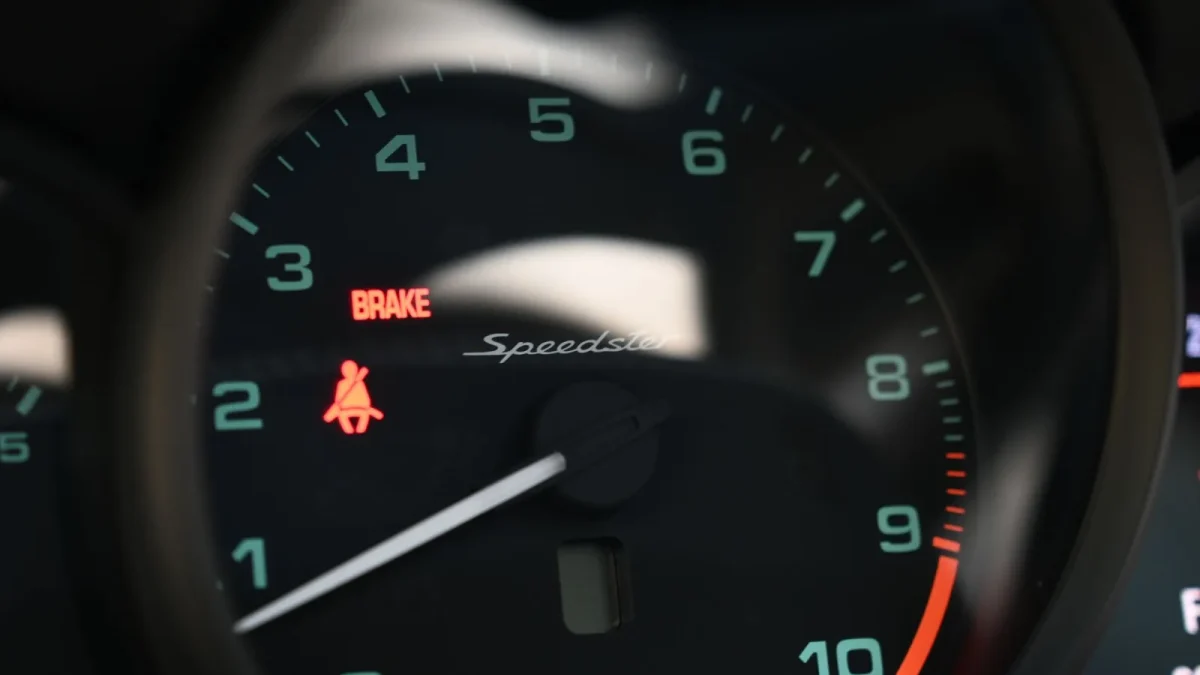
A red symbol is a different animal. Red means stop safely and check now, especially if it is paired with a brake warning, a battery symbol, or a temperature gauge in the danger zone.
If you want a deeper primer on the color code and the shapes you are seeing, our guide on decoding amber dashboard symbols lays out what each hue is trying to tell you.
Good to know
Symbols that show a car with sensor waves, a steering wheel with lane lines, or the letters ACC, LKA, or PCS are almost always ADAS features. They are helpers layered on top of the car, and losing one does not make the vehicle mechanically unsafe.
Step 1: Read the exact message and note it
Before you touch anything, read the words on the screen and remember them, or better, take a photo. The car is usually telling you the cause in plain language, and that wording is the single most useful clue a technician can get.
Phrases like “front radar obstructed,” “clean windshield camera,” or “lane departure unavailable” point you straight at the fix. A vague “system fault” with a warning light is a different story and moves you further down this list.
These messages often clear themselves within a mile or two, so if you do not capture the exact wording now, you may lose your best diagnostic clue. Curious what the acronym even stands for? Our explainer on what ADAS means on your car decodes the alphabet soup.
Step 2: Decide if it is safe to keep driving
Here is the honest answer for most cases: yes, you can usually finish your drive. When a system like Subaru EyeSight, Toyota LTA, or Honda CMBS goes offline, you simply lose that assist. The brakes, steering, and engine all work exactly as they did before power steering and cruise existed.
What changes is that you are now the only safety net. No automatic emergency braking backstop, no lane nudge, no blind spot chime. Drive like the features are not there, because right now they are not.
Watch out
Some warnings are not just ADAS. If the assist symbol shows up alongside a red brake light, an ABS light, a traction or stability control light, or the steering feels different, treat it as a real fault. Slow down, find a safe spot, and do not assume it is only a sensor.
The quick safe-to-drive gut check
- Is the light amber, not red? Amber leans toward caution.
- Does the car drive, steer, and brake normally right now?
- Is there only one warning, not a cluster of them?
- Are all the gauges (temp, oil, charge) in their normal range?
Four yeses and you are almost certainly looking at a paused feature, not a broken car. A no on any of them nudges you toward stopping and calling for help.
Step 3: Check the free, common causes
The boring explanations win far more often than the scary ones. Before anyone reaches for a scan tool, these are the things I check, and any driver can do them in a parking lot.
A blocked or dirty sensor
This is the single most common trigger, full stop. Cameras usually sit behind the windshield near the mirror, and radar sits behind the grille or lower bumper. Snow, road salt film, caked mud, a smear of bugs, or even a stray leaf can blind them.
I once had a driver white-knuckled certain his pre-collision system had failed. It was a fast-food napkin pinned flat over the radar by highway wind. Clean the windshield in front of the camera and wipe the grille and bumper over the radar. That alone clears a huge share of these.
Weather that reduces visibility
Heavy rain, dense fog, glare off wet pavement, and blowing snow can all push a system past its limits, so the car pulls the feature to keep you safe. You will usually see a message that mentions weather or visibility, and it comes back on its own once things clear.
A recent battery event
If your ADAS lights appeared right after a jump start, a dead battery, or a battery swap, that timing is rarely a coincidence. Losing power can drop calibration data and throw temporary faults. Our walkthrough on battery disconnect and ADAS warnings explains what to do next.
Nine times out of ten, the fix I hand back to a worried driver is a clean sensor and a short drive to let the system relearn. Free beats a scan tool every time.
Step 4: Try the simplest reset
Once the sensor is clean and the weather is clear, a lot of temporary faults clear themselves with an ignition cycle. Park safely, shut the car fully off, wait about thirty seconds, then restart and take a short drive.
Many camera-based systems relearn as you drive a few miles on clearly marked roads in decent light. If the warning was just a hiccup, it disappears. If you want to understand the difference between this gentle restart and a deeper reset, read soft reset versus hard reset for ADAS before you go further.
Tip
Do not disconnect the battery hoping to “reset” the light. On most 2018 onward vehicles that can wipe calibration and create a bigger, more expensive relearn than the one you started with. Start gentle, not nuclear.
Step 5: When the warning will not clear
If the sensor is clean, the weather is fine, and a restart did not help, it is time to stop guessing and pull codes. A technician can read the stored diagnostic trouble codes in under an hour and tell you whether it is lost calibration, a wiring issue, or a failed sensor.
This matters more than a nuisance light suggests. Many of these faults are tied to automatic emergency braking and lane keeping, features rated by the IIHS as genuinely reducing crashes. A dark warning means that protection is off until it is fixed.
For the full map of what these lights mean and how the systems behave, keep our ADAS warning lights explained for beginners guide bookmarked. It is the parent piece this whole triage grows out of.
The one-minute recap
Amber usually means a feature paused, and the car is fine to drive with extra care. Red, or a cluster of lights, means slow down and stop safely. Read the message, clean the sensors, rule out weather, try a clean restart, and only then reach for a scan.
Do that in order and you will spend money only when the car truly needs it. Most days, the answer is cheaper and calmer than the light made you fear.
Questions drivers ask
Usually yes, if the light is amber and the car steers and brakes normally. You lose the assist feature, so drive as if it is not there. If the light is red or paired with a brake or stability warning, slow down and stop safely.
The most common causes are a dirty or blocked camera and radar sensor, bad weather reducing visibility, or a recent battery event. Clean the windshield and grille, rule out weather, then try a clean restart before assuming a real fault.
Often it will. Many warnings clear once the sensor is clean, the weather improves, or after an ignition cycle and a few miles of driving on clearly marked roads. If it stays after those steps, have the car scanned for codes.
No. On most 2018 and newer cars, disconnecting the battery can wipe calibration data and create a larger, costlier relearn. Start with a normal engine restart instead of pulling power.
A code scan alone often runs from free at some parts stores to around $80 to $150 at a shop. That reading tells you whether it is lost calibration, a wiring fault, or a failed sensor before you commit to any repair.