
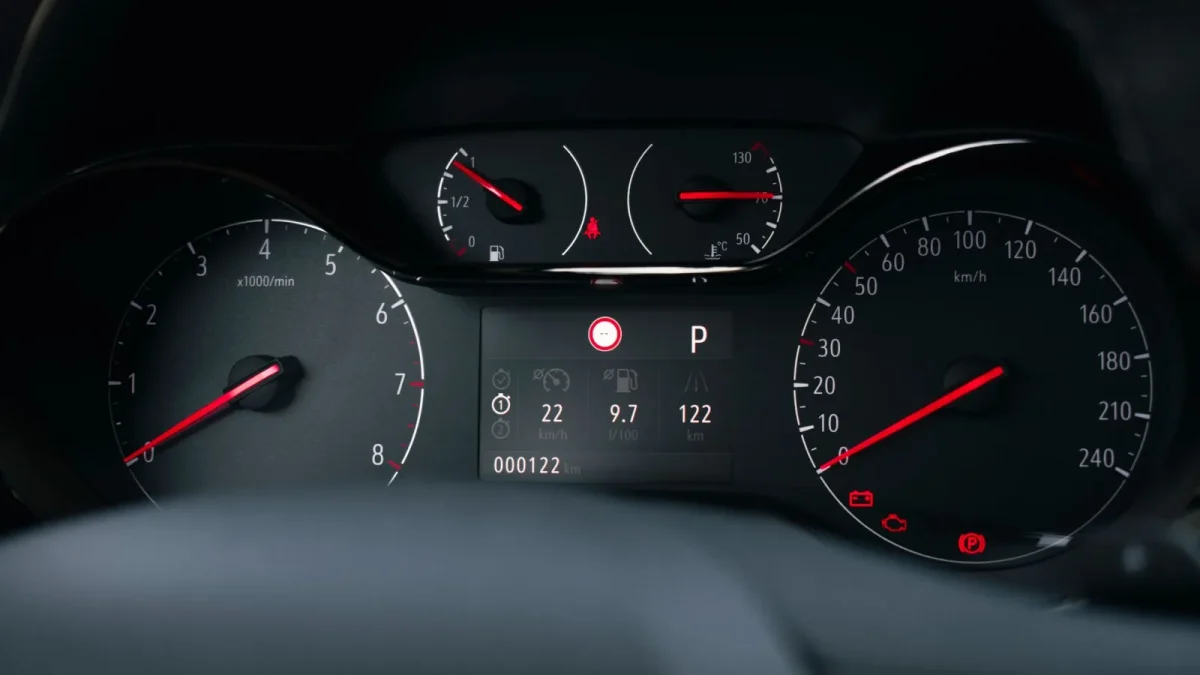
A driver came into the bay last winter, phone out, showing me a photo of her cluster. There was a little amber car with a squiggly line under it, and she wanted to know if it was safe to keep driving. Fair question. The symbol looked like nothing she had ever seen.
The frustrating truth about dashboard icons is that carmakers love vague pictures. A generic car outline, some wavy lines, a triangle, maybe a road. They are trying to speak a universal language, and the result is a set of symbols that could mean almost anything to a normal person.
So here is the glossary I wish every new-car buyer got handed with the keys. The most common amber ADAS symbols, one at a time, with what each generic shape is actually trying to tell you.
Key takeaways
- Amber ADAS symbols almost always mean a driver-assist feature is temporarily offline, not that a part has failed.
- The shape gives you the system: a car with waves is usually collision or cruise, a car between lines is lane keeping.
- Most of these clear after you clean the right sensor and restart the car.
- A flashing amber symbol with a chime is a live alert, not a fault. Treat it as urgent.
How to read any amber symbol fast
Before the list, one rule that covers 90 percent of cases. Amber means caution, not emergency. A steady amber ADAS icon is the car telling you a helper is switched off or degraded, and you are now driving with less backup than usual.
The picture itself usually points at the system. Look for the car outline and then look at what surrounds it: lines beside it are about lanes, waves in front of it are about the road ahead, a P or arrows are about parking.
If you want the full framework for how these lights fit into your car’s whole safety network, our pillar on ADAS warning lights explained for beginners is the map. This article is the field guide to the specific icons.
The common amber ADAS symbols, decoded
1. Car with a wavy line in front of it
This is your pre-collision or forward collision symbol. The waves represent the radar or camera beam reaching out ahead. When it glows amber, the automatic braking system is unavailable, usually because the front sensor is blocked.
Nine times out of ten the fix is cleaning the grille and the windshield in front of the camera, then restarting. Snow, a bug-splattered sensor, or road grime is the usual culprit.
2. Car centered between two lines
The car sitting between two lane lines is lane keep or lane departure. If it is amber, lane assist is off. This one loves to appear when the road paint is faded, when the camera lens is dirty, or in heavy rain.
It also shows up if you simply turned lane keeping off with a button and forgot. Check that first before you worry.
3. Car with a wavy line and the word OFF or a slash
A crossed-out or slashed version of the collision symbol means the system is not just degraded, it is fully disabled. Sometimes you did that on purpose, sometimes a fault forced it. If you did not switch it off, treat it like any other amber warning and investigate.
4. Two cars side by side, or a car with an arc beside it
This is blind spot monitoring. Ford badges it BLIS. Amber here means the rear-corner radar cannot see, often because the rear bumper is caked with snow or mud, or because a sensor took a hit.
Tip
Blind spot sensors hide in the rear bumper corners, not the mirrors. When that symbol lights up in winter, the fix is usually clearing packed slush from the back corners of the car, a spot most people never think to clean.
5. Steering wheel with hands, or a steering wheel alone
A steering-wheel icon relates to lane centering or steering assist. In amber it often means the system wants you to put your hands back on the wheel, or that steering assist has switched off. Green means it is actively helping. Amber means it stepped back.
6. Car with a P and arrows or waves at the corners
These are your parking sensors and rear cross-traffic symbols. Amber usually means the ultrasonic sensors are blocked or a rear sensor is faulted. A trailer hitch, a bike rack, or thick ice over a bumper puck will do it.
7. A plain amber triangle with an exclamation point
This is the catch-all master warning, and it is the one people panic over most. On its own it just means check the message center for details. It frequently appears alongside one of the ADAS symbols above to say “something needs your attention,” and the text screen tells you what.
Good to know
The general amber triangle rarely means an ADAS part failed. It is a pointer. Read the text message that comes with it, because that wording is what actually tells you which system is unhappy.
What to do once you have identified the symbol
Naming the icon is half the battle. Now you know which sensor to look at. Run through this short routine before you assume anything expensive.
- Clean the sensor tied to that symbol: front grille and windshield for collision and lane, rear corners for blind spot and parking.
- Check whether you simply switched the feature off with a button.
- Rule out weather. Fog, heavy rain, and low sun blind cameras by design.
- Restart the car fully and drive a short distance so the system can re-check.
- If it stays on, note the exact text message before heading to a shop.
For a fuller walkthrough of that first hour after a light appears, our guide on what to do when an ADAS warning comes on takes it further. And if the symbol showed up right after you replaced or jump-started the battery, that timing matters. Read battery disconnect and ADAS warning lights because a dead battery can light up half these icons at once.
Amber versus red, and when to worry
Color really is your fastest triage tool. Let me put the difference in a table so it sticks.
| Color and behavior | What it means | Your move |
|---|---|---|
| Steady amber | System offline or degraded | Clean sensor, restart, then drive |
| Flashing amber with chime | Live alert happening now | React to the road immediately |
| Red | Serious, stop and address | Pull over safely and check |
The color is doing you a favor. Amber is a heads-up, red is a demand. Learn to feel that difference and half the fear disappears.
Most amber ADAS symbols are the car being cautious, not the car breaking. A blocked sensor triggers the exact same warning as a failed one, which is why cleaning and restarting comes before spending money.
Symbols that fade but keep coming back
Sometimes an amber symbol clears after a wash and a restart, then returns the next cold morning. That pattern usually means the sensor is marginal: aimed slightly off, or seeing through a chip or crack. That is a recalibration conversation, not a cleaning one.
When timing points to recent glass or bumper work, the sensor almost certainly needs re-aiming. Our primer on ADAS recalibration basics for beginners explains why a symbol that keeps returning is often a calibration issue rather than a dirty lens.
Watch out
A symbol that flickers on and off while you drive, especially the collision or lane one, can mean an intermittent sensor connection or a marginal aim. Do not ignore a light that will not stay decided. Get it scanned before you rely on that feature again.
Keep this glossary handy
Dashboard icons will never be as clear as we all wish, but once you learn the pattern, the panic goes away. Car plus waves is the road ahead. Car plus lines is your lane. Car plus corners is parking and blind spot. That simple grammar decodes almost everything on the cluster.
Snap a photo of any symbol you do not recognize, match it to the shape logic here, and clean the matching sensor first. For a friendly outside reference on what each warning-light feature does, MyCarDoesWhat keeps a plain-language library, and the Consumer Reports car safety hub is a solid neutral second opinion.
Learn the shapes once and your dashboard turns from a wall of mysterious pictures into a car that is simply telling you what it can and cannot do right now.
Questions drivers ask
That is the forward collision or pre-collision symbol, and the waves represent the front sensor beam. In amber it means automatic braking is unavailable, usually because the grille or windshield camera is blocked. Cleaning and restarting clears it most of the time.
Usually not. A steady amber ADAS symbol means a driver-assist feature is offline or degraded, so you are driving with less backup than normal. A flashing amber symbol with a chime is a live alert and needs your immediate attention.
The car-between-lines symbol lights up when lane assist cannot see clearly, often from faded road paint, a dirty camera, or heavy rain. Check whether you simply switched the feature off before assuming a fault.
Blind spot sensors sit in the rear bumper corners, not the mirrors. When that symbol lights up in winter, clearing packed snow and slush from the back corners of the car usually fixes it.
It is a general master warning that points you to the message center rather than naming a specific fault. Read the text that appears with it, because that wording tells you which system actually needs attention.