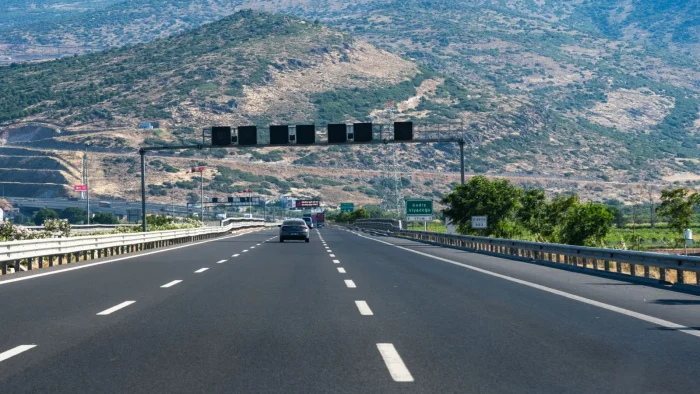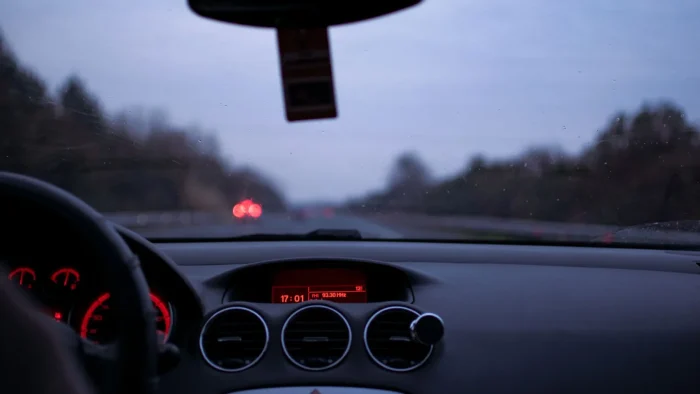
You are cresting a long grade on the interstate, the car ahead drops out of view over the top, and your cruise suddenly floors it toward the summit. A few seconds later, coming down the other side, it grabs the brakes for a car that is a comfortable distance away. Nothing is broken. Your radar just lost its target for a moment, and the system reacted the only way it knows how.
Hills and curves are where adaptive cruise control shows its seams. On flat, straight highway it feels almost magic. Point it at a bend or a steep pitch and the same system can surge, brake late, or lock onto the wrong vehicle entirely.
I want to walk you through why that happens and give you a real playbook for driving ACC through terrain, because once you understand what the radar is actually looking at, the odd behavior stops being scary and starts being predictable.
Key takeaways
- Radar and cameras aim mostly straight ahead, so hills and curves push your lead car out of their view.
- Losing the target makes the car accelerate back to your set speed, which feels like an unwanted surge.
- On curves the system can lock onto a car in the next lane or lose yours around the bend.
- A longer following gap and a lower set speed in terrain smooth almost all of this out.
- None of it is a fault. It is a line-of-sight limit, and your hands and right foot are the fix.
Why terrain confuses the radar
Your adaptive cruise leans on a forward radar, usually tucked behind the grille or lower bumper, and on many cars a camera at the top of the windshield. Both aim in a fairly narrow cone straight down the road.
That cone is the whole story. On flat, straight pavement the car in front of you sits right in the middle of it, and the radar tracks it beautifully. The moment the road tilts or bends, the vehicle you care about drifts out of that cone, and the system briefly sees empty road.
When the radar sees no lead car, it does exactly what cruise control has always done: it speeds back up to the number you set. That is the surge. It is not the car misbehaving. It is the car correctly reacting to a target it can no longer see.
Good to know
Adaptive cruise was designed and validated mostly on highway geometry. Automakers are open about the fact that steep grades and tight radii sit near the edge of what the sensors handle. That is why your owner’s manual tells you to stay ready to take over in hilly or winding terrain.
What happens on hills
Cresting a rise
As you climb toward the top of a grade, the car ahead of you goes over the crest first and drops below your radar’s line of sight. For a few seconds your system thinks the lane is clear and adds throttle to hold your set speed.
Then you crest, the lead car reappears, and the radar reacquires it. Now you are suddenly too close, so the car eases off or brakes to rebuild the gap. That surge-then-settle cycle is the classic hill behavior, and it is completely normal.
Descending a grade
Going downhill, gravity is doing the accelerating for you. Some systems hold speed well on a descent, using engine braking or light brake application. Others let the car drift a few miles per hour over your set speed on a steep pitch before they rein it in.
If your car creeps over the set speed downhill, that is worth knowing before you meet a curve or a slower vehicle at the bottom. Do not assume the system will hold your number perfectly on a long, steep descent.
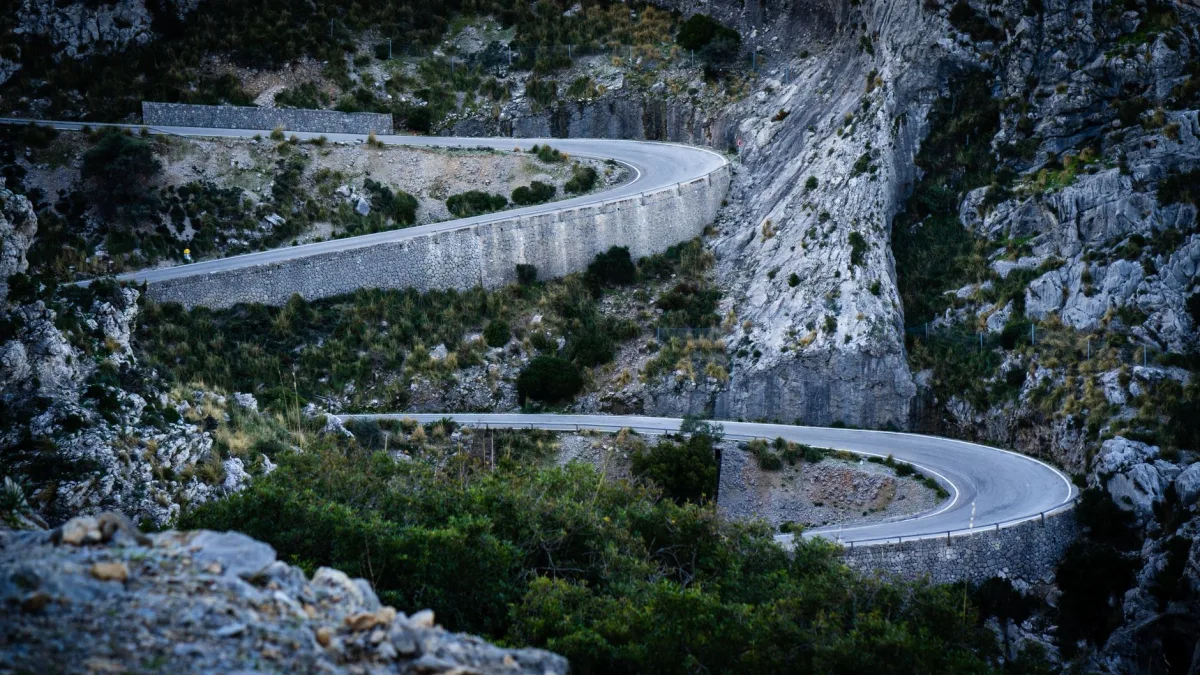
What happens on curves
Curves are trickier than hills because they scramble which car the radar is looking at, not just whether it can see one.
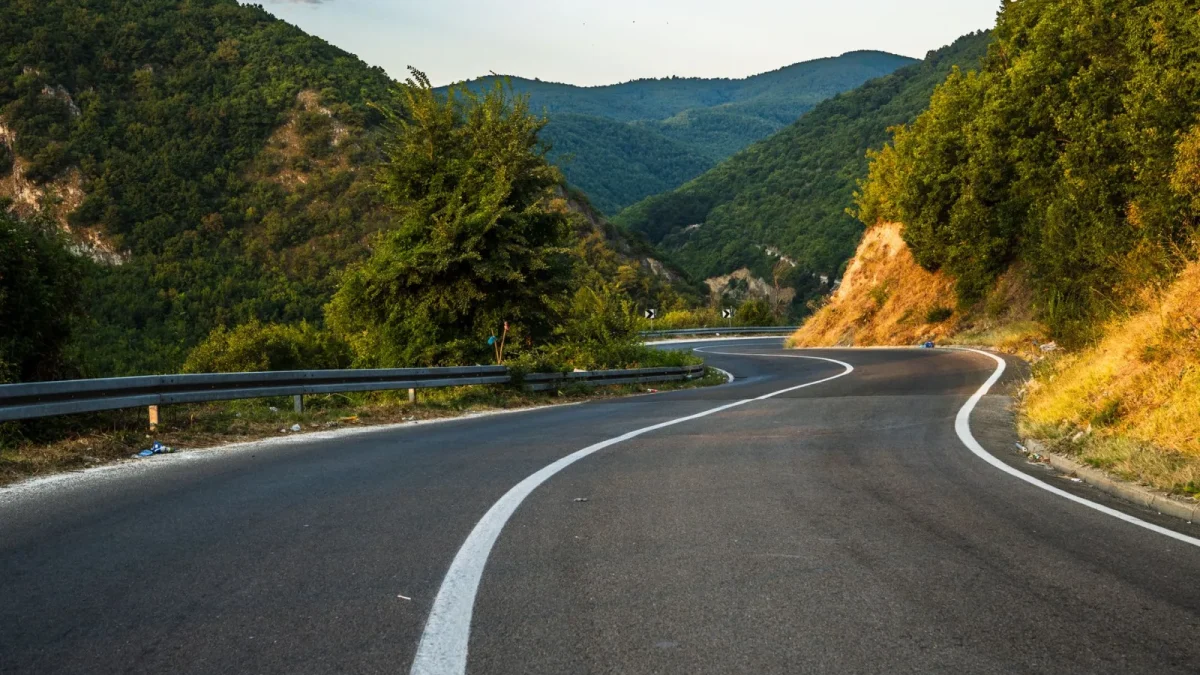
Entering a bend, your lead car swings out of your straight-ahead cone and off to one side. Your radar may drop it and speed up, the same as on a hill. That is why a car you were smoothly following can suddenly feel like it vanished as the road curves away.
The flip side is worse. On a right-hand bend, the radar’s straight cone can sweep into the oncoming or adjacent lane and grab a completely different vehicle, or a roadside object, and brake for it. I have had customers describe a hard, confusing brake on a curve for a car that was never in their path at all.
The radar does not steer. It looks straight down the barrel of the car, so on a curve it is aiming at wherever your nose points, not where the road actually goes.
Watch out
On tight interchange ramps and cloverleafs, adaptive cruise can either lose your lead car and accelerate into the curve, or brake for a barrier or sign. Take manual control of your speed on any ramp or sharp bend. This is not the place to trust the system.
How to drive ACC through terrain
Here is the practical part. These are the exact habits I coach drivers through when they tell me their cruise gets weird in the hills.
- Set a longer following gap before you reach hilly or winding sections, so a lost-and-reacquired target has more room.
- Drop your set speed 5 to 10 mph below your flat-road number for a curvy stretch.
- Cover the brake or throttle over crests, where surge is most likely.
- On sharp ramps and tight bends, take over speed yourself and re-engage when the road straightens.
- Watch for the system braking for a car in the next lane on curves, and be ready to tap the gas or steer through.
- Do not fight a downhill overspeed with the resume button. Feather the brake and let the system resettle.
The single biggest fix is the following gap. A short gap gives the car almost no room to absorb a lost-and-found target, so every hill feels like a lurch. Bump to the longest setting in terrain and most of the drama disappears. If you are not sure how those gap bars translate to real spacing, our breakdown of following distance settings lays it out.
Tip
On a familiar mountain commute, I set the longest gap and knock 8 mph off my usual set speed at the base of the climb. The car surges far less over crests, and I almost never have to intervene through the curves. Small adjustment, big difference in how planted it feels.
Is your system actually faulty?
Almost none of this is a defect. Surging over a crest, losing a target around a bend, drifting a little downhill: that is all line-of-sight physics and normal design behavior.
Start paying attention if the behavior shows up on flat, straight road too, or if the system brakes hard for nothing on open highway. Random braking with no clear trigger is a separate issue, and we dig into it in our piece on adaptive cruise phantom braking. If the system is dropping out entirely rather than just surging, our guide to adaptive cruise dropping out while driving is the better starting point.
Brand quirks matter here too. Camera-based Subaru EyeSight can lose a lead car on a curve differently than radar systems, and its behavior is covered in our Subaru EyeSight troubleshooting guide. If you drive a Toyota and notice odd terrain behavior, the Toyota DRCC problems writeup is worth a read.
The bigger picture
Adaptive cruise is a highway comfort tool, not an autopilot. On hills and curves it does most of the work and hands the tricky moments back to you. Knowing when those moments come is what turns a jumpy system into a smooth one.
For how your system is meant to behave across every condition, the complete adaptive cruise control guide ties the whole picture together. And if you want an independent, plain-English take on what these features can and cannot do, the safety folks at the IIHS driver assistance resource keep it grounded.
Longer gap, lower set speed, hands ready over the crest. Do those three and the hills stop surprising you.
Questions drivers ask
As you climb toward the crest, the car ahead drops over the top and out of your radar's straight-ahead view. The system sees an empty lane and accelerates back to your set speed. It settles once you crest and the radar reacquires the lead car.
The radar aims straight down the length of your car, not along the curve. On a bend it can sweep into an adjacent lane and lock onto a different vehicle or a roadside object, then brake for it. Take manual control of speed on sharp bends and ramps.
It usually tries, using engine braking or light brake application, but on a steep descent some systems let the car drift a few mph over your set speed before reining it in. Feather the brake rather than fighting it with the resume button on long grades.
You can, but adjust it. Set the longest following gap, drop your set speed 5 to 10 mph below your flat-road number, and take over on tight ramps and hairpins. Treat it as a comfort aid on the straighter climbs, not an autopilot through the curves.
Almost never. Surging over crests and losing a target on bends is normal line-of-sight behavior. Worry only if the system brakes hard or drops out on flat, straight road, which points to a different problem worth having scanned.